
Your Nervous System Is Screaming Right Now — The Real Reason Neurowellness Became 2026's #1 Wellness Trend
Summary
The modern human nervous system is trapped in chronic fight-or-flight mode, driving sleep disorders, anxiety, and chronic fatigue. With Neurowellness named the #1 trend at the Global Wellness Summit 2026, a massive paradigm shift from performance optimization to nervous system recovery has begun.
Key Points
The Modern Nervous System Overload and the Rise of Neurowellness
Smartphone notifications, 24-hour news cycles, blurred work-life boundaries, and blue light exposure are chronically over-activating the sympathetic nervous system, trapping modern humans in a perpetual fight-or-flight state. This leads to chronic inflammation, hormonal imbalance, cognitive fog, weakened immunity, and accelerated aging. The Global Wellness Summit (GWS) named Neurowellness the #1 trend out of ten in its 150-page report published January 27, 2026. This marks the official recognition that fixing the nervous system fixes everything downstream — a fundamental shift in how the wellness industry conceptualizes health.
The Dual Growth Structure: Hardcare vs. Softcare
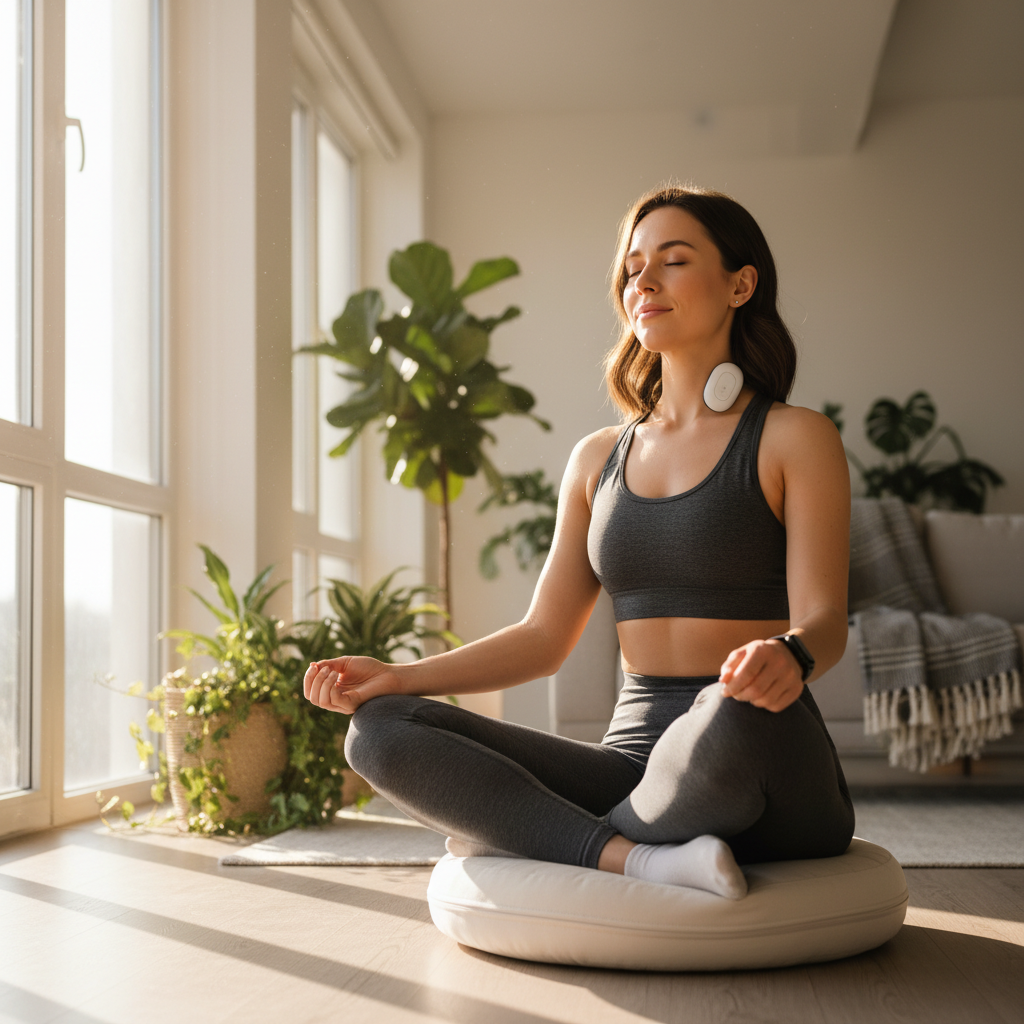
Neurowellness is growing simultaneously along two tracks: tech-based 'hardcare' and traditional 'softcare.' On the hardcare side, vagus nerve stimulation devices (Pulsetto, Sensate), EEG-based sleep tools (Elemind), neurofeedback platforms (Myndlift), and FDA-cleared home devices (Flow) are seeing explosive growth. On the softcare side, breathwork, somatic movement, and nature exposure are being reframed through neuroscience. A meta-analysis in Scientific Reports confirmed that breathwork significantly reduces stress levels, while slow breathing at 5-6 breaths per minute substantially improves heart rate variability (HRV) through parasympathetic activation.
The Paradigm Shift from Performance Optimization to Recovery
For the past decade, the wellness industry obsessed over sleep scores, HRV tracking, VO2max measurements, and macro counting — health reduced to numbers. Yet people became more exhausted, not less. Neurowellness proposes the opposite direction: regulation before results, sensation before scores, and 'how alive do you feel' as the metric that matters. This goes beyond gamified mindfulness apps celebrating '100-day streaks' — it legitimizes the radical concept of wellness that doesn't pursue performance at all. The core message is simple: your nervous system needs to feel safe before anything else can improve.
Explosive Growth in the Neurostimulation Device Market
According to Astute Analytica, the global neurostimulation device market is projected to grow from approximately $9.84 billion in 2024 to $22.64 billion by 2033, at a CAGR of 9.7%. Pulsetto has secured over 100,000 global users, and Flow's FDA clearance has opened a reimbursement pathway. A pivotal RCT published in Nature Medicine (the RESET-RA trial with 242 patients, double-blind sham-controlled) demonstrated that vagus nerve stimulation produced significant improvements in rheumatoid arthritis, expanding the application scope from mental health into immune regulation. With 440 VNS-related clinical trials registered on ClinicalTrials.gov, the evidence base is rapidly accumulating.
Expansion into Corporate Wellness and Workplace Culture
The global corporate wellness market is projected to reach $100 billion by 2026, growing at approximately 9% annually, with nervous system regulation emerging as a key new category. A new equation has emerged: performance equals regulation over motivation. Companies are implementing structural changes including mandatory breathing intervals between meetings, notification-free focus periods, and biophilic office design with natural light. The shift from treating burnout as an individual failure to recognizing it as an organizational responsibility is accelerating alongside the concept of 'nervous system safety' in the workplace.
Positive & Negative Analysis
Positive Aspects
- Democratization of Wellness
Softcare approaches like breathwork, nature exposure, and sleep timing adjustments cost virtually nothing. No expensive gym memberships, organic food plans, or premium supplements required. As confirmed by a meta-analysis of 223 studies, voluntary slow breathing significantly increases vagally-mediated HRV, while a Scientific Reports meta-analysis showed that slow breathing at 5-6 breaths per minute meaningfully reduces stress, anxiety, and depressive symptoms while activating the parasympathetic nervous system. This represents a health revolution accessible to anyone on the planet, regardless of socioeconomic status.
- Structural Improvement of Workplace Culture and Burnout
Forward-thinking companies are beginning to adopt 'nervous system safety' as a core employee welfare concept. This goes far beyond installing meditation rooms. Organizations are implementing structural changes: mandatory 2-minute breathing intervals between meetings, notification-free focus time blocks, and office designs that ensure natural light exposure and biophilic elements. As the recognition spreads that nervous system regulation directly drives productivity, a paradigm shift becomes possible — one that treats burnout as an organizational responsibility rather than an individual failing.
- Integration with the Digital Health Ecosystem
Existing wearables like Apple Watch, Oura Ring, and Fitbit already track HRV. When this data is combined with a neurowellness framework, it can evolve from simple metric reporting to actionable guidance like 'Your nervous system is currently hyperaroused — 5 minutes of slow breathing is recommended.' Samsung announced brain health features for its Galaxy wearables at CES 2026, analyzing gait patterns, voice changes, and sleep data to detect early signs of cognitive decline. This represents a decisive turning point where wearables evolve from fitness trackers into nervous system health platforms.
- Societal Healthcare Cost Reduction
Chronic stress-related conditions account for a significant portion of global healthcare spending. In the United States alone, stress-related illness costs an estimated $190 billion annually. If nervous system regulation can proactively suppress the onset of insomnia, anxiety disorders, irritable bowel syndrome, and chronic pain, it represents not just an individual health solution but a fundamental approach to reducing societal healthcare burdens. Neurowellness contributes to shifting the medical paradigm from reactive treatment after illness to proactive prevention through preemptive regulation.
Concerns
- Incomplete Scientific Foundation
While clinical evidence for consumer vagus nerve stimulation devices is accumulating, large-scale long-term follow-up studies remain scarce. Pulsetto's 86% satisfaction rate is self-reported data, not results from a double-blind RCT. Consumer VNS devices have not been evaluated in published clinical trials for the treatment of any medical or psychiatric condition, and results from implantable or clinical-grade VNS cannot be directly extrapolated to consumer wellness devices. While high-quality journals like JAMA Network Open are producing positive results, the concern that the consumer market is outrunning the science remains valid.
- Commercialization and Marketing Hype
As terms like 'nervous system reset,' 'vagus nerve activation,' and 'parasympathetic mode switching' become overused marketing slogans, their actual scientific meaning gets diluted and consumers become confused. Social media is already flooding with self-proclaimed 'neurowellness coaches' of dubious qualifications. When a simple breathwork practice would suffice, the attempts to enroll people in expensive 'nervous system reboot programs' are concerning. Without an established neurowellness practitioner certification system, there is no filter to screen out unqualified practitioners.
- The Paradox of Technology Dependence
There is a clear irony in proposing to escape digital overload with yet another set of digital devices — vagus nerve stimulators, neurofeedback headbands, sleep tracking apps. Whether strapping on a device and opening an app to receive a notification saying 'your nervous system is currently hyperaroused' actually calms the nervous system, or simply creates another monitoring compulsion, is a question worth considering. Finding the balance between 'device-free neurowellness' and 'device-dependent neurowellness' remains a key challenge for the industry.
- Accessibility Gap and Socioeconomic Inequality
While softcare approaches (breathwork, nature exposure) are free, hardcare solutions remain expensive: Pulsetto costs approximately $300, Elemind around $500, and neurofeedback sessions run $100-200 per session. The concern that 'nervous system health' could become yet another socioeconomic privilege is not unfounded. While Flow's FDA clearance has opened a pathway to insurance coverage, actual reimbursement will take time, and in the interim, a gap widens where only those with financial means can access the full benefits of neurowellness technology.
Outlook
Let me be honest: mapping out the future of neurowellness is genuinely exciting work. This is not a passing fad — it is a fundamental shift in how we think about health itself. Let me break it down across short-term, mid-term, and long-term horizons.
Within the next few months, expect a rush of neurowellness product launches. Pulsetto is charging toward a nine-figure valuation, and Flow's FDA clearance has opened the regulatory pathway for followers. I anticipate at least 5 to 10 new consumer neurostimulation devices entering the market in the second half of 2026. The real game-changer comes when Big Tech players like Apple, Samsung, and Google begin integrating neurowellness features into their existing wearable ecosystems. Samsung already unveiled brain health capabilities for its Galaxy wearables at CES 2026 — once these ship commercially, hundreds of millions of users will begin tracking nervous system health without purchasing a single additional device. This is the pivotal moment that elevates neurowellness from "niche biohacking" to "mainstream health essential."
In the near term, corporate wellness programs will rapidly adopt neurowellness frameworks. McKinsey's 2024 report found that 76% of global companies plan to increase employee wellness budgets, and in 2026, a significant share of that spending will be allocated to the new category of "nervous system regulation." Specifically, this means vagus nerve stimulation devices in office wellness rooms, breathwork workshops as regular training modules, and nervous-system-conscious office design featuring noise reduction, natural light, and biophilic elements. The global corporate wellness market itself is projected to reach $100 billion by 2026, growing at approximately 9% annually, and neurowellness is positioned to be the fastest-growing slice of that enormous pie. Because this is perceived as a productivity investment rather than a mere perk, these budgets are likely to be recession-resistant.
The picture becomes far more interesting at the 1-to-2-year horizon. The mid-term development I am watching most closely is the emergence of "prescription neurowellness." Flow's FDA clearance is not merely a single product approval — it is a signal that home-use neuromodulation devices can enter the insurance reimbursement pathway. By 2027 or 2028, we could see physicians prescribing transcutaneous vagus nerve stimulation devices for insomnia patients instead of sleeping pills, with insurance covering the cost. The double-blind RCT published in JAMA Network Open supports this trajectory, and a pivotal RCT published in Nature Medicine (the RESET-RA trial, 242 patients, double-blind sham-controlled) demonstrated significant effects of vagus nerve stimulation on rheumatoid arthritis, expanding the application scope from mental health into immune regulation. With 440 VNS-related clinical trials currently registered on ClinicalTrials.gov, the evidence pipeline is robust and growing.
In the mid-term, the convergence of AI and neurowellness will accelerate dramatically. Current vagus nerve stimulation devices mostly follow preset protocols, but AI-driven analysis of real-time biometric data — HRV, brainwaves, electrodermal activity — will enable "adaptive neuromodulation" that optimizes stimulation intensity, frequency, and timing in real time. This is a genuine game-changer: the same device can deliver completely personalized therapeutic effects for each individual user. The market projection of $22.64 billion for neurostimulation devices by 2033 may need upward revision once AI integration reaches critical mass.
I also expect a "neurowellness certification" framework to emerge within the next 6 to 24 months. Similar to yoga instructor certifications, a professional credentialing system for neurowellness practitioners will be established. Organizations like the Global Wellness Institute (GWI) or the International Coaching Federation (ICF) are likely candidates to launch neurowellness coach certification programs, which would simultaneously boost industry credibility and serve as a filter against unqualified "coaches." Lifestyle publications like Vogue and Elle have already been featuring neurowellness as a key 2026 trend, suggesting that even regional certification markets — including South Korea and East Asia — could form by 2027.
The truly transformative developments arrive in the 3-to-5-year window. In the long term, neurowellness will become as normalized as fitness. Just as "not exercising is bad for your health" is common sense today, by 2028 to 2030, "not managing your nervous system is bad for your health" will become equally self-evident. This is not an exaggeration. Consider the trajectory of yoga: in the 1990s, it was dismissed as "hippie stuff," and today it is a $50 billion global industry. Neurowellness has a stronger scientific foundation and far greater potential for technology integration than yoga ever had, which means its growth trajectory could be even steeper.
The biggest long-term transformation is a healthcare paradigm shift. The current medical system operates on a reactive model: disease occurs, then treatment follows. Neurowellness enables a preventative model: monitor nervous system state, detect anomalies, intervene preemptively. By 2030, advances in wearable technology and AI could make "closed-loop neuromodulation" a reality — 24/7 real-time tracking of an individual's nervous system state, with automatic calming stimulation delivered when hyperarousal is detected. If realized, this could dramatically reduce the incidence of insomnia, anxiety disorders, and chronic stress-related conditions.
Of course, my predictions could be wrong. If large-scale clinical trials of consumer devices show no significant difference from placebo, the hardcare market could contract sharply. Even in that scenario, softcare approaches (breathwork, somatic therapy) already have robust scientific backing and would maintain their growth trajectory, though the "neurowellness" brand itself would take a hit. In another scenario, if regulations become excessively restrictive and block consumer device market entry, neurowellness would grow primarily through medical institutions, delaying mass adoption by 2 to 3 years. The most optimistic scenario sees neurowellness features becoming standard in Apple Watch and Galaxy Watch, enabling billions to naturally begin tracking nervous system health, with the resulting data powering large-scale epidemiological studies that explosively validate neurowellness's clinical value.
My probability assessment: base case 55%, bull case 30%, bear case 15%. Even in the bear case, the mainstreaming of breathwork and somatic therapy will not stop, making it extremely unlikely that the broader neurowellness trend disappears entirely.
The outlook for markets like South Korea and East Asia is particularly bright. South Korea has among the world's highest early adopter rates for digital devices and strong consumer spending on wellness. Ybrain's Mindstem received approval as the world's first digital therapeutic for depression from Korea's Ministry of Food and Drug Safety, demonstrating that the neurotechnology ecosystem is already in place. By 2027 to 2028, neurowellness is likely to transition from "premium wellness" to "everyday health routine" in these markets.
Finally, I want to emphasize neurowellness's potential contribution to reducing mental health stigma. For people who still feel uncomfortable about "going to a psychiatrist," approaching the same issues through the frame of "managing my nervous system" dramatically lowers the barrier to entry. This is not a marketing trick. Nervous system regulation genuinely addresses the biological foundations of mental health, and as this approach becomes mainstream, it opens a new door for the millions who suffer from anxiety, depression, and insomnia but have never sought professional help.
Sources / References
- The Rise of Neurowellness — Global Wellness Summit 2026 — Global Wellness Summit (GWS)
- Global Wellness Summit Releases 10 Wellness Trends for 2026 — Global Wellness Institute (GWI)
- Effect of Breathwork on Stress and Mental Health: A Meta-Analysis — Scientific Reports (Nature)
- Transcutaneous Auricular Vagus Nerve Stimulation for Chronic Insomnia — Double-Blind RCT — JAMA Network Open
- How Breath-Control Can Change Your Life — A Systematic Review — PMC (National Library of Medicine)
- Neurostimulation Devices Market to Surpass $22.64 Billion by 2033 — Astute Analytica (GlobeNewsWire)
- Best Vagus Nerve Stimulator 2026 — Pulsetto Market Performance — Yahoo Finance
- Vagus Nerve-Mediated Neuroimmune Modulation for Rheumatoid Arthritis — Pivotal RCT — Nature Medicine