
Can Pistachio Cream Really Wash Away a Dictatorship's Image? — The Surprising Way Dubai Chocolate Backfired on the UAE
Summary
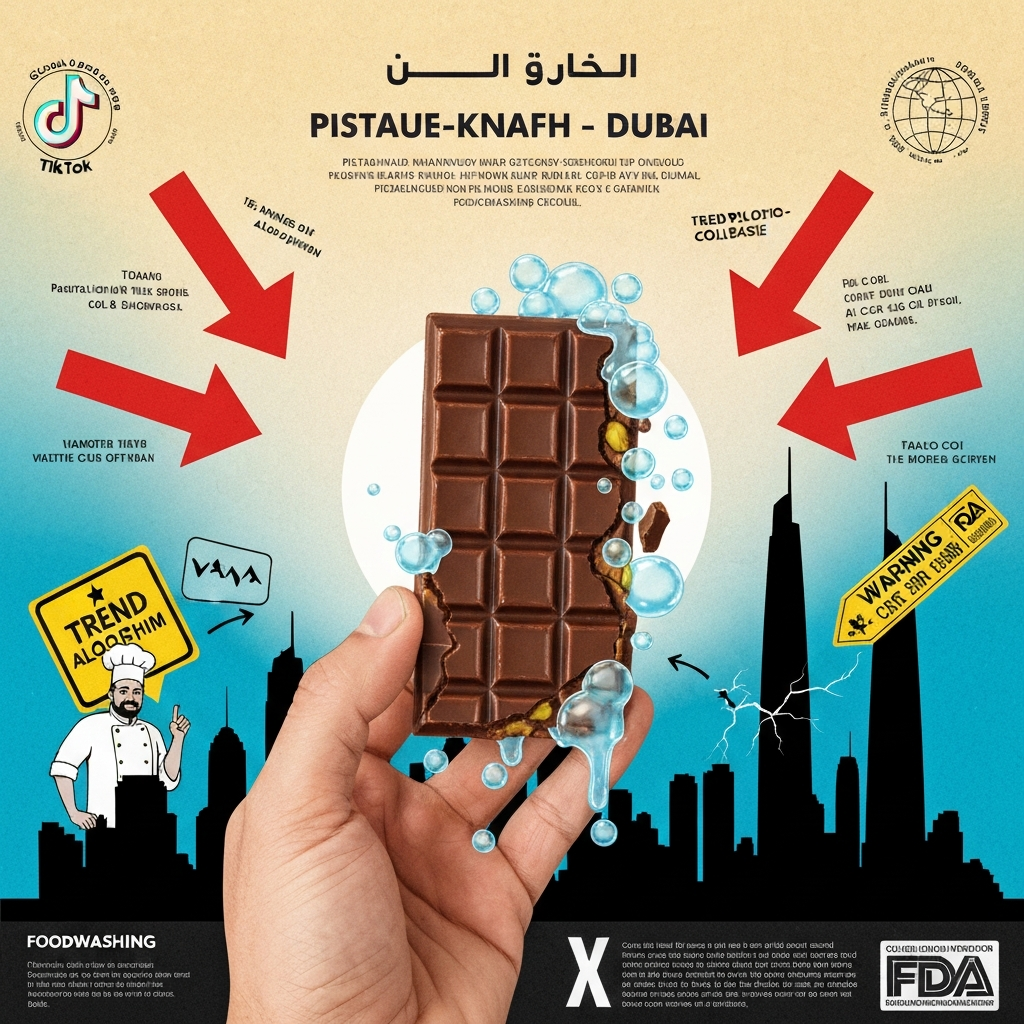
Dubai Chocolate emerged from a small dessert shop in 2021 and exploded globally through TikTok's algorithm in 2024, after which the UAE government claimed the trend as a definitive soft power achievement and poured approximately $40 million into an influencer fund to amplify it. However, the viral phenomenon delivered precisely the opposite of what state strategists intended: as "Dubai" became a global search term, international scrutiny of the UAE's modern slavery crisis, alleged support for Sudan's RSF militia, carcinogenic compound detections in UAE-origin products, and an FDA Class 1 salmonella recall all arrived under the same spotlight. Oxford University's Professor Charles Spence has demonstrated that the trend's viral engine was not state strategy but rather TikTok's algorithm and the deep human psychology of being a "food discoverer" — a dynamic the UAE's $40 million arrived too late to manufacture. Filipino pastry chef Nouel Catis Omamalin, who actually created the pistachio-kunafa recipe, has been systematically erased from global brand narratives, exposing the structural creator-erasure problem that runs through viral economy dynamics. Academic research published in Taylor & Francis on the Qatar World Cup's sportswashing effect strongly suggests that state branding efforts that co-opt popular cultural trends tend to amplify critical scrutiny rather than suppress it — making this case the most transparent illustration yet of the structural self-destruction mechanism built into foodwashing as a geopolitical strategy.
Key Points
Foodwashing Builds Short-Term Brand Equity But Structurally Invites Long-Term Scrutiny
The Dubai Chocolate case provides the clearest available demonstration of what researchers and analysts are calling the "foodwashing self-destruction mechanism" — the structural dynamic where a government's decision to publicly claim a food product as national identity causes the product's commercial success and the government's political scrutiny to operate as a single inseparable package. The UAE committed AED 150 million (roughly $40 million) to an influencer fund, arranged direct Crown Prince participation in product collaborations, and built a dedicated influencer academy to amplify the trend through a sustained institutional infrastructure investment. In the short term, the numbers looked promising: Dubai DET official figures recorded 18.72 million international visitors in 2024, a 9.15% year-over-year increase, and the pistachio market experienced a 35% price surge reflecting genuinely expanded global demand. However, the same search volume that brought "Dubai" into global consciousness also delivered the Walk Free Global Slavery Index finding that UAE ranks seventh in the world with 13.4 modern slaves per 1,000 people, ILO documentation of 8.7 million migrant workers operating under the kafala system, International Court of Justice scrutiny of UAE-RSF support in Sudan, and both an FDA Class 1 recall and a German consumer authority "unfit for consumption" finding against UAE-origin products. Taylor & Francis peer-reviewed research on Qatar's 2022 World Cup sportswashing effort found the strategy actively intensified critical scrutiny among German audiences rather than suppressing it — suggesting the foodwashing mechanism produces the same boomerang effect. The structural conclusion is that purchasing a national spotlight also means accepting that the spotlight illuminates everything, not just the curated parts.
Dubai Chocolate's Viral Explosion Was Built by an Algorithm, Not a Government Budget
The timing and mechanism of Dubai Chocolate's global breakthrough make it one of the most precisely documented examples available of how state resources fail to manufacture organic virality. FIX Dessert Chocolatier operated in commercial obscurity from its 2021 launch through late 2023 — three full years of genuine irrelevance, despite the UAE being one of the world's most heavily marketed tourism destinations throughout the same period. The actual ignition event was Maria Vehera's November 2023 TikTok video — an unsolicited, unsponsored, unproduced video of someone eating chocolate in a car — which accumulated approximately 100 million views and triggered a global pistachio cream shortage within weeks. Oxford University's Professor Charles Spence, working in experimental psychology of food perception, analyzed the viral mechanism and identified four psychological drivers: intense visual contrast between the chocolate's green pistachio filling and brown outer shell, textural contrast between the crunchy kadaifi strands and smooth pistachio cream, the exotic foreignness signal that triggers "food discovery" motivation, and the specific social status reward that comes from being the person who introduces an unfamiliar food experience to a social network. Every one of these four triggers operated at the individual consumer level through TikTok's recommendation algorithm — none were engineered by the UAE's $40 million fund, which arrived after the viral peak had already passed. Government planning will always lag the algorithm's discovery cycle, and the asymmetry between institutional budgets and algorithmic spontaneity is not a temporary gap that larger budgets can close. It is a structural feature of how cultural virality actually works.
The Viral Economy Systematically Erases the Creators Who Actually Build the Things It Amplifies
The story of Nouel Catis Omamalin is not a footnote to the Dubai Chocolate narrative — it is the structural core of what the case reveals about viral economy dynamics and creator attribution. Omamalin, a pastry chef originally from Dipolog City in the Zamboanga del Norte province of the Philippines, was employed by Sarah Hamouda to develop the pistachio-kunafa recipe that became FIX Dessert Chocolatier's signature product. He built the original bar from scratch, combining pistachio cream with kunafa pastry — itself a Levantine tradition with roots in Nablus, Palestine, where it has been prepared for Palestinian weddings and Ramadan celebrations for centuries. During FIX Dessert Chocolatier's early production phase, each bar required six to eight hours of handmade preparation, work that Omamalin effectively carried. His recognition has been partial and late: Arab News and Rappler have published his story, and the 2024 Global Filipino Icon Awards named him a "Rising Global Filipino Icon." But in the dominant global brand narrative — the CNN Travel features, the viral TikTok content, the Crown Prince collaborations — his name and Nablus's name are nearly absent. The geographic label "Dubai" functioned as a black hole, absorbing Palestinian culinary heritage and Filipino culinary craft and rebranding both as UAE cultural output. This is not an accident of careless reporting. It reflects the structural logic of viral branding economies, where whoever owns the most marketable geographic label captures the value that the actual creators generated. Without deliberate structural intervention — attribution standards, creator recognition protocols, origin disclosure requirements — the next viral food trend will erase the next Nouel Catis Omamalin in exactly the same way.
The Rise of Food Authenticity Markets Represents a Structural Market-Level Counter to Foodwashing
Research and Markets projects the global food authenticity market growing from $8.49 billion in 2025 to $9.23 billion in 2026, representing an 8.8% annual growth rate that reflects accelerating consumer demand for verifiable information about food origin, recipe lineage, and creator identity. Dubai Chocolate did not cause this trend — the food authenticity market was already growing before the pistachio bar went viral — but it has functioned as a significant catalyst, making the underlying consumer desire for genuine provenance more visible and more commercially actionable. The most concrete legal expression of this dynamic appeared in a German court ruling in January 2025, when a judge found that Aldi's "Alyan Dubai Handmade Chocolate" had violated consumer protection law by implying UAE geographic origin when the product was manufactured in Turkey. That ruling established a legal precedent with implications that extend well beyond one supermarket chain's labeling decision: it signals that courts in major consumer markets are prepared to treat geographic-name food marketing as a truth claim subject to verification. Baden-Württemberg consumer authorities had already demonstrated the willingness to conduct systematic testing, finding all five UAE-origin Dubai Chocolate samples "unfit for consumption" in 2025. Mintel's 2026 Global Food and Drink forecast projects that consumer preference will continue shifting toward transparent origin information over geographic-name marketing — a structural evolution in purchasing behavior that makes the foodwashing strategy progressively less effective as a commercial tool, independent of any regulatory action.
Authoritarian Governments Have a Structural Advantage in Food Diplomacy That Democracies Cannot Match — and That's the Real Problem
The most politically consequential dimension of the Dubai Chocolate case is not what happened to the UAE specifically but what the UAE's playbook reveals about the structural advantages authoritarian governments possess in food and cultural diplomacy. Democratic governments cannot coordinate national food policy with anything approaching the vertical integration that the UAE demonstrated: simultaneously controlling the creator fund, the influencer academy partnerships, the Crown Prince's personal brand engagement, the tourism marketing messaging, and the international media relationship through a single institutional framework. The UAE was able to operationalize all of these layers within weeks of identifying the viral opportunity, moving at a speed and coherence that no democratic government's bureaucratic structure could replicate. Middle East Eye reported that human rights organizations, including Arab Organisation for Human Rights UK spokesperson Mohammed Jamil, have specifically warned that the influencer academy model places participating creators at risk of unknowingly becoming advocates for authoritarian normalization, since many participants lack full information about the political context their content is operating within. The alarm is not hypothetical: Saudi Arabia's "Saudi Coffee" branding campaign and Qatar's camel milk positioning signals suggest the foodwashing playbook is already being adapted by regional neighbors with comparable governance structures. If this model continues to proliferate, the global food culture marketplace will increasingly be shaped by state-sponsored campaigns from governments that have significant structural advantages in executing them — raising questions about who shapes global food narratives and in whose interest.
Positive & Negative Analysis
Positive Aspects
- Global Food Culture Is Evolving Toward Genuine Source Awareness
One of the clearest positive developments that emerged from Dubai Chocolate's global explosion is a measurable shift in how international food media and consumers think about origin. When the trend peaked in 2024, searches for "kunafa history" and "kunafa Palestine" showed significant increases, and traditional kunafa establishments in Beirut, Nablus, and Damascus began receiving coverage from global outlets that had never previously featured them. This represents a meaningful evolution in how mass-market food culture engages with culinary heritage: rather than simply consuming a trend, a visible portion of the audience became curious about the deeper story behind what they were eating. Rappler and Arab News covering Nouel Catis Omamalin's story, and the Global Filipino Icon Awards recognizing him publicly in 2024, are concrete examples of this directional shift — even if they came late and reached a smaller audience than the trend itself. The food authenticity market growth data from Research and Markets (8.8% annual growth, from $8.49 billion to $9.23 billion between 2025 and 2026) provides quantitative support for the qualitative observation: consumer appetite for genuine provenance information is expanding, and Dubai Chocolate functioned as a high-profile case study that made that appetite more visible. Long-term, this pattern suggests that each subsequent major viral food trend will face a better-informed consumer base that is more likely to ask where a dish actually comes from and who actually created it.
- Global Pistachio Markets Are Experiencing a New Demand Curve That Benefits Producing Regions
One of the most concrete and economically significant unintended consequences of the Dubai Chocolate phenomenon is the transformation it caused in global pistachio markets. Dairy News Today reports that pistachio kernel prices rose from $7.65 per pound to $10.30 per pound within twelve months — a roughly 35% increase driven primarily by the explosion in consumer demand for pistachio cream products across the confectionery and bakery sectors. The UAE's imports of Iranian pistachios increased 40% between September 2024 and March 2025, according to trade data cited in commodity reporting. USDA FAS official figures confirm that U.S. pistachio production in the 2024/25 season reached a record 713,000 metric tons, up 43% year-over-year, with the global market projected to expand from $8.5 billion in 2024 to $16.1 billion by 2032 at a compound annual growth rate of 8.3%. For pistachio-producing regions in California, Iran, and Turkey, this demand expansion represents a genuine agricultural and economic opportunity — one that arrived not through agricultural policy or trade negotiations but through a single TikTok video and the algorithm-driven global attention economy. The phenomenon also demonstrated something previously theoretical: that digital virality can materially reshape global commodity markets faster than any conventional supply chain analysis would have predicted, which is both an opportunity and a warning for agricultural planners across all major crop categories.
- The Food Authenticity Market Is Accelerating as a Structural Counter-Force to Geographic-Name Branding
The global food authenticity market's documented growth represents more than a niche consumer preference — it functions as a market-level immune response to the kind of geographic-name branding that Dubai Chocolate exemplifies at scale. When consumers start paying a premium for verifiable provenance information, they are creating a financial incentive for the food industry to invest in supply chain transparency and creator attribution rather than geographic label capture. Research and Markets projects the market reaching $9.23 billion in 2026, and the underlying consumer behavior driving that growth — demand for real origin information, real recipe lineage, real creator identity — directly undermines the core premise of foodwashing as a commercial strategy. The German court ruling against Aldi's Dubai Chocolate labeling practices formalized this consumer preference into legal accountability, establishing that claiming geographic origin is a truth claim rather than merely a marketing convention. Mintel's 2026 forecast further supports the trajectory, projecting that consumer purchasing decisions will increasingly weight verifiable authenticity signals over geographic-name associations. If this trend continues at its current pace through 2028 and 2030, the commercial landscape for future foodwashing campaigns will be significantly less hospitable than the environment the UAE operated in during 2024 — meaning the Dubai Chocolate case may ultimately serve as the high-water mark of state-sponsored food branding effectiveness, not the beginning of an expanding trend.
- Multisensory Food Innovation Is Becoming a Permanent Industry Standard
Mintel's 2026 Global Food and Drink forecast documents that Dubai Chocolate's core innovation formula — layering intense visual contrast, textural contrast, and exotic ingredient provenance into a single eating experience — has moved from viral novelty to industry standard. Major brands and product developers across ice cream, bakery, and beverage categories are systematically incorporating multisensory design principles that were popularized by the Dubai Chocolate moment. This represents a genuine and lasting improvement in how the food industry approaches product innovation, moving beyond simple flavor differentiation toward holistic sensory experience design. Angel Hair Chocolate's 3,900% increase in online mentions signals that the next trend cycle is building on the same multisensory principles Dubai Chocolate popularized. The Oxford experimental psychology framework Professor Spence's team developed to analyze Dubai Chocolate's viral mechanism — visual contrast, textural contrast, exotic foreignness, food discoverer social status — is already being cited by product development teams as a practical framework for designing items that can generate organic consumer interest. The legacy here is not the specific product but the methodology: a more intentional, psychology-informed approach to food design that will likely produce better, more experientially rich products across the industry regardless of how Dubai Chocolate itself performs commercially over the next few years.
- Creator Recognition in Viral Economy Is Slowly Becoming More Visible
Nouel Catis Omamalin's belated recognition — through Filipino media coverage, Global Filipino Icon Award recognition, and growing acknowledgment in culinary journalism — represents a small but meaningful signal that the viral economy's structural creator-erasure problem is becoming visible enough to attract corrective pressure. Arab News and Rappler covering his story, Hyperallergic and other cultural criticism outlets examining the broader attribution dynamics of viral food trends, and the 2024 award recognition collectively suggest that media and industry are beginning to develop the reflexes needed to ask "who actually made this?" before a trend reaches peak saturation. This matters because the corrective mechanism for creator erasure requires awareness at the point where attention is highest — not retrospective recognition months after the commercial peak has passed. If the Dubai Chocolate case functions as a reference point that makes future food journalists and viral content creators ask earlier in the cycle who developed the recipe, who owns the cultural tradition, and whether the geographic name reflects genuine provenance, then Nouel Catis Omamalin's story will have served a purpose beyond his own recognition. The global Filipino diaspora's high-profile food culture presence — including established communities in Dubai, Abu Dhabi, Singapore, and Hong Kong who have shaped the culinary landscapes of those cities over decades — deserves acknowledgment structures that reflect the actual contribution, not just the marketing label applied afterward.
Concerns
- The Foodwashing Playbook Is Actively Being Replicated by Other Authoritarian States
The most consequential negative consequence of the UAE's Dubai Chocolate experiment is not what it did to the UAE's own reputation but the template it has validated for other authoritarian governments to deploy. Saudi Arabia's "Saudi Coffee" cultural campaign has begun positioning qahwa coffee culture as a global soft power asset through an institutional strategy that parallels the Dubai Chocolate playbook in its core architecture: government-backed cultural promotion, influencer amplification, and international media partnerships. Qatar has been signaling interest in positioning "Camel Milk" as a global food trend category, and similar signals have been observed from other Gulf Cooperation Council states studying the UAE's creator fund model. Middle East Eye reported that human rights organizations have specifically flagged the influencer academy as a model that normalizes authoritarian governance through participatory content creation, with Mohammed Jamil of Arab Organisation for Human Rights UK warning that creators participating in these programs risk being "instrumentalized" into legitimizing practices they may not have full information about. The structural advantage authoritarian governments possess in executing food diplomacy — vertical integration of state, corporate, and influencer networks with top-down coordination that democratic bureaucracies fundamentally cannot match — means this competitive advantage will likely widen rather than narrow over time. The Dubai Chocolate case demonstrated that the ROI on food-based soft power can be measured in tourism arrivals and international brand coverage at a scale that justifies the investment, making it more attractive as a model, not less, despite the human rights backlash.
- Food Safety Regulation Is Structurally Unable to Keep Pace With Viral Trend Speed
The public health dimension of Dubai Chocolate's viral moment reveals a structural mismatch between the speed at which trends can now scale and the speed at which food safety infrastructure can verify and certify products at scale. The FDA's July 2025 Class 1 recall — the agency's highest-severity classification, reserved for situations where continued use or exposure is likely to cause serious adverse health consequences — was issued after salmonella contamination from a Dubai Chocolate spread product was linked to confirmed infections across 32 U.S. states and at least one hospitalization. This is not a routine regulatory event; Class 1 recalls represent systemic failures in the supply chain that reach consumers before safety verification catches up. Germany's findings were independently alarming: Baden-Württemberg's Chemical and Veterinary Investigation Office tested five UAE-origin Dubai Chocolate samples and declared all five "unfit for consumption" following detection of excess glycidyl fatty acid esters and 3-MCPD, compounds with carcinogenic potential at the levels found. The underlying structural problem is that TikTok's algorithm can scale a product from regional obscurity to global demand in a matter of weeks, while food safety certification processes operate on timelines measured in months. The fraudulent and uncertified Dubai Chocolate products that flooded global markets during the peak demand period of 2024 were a predictable consequence of that speed mismatch. Without systemic changes to how food safety authorities handle viral trend speed — emergency certification protocols, rapid-response testing frameworks, or platform-level safety disclosure requirements — this pattern will repeat with the next major viral food trend.
- The Structural Creator-Erasure Dynamic in Viral Economy Remains Fundamentally Unchanged
Nouel Catis Omamalin's delayed recognition, while meaningful at the individual level, has not altered the structural dynamics that made his erasure possible and that will ensure the same mechanism operates identically on the next creator whose work gets absorbed by a more marketable geographic or brand label. The core structure — geographic name plus platform amplification plus mass-manufacturer replication — creates a value capture architecture in which the creator who originated the recipe, the cultural tradition the recipe draws from, and the actual producing communities all lose their share to whoever controls the brand name and the distribution channel. When Lindt, Aldi, and Lidl launched their own Dubai Chocolate lines, the royalty and revenue flows those products generated went to those corporations and to the retailers who stocked them, not to FIX Dessert Chocolatier and certainly not to Nouel Catis Omamalin or to the Palestinian kunafa tradition he drew on. The German court ruling against Aldi's labeling practice addresses the consumer deception dimension but does not address the creator compensation dimension. Research and Markets' food authenticity market growth projections suggest consumer demand for origin transparency is increasing, but demand for transparency is not the same as actual transparency — and the incentive structures within the viral food economy still heavily favor rapid brand capture over careful attribution. Without enforceable creator attribution standards, origin disclosure requirements with commercial consequences, or platform-level policies that require food content creators to surface recipe lineage, the next viral food trend will produce the next erased creator.
- Pistachio Supply Chain Shocks Are Creating New Global Food Price Instability
The 35% price increase in pistachio kernels — from $7.65 to $10.30 per pound within twelve months — generated by Dubai Chocolate's demand explosion is not simply a windfall for producing regions. It is also a supply chain shock that cascades across every food product category that uses pistachio as an ingredient or as a positioned flavor: ice cream, confectionery, bakery, and the growing pistachio butter and paste market that Dubai Chocolate itself popularized. USDA FAS projects global pistachio production declining approximately 8% in the 2025/26 season due to reduced yields in Iran, Turkey, and Syria — meaning the supply base is contracting while demand remains elevated from the category entrenchment Dubai Chocolate triggered. If prices rise a further 15-20% from the current elevated level, as is plausible under this supply-demand scenario, the impact will extend beyond the pistachio category to affect overall ingredient costs across the confectionery and specialty food sectors. More fundamentally, the fact that a single TikTok video can shift global commodity prices by 35% within twelve months represents a new category of supply chain risk that agricultural commodity markets, food manufacturers, and retail planners have not historically needed to factor into their scenarios. The Dubai Chocolate case has effectively demonstrated that digital virality is now a material input variable in global food commodity pricing — and that building resilience to viral trend-driven demand spikes requires investment in commodity market analytics that most mid-size food producers currently lack.
- Authoritarian Influencer Academies Are Becoming More Sophisticated and More Difficult to Criticize
The Dubai influencer academy model — three months of funded residency combining flights, luxury accommodation, covered living expenses, and professional content creation infrastructure in exchange for positive coverage of UAE culture and lifestyle — represents a more sophisticated and harder-to-contest form of soft power than conventional state propaganda. Participants are not told to produce positive messaging; they are placed in environments carefully designed to generate authentic-feeling enthusiasm, because authentic-feeling enthusiasm is what performs well on the platforms where the content will live. Middle East Eye's coverage of the human rights community's response quoted Mohammed Jamil of Arab Organisation for Human Rights UK as warning that many participating influencers "may not fully understand the political implications of their participation," making them unwitting amplifiers of authoritarian normalization rather than deliberate propagandists. The structural genius of the model — from an authoritarian government's perspective — is that it recruits people who genuinely enjoy and believe in what they are experiencing, then benefits from content that carries the emotional credibility of real enthusiasm rather than the manufactured quality of paid messaging. As Saudi Arabia, Qatar, and potentially other state actors adopt and refine this model based on what the UAE learned, the resulting influencer content ecosystem will become progressively harder for audiences to distinguish from organic travel and lifestyle media. The scale of the investment — $40 million for the UAE alone, with comparable budgets likely for the regional competitors that follow — suggests this is not a temporary experiment but a structural feature of how authoritarian soft power will operate through the mid-2030s.
Outlook
Over the next six months, Dubai Chocolate itself is very likely entering what market analysts call the classic post-viral consolidation phase — the transition from "trend" to "category." Fizzy Magazine and Ehrenberg-Bass Institute analysis together suggest the product has entered the late stage of the viral cycle, where three simultaneous pressures are operating: market oversaturation as supermarket own-label imitations eliminate the scarcity premium, ethical backlash as human rights scrutiny intensifies, and quality dilution as mass-production versions diverge from the original handmade bar. Lindt, Aldi, and Lidl have all released copycat lines, with UK Waitrose at one point implementing a two-per-customer purchase limit. Meanwhile, Angel Hair Chocolate — combining pistachio butter with Turkish pişmaniye cotton candy — has already recorded a 3,900% increase in online mentions, positioning itself as the next trend cycle. I put the probability that Dubai Chocolate completes its transition from "trend" to "classic category" by the end of 2026 at roughly 65%, meaning sales decline but the category itself survives as a permanent shelf fixture rather than vanishing entirely.
During the same period, the UAE government's response to the cooling trend will be worth watching closely. Dubai's Department of Economy and Tourism has already begun positioning Dubai Chocolate as part of "Emirati culinary heritage" in domestic marketing communications, a framing that sidesteps the obvious problem that neither the recipe nor the core ingredient has Emirati roots. The influencer academy's first graduating cohort is being deployed on a diversification campaign — "Dubai is more than chocolate" — which reflects a clear strategic pivot away from the single-product dependency the government inadvertently created. Simultaneously, the PR response to foodwashing criticism has begun incorporating a multicultural narrative: acknowledging both Sarah Hamouda's British-Egyptian background and Nouel Catis Omamalin's Filipino contribution, framing the product as a "global collaboration" rather than a UAE invention. This framing is PR-sophisticated, but it doesn't resolve the underlying structural issues. Without substantive kafala system reform or credible answers to the Sudan RSF allegations, the human rights critique will continue regardless of how the chocolate is described. I put the probability of at least one major international human rights organization publishing a high-profile public criticism directed specifically at the UAE government's foodwashing strategy before the end of 2026 at approximately 75%. Dubai's tourism numbers will likely remain largely unaffected in the short term — the 6% visitor growth already recorded in the first half of 2025 suggests the broader tourism engine is too large to be significantly disrupted by brand-level controversy alone.
Looking at the medium-term horizon from 2026 through 2028, the most consequential development will likely be the acceleration of food authenticity regulation at the EU level. Germany's Baden-Württemberg consumer protection findings — five UAE-origin samples all declared "unfit for consumption" — are now feeding into broader European regulatory discussions about labeling standards for products that use geographic names without genuine geographic provenance. A German court already ruled in January 2025 that Aldi's "Alyan Dubai Handmade Chocolate" violated consumer protection law by implying UAE origin when the product was manufactured in Turkey. As more cases like this accumulate in European courts, the probability of the EU implementing formal enhanced origin disclosure requirements for food products using geographic place names in their marketing rises to roughly 50-55% by 2027. This would represent a meaningful structural constraint on the foodwashing playbook — making it legally and commercially harder for any government to claim a food product as culturally theirs when the recipe, creators, and ingredients originated elsewhere.
The food industry itself will undergo structural changes in this same period that are worth understanding as context. Mintel's 2026 Global Food and Drink forecast argues that Dubai Chocolate's "multisensory innovation formula" — intense visual contrast plus textural contrast plus exotic foreignness — is becoming an industry standard that will spread across adjacent categories including ice cream, bakery, and beverages. The pistachio price shock (a 35% increase from $7.65 to $10.30 per pound within twelve months) demonstrated that TikTok virality can materially reshape global commodity markets. USDA FAS projects global pistachio production in the 2025/26 season declining approximately 8% due to reduced yields in Iran, Turkey, and Syria. If Dubai Chocolate successfully transitions to a classic category and demand holds at current levels, prices could rise an additional 15-20% from the current elevated baseline, which would meaningfully affect manufacturing costs across the bakery, ice cream, and confectionery sectors globally. Agricultural planners in producing regions are already developing "trend mapping" capabilities specifically designed to anticipate which TikTok food trends might create the next demand shock before it hits.
Looking at the longer-term horizon from 2028 through 2031, three distinct scenarios are worth mapping with explicit probabilities. In the bull scenario — which I assign roughly 25% probability — the Dubai Chocolate case becomes a landmark reference point demonstrating the limits of foodwashing, making food-based image laundering campaigns broadly recognized as high-risk, low-return investments. The UAE pivots its influencer and content investment from food and lifestyle toward technology, space, and climate innovation, and couples that pivot with genuine structural reform of the kafala system. Under this scenario, UAE tourism continues its growth trajectory toward the WTTC-projected AED 287.8 billion tourism GDP contribution by 2035. Global food authenticity standards mature into something close to an international norm, with labeling requirements that attribute recipes and creators alongside geographic origin claims. Creator-protection models emerge from the Dubai Chocolate precedent, making it commercially and reputationally costly to erase the Nouel Catis Omamalins of the next viral cycle.
In the base scenario — which I assign 50% probability — Dubai Chocolate settles into its classic-category status and the UAE's foodwashing strategy is evaluated in hindsight as a partial success with significant unintended costs. The short-term tourism and revenue numbers were real. The long-term human rights image damage was also real. Both coexist without either resolving. Other authoritarian states model themselves on the UAE playbook and launch their own food-based soft power campaigns, but with increasingly sophisticated audience segments growing resistant to the pattern. Nouel Catis Omamalin receives more recognition than he initially did, but the structural "location-name-plus-platform-plus-mass-manufacturer" triangle that erased him in the first place remains functionally intact across the viral economy. EU origin-labeling reforms arrive but affect the edges of the problem without eliminating the core incentive structure.
In the bear scenario — which I assign 25% probability — a combination of sustained food safety scandals and escalating human rights pressure from international judicial processes effectively taints the Dubai Chocolate category as a commercial proposition. Pistachio prices partially retrace the 35% premium as demand falls, creating losses for farmers who expanded production based on the trend. The broader foodwashing model gets formally labeled as a high-risk geopolitical strategy in academic and policy circles, constraining its adoption by future authoritarian governments that might otherwise have deployed it. The global food industry self-imposes tighter standards on trend-chasing to avoid the reputational exposure of the next FDA Class 1 recall, and some of the creative energy currently flowing into viral food formats redirects toward more substantive product innovation.
A counterargument worth taking seriously is the claim that Dubai Chocolate was a purely organic market phenomenon and that the political analysis overlays something artificial onto what was just a dessert trend. TIME's coverage and Oxford's research both treat the viral success as genuinely emergent — which it was. The UAE government didn't engineer the TikTok explosion. Sarah Hamouda's founding story is real. The pregnancy craving was real. What I think this counterargument misses is the distinction between origination and co-optation. The UAE didn't create the wave. But it deployed $40 million in institutional infrastructure specifically to amplify and brand-capture a wave that was already moving, and that deliberate amplification is the definition of foodwashing as a strategy — not who first made the food, but who consciously claimed the food as a national identity asset and backed that claim with state resources.
The chain effects from this case will unfold across at least three layers with different time horizons. In the first-order effect, which is already visible, the global food authenticity market accelerates as consumer demand for genuine origin transparency increases. In the second-order effect, which will manifest over the next two to three years, authoritarian states' food diplomacy models face growing institutional resistance from both consumer markets and regulatory bodies that have been sensitized by the Dubai precedent. In the third-order effect, which will take three to five years to materialize fully, the viral economy's creator-erasure structure may begin to face structural counter-pressure as platforms, regulators, and media organizations develop norms around attribution that make the disappearance of the next Nouel Catis Omamalin slightly harder to execute. None of these effects are guaranteed. But the first-order effect is already happening in real time — the food authenticity market growth data and the German court rulings confirm it.
The practical takeaway is straightforward: when you see a geographic name on a food product, ask whether it reflects genuine cultural origin or whether someone with a state budget decided to attach a place name to a product for marketing reasons. Dubai Chocolate's actual roots are in Palestinian kunafa tradition and a Filipino pastry chef's technique. When a viral food trend generates the kind of commercial momentum Dubai Chocolate did, check the food safety certifications — the FDA Class 1 recall and the German "unfit for consumption" findings were not rare events in some technical sense; they were the predictable result of global supply chains scaling faster than safety infrastructure. And when a government announces a food-based cultural campaign, search the country alongside the food. The most powerful antidote to foodwashing is a search engine used with curiosity.
Sources / References
- Oxford University: Dubai Chocolate Viral Psychology Research (Professor Charles Spence, food discoverer desire analysis) — Oxford University
- Walk Free Global Slavery Index 2023: UAE Modern Slavery World Ranking #7, 13.4 per 1,000 — Walk Free
- ILO Report: UAE Migrant Workers 8.7 Million (88% of Total Population), Kafala System Analysis — ILO
- FDA Official: Dubai Chocolate Spread Class 1 Recall (Salmonella, 32 States Distribution) — FDA
- Current Affairs: Dubai Chocolate as Regime Propaganda Analysis, Foodwashing Concept Definition — Current Affairs
- Middle East Eye: UAE Influencer Academy Whitewashing Criticism (Arab Organisation for Human Rights UK) — Middle East Eye
- Dairy News Today: Global Pistachio Price 35% Surge, Viral Trend Supply Chain Shock — Dairy News Today
- Fizzy Magazine: Dubai Chocolate Trend Collapse Analysis (Oversaturation + Ethics + Quality) — Fizzy Magazine
- Taylor & Francis: Sportswashing Backlash Effect Peer-Reviewed Study (Qatar World Cup Case, Foodwashing Mechanism Inference) — Taylor & Francis
- Wikipedia: Dubai Chocolate Viral Timeline, German Court Aldi Ruling, Lindt/Aldi/Lidl Copycat Line Information — Wikipedia