
Protein in Your Coffee, Your Moisturizer, and Now Your Government's Food Pyramid — Why America's Protein Obsession Is Actually Dangerous
Summary
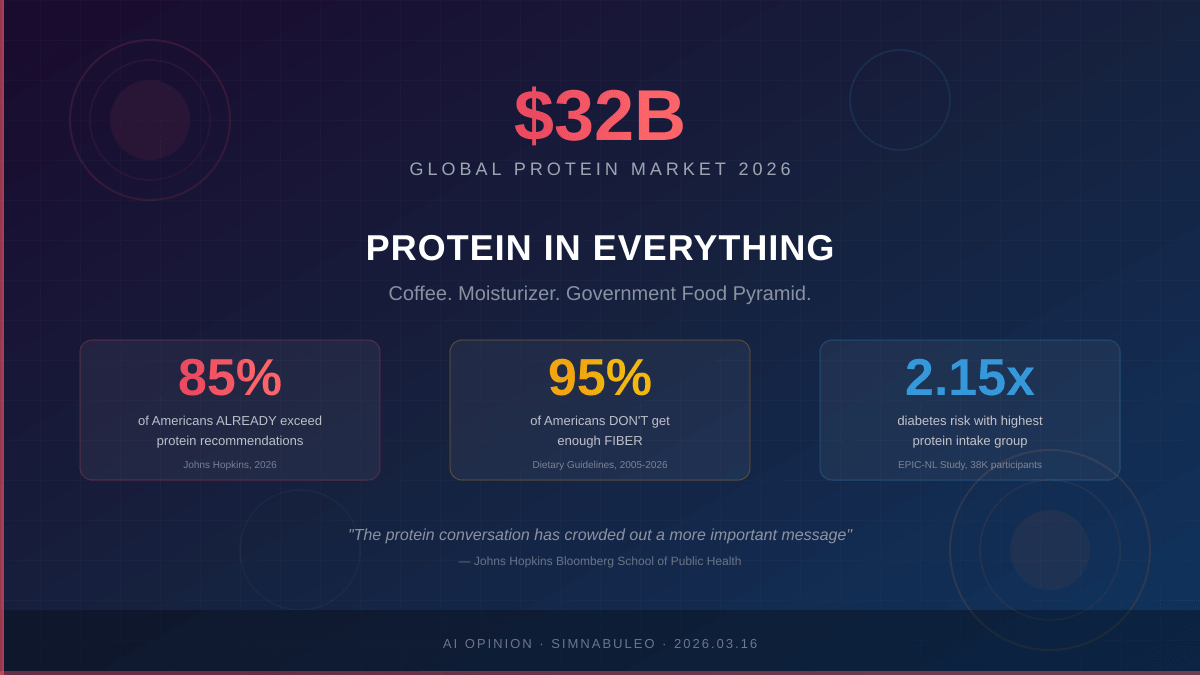
While the $32 billion protein market swallows everything from coffee to moisturizers, 95% of Americans are ignoring the nutrient they actually lack — fiber — and the government's new dietary guidelines chose the meat industry lobby over science.
Key Points
85% of Americans Already Exceed Protein Recommendations
According to Johns Hopkins Bloomberg School of Public Health's 2026 analysis, 85% of American adults already exceed the recommended daily protein intake of 0.8g per kilogram of body weight, with roughly 25% consuming double the recommendation. Despite this, the U.S. government raised protein targets to 1.2-1.6g/kg/day in its January 2026 dietary guidelines — a 50-100% increase. This amounts to telling people to eat more of something they already have too much of, with overconsumption risks including kidney strain, increased insulin resistance, and elevated cardiovascular disease risk. The Dutch EPIC-NL study, tracking 38,000 participants for over 10 years, showed that the highest protein intake group had a 2.15x increased risk of developing diabetes.
Protein Has Infiltrated Coffee, Moisturizers, and Pancake Mix
The global protein supplements market surpassed $32 billion in 2026. Protein is no longer confined to the gym. Protein coffee (proffee), protein water, protein ice cream, and protein pancake mix are just the beginning — now skincare products are adding protein and advertising collagen production enhancement. According to Retail Brew's March 2026 report, protein has already conquered cereal, coffee, boba tea, and snack categories, and is eyeing the moisturizer shelf. Clear protein RTD beverage sales surged 34% year-over-year. The problem is that most of these products are ultra-processed foods (UPF).
RFK's Dietary Guidelines Are a Product of Lobbying, Not Science
In January 2026, HHS Secretary Robert F. Kennedy Jr. declared We are ending the war on protein and unveiled new dietary guidelines placing red meat, cheese, and saturated fats at the top of the food pyramid. Stanford nutrition expert Christopher Gardner criticized it as going against decades and decades of evidence and research. Scientific American reported that several members of the scientific review panel had financial ties to the meat and dairy industries. MIT Technology Review called the guidelines a move that ignores decades of scientific research.
The Real Crisis Is Fiber — 95% of Americans Are Deficient
While obsessing over protein, Americans are ignoring the nutrient they actually lack the most. 95% of Americans fall short of recommended dietary fiber intake (25-38g daily), with average consumption hovering at just 15g. The Dietary Guidelines for Americans have classified fiber as a nutrient of concern since 2005. Fiber deficiency is directly linked to cardiovascular disease, diabetes, colorectal cancer, and shortened lifespan. CNBC reported that fibermaxxing is emerging as the next nutrition trend after protein.
Seed Oil Panic and Beef Tallow's Comeback — Science Says Otherwise
Beef tallow made a dramatic comeback at Expo West in March 2026. RFK Jr. fried his Thanksgiving turkey in tallow and praised Steak n Shake for replacing vegetable oil with beef tallow nationwide. Tallow sprays, tallow snacks, and tallow french fries flooded the market. However, Harvard School of Public Health warned that beef tallow is not a healthier option than seed oils. Tallow is high in saturated fat, making it worse for heart health than plant-based unsaturated fats.
Positive & Negative Analysis
Positive Aspects
- Contributes to Preventing Sarcopenia in Elderly
The rising social interest in protein has improved protein intake among those over 65 who face high risk of sarcopenia. According to Korea's National Health and Nutrition Examination Survey, protein deficiency rates remain high among the elderly, meaning the protein trend could lead to real health improvements for this age group. However, current protein marketing primarily targets MZ generation consumers in their 20s-30s rather than the elderly who actually need it.
- Drives Greater Attention to Nutritional Labeling
The protein craze has led consumers to scrutinize food nutrition labels more carefully. According to Numerator's research, consumers checking protein content increased 18% year-over-year. This signals improvement in overall nutritional literacy and has potential to naturally expand into awareness of fiber, sodium, added sugars, and other nutrients.
- Accelerating Plant-Based Protein Innovation
The explosion in protein demand has paradoxically accelerated plant-based protein innovation. Expo West 2026 showcased numerous new plant-based protein products from chickpea, lentil, and seaweed sources. With whey protein prices approaching $11 per pound, market demand for price-competitive plant-based alternatives is growing.
- Enhanced Satiety Can Help Curb Overeating
Protein's position as the most satiating of the three macronutrients is well established. Studies show that increased protein intake can reduce snacking urges and lower overall calorie consumption. Including protein in breakfast particularly benefits appetite regulation throughout the day.
Concerns
- Direct Threat to Kidney Health
Excessive protein intake places direct burden on the kidneys. The nitrogen waste products from protein metabolism increase glomerular filtration rate, and prolonged overload can lead to kidney function decline. In Korea, there are reports of MZ generation consumers in their 20s-30s developing kidney stones and kidney function abnormalities from excessive protein supplement use.
- Protein Washing Disguises Ultra-Processed Food as Health Food
Bakery and Snacks' March 2026 report highlighted the growing paradox between high-protein snacks and ultra-processed foods. A protein bar may contain 20g of protein, but it also packs sugar alcohols, artificial sweeteners, emulsifiers, and preservatives. The high protein health halo causes consumers to overlook ultra-processed ingredients.
- Protein Prioritization Is Crowding Out Dietary Fiber
As protein dominance in diets increases, other nutrients — particularly dietary fiber — get crowded out. Fortune reported that Americans are overdoing it on protein and not getting enough of another vital nutrient. Two-thirds of American protein intake comes from meat, while consumption of fiber-rich beans, lentils, whole grains, fruits, and vegetables is declining.
- Meat Protein Bias Ignores Environmental Costs
RFK's placement of red meat at the pyramid's apex is environmentally problematic. With the U.S. cattle herd at roughly 86 million head — the lowest level in decades — encouraging more meat consumption triggers a vicious cycle of rising prices, expanded farming, and increased greenhouse gas emissions. Producing 1g of animal protein requires 5-10 times more land and water than plant-based protein.
- Generational Polarization — MZ Overconsumption vs Elderly Deficiency
The greatest irony of protein marketing is its targeting failure. Korean research shows MZ generation consumers in their 20s-30s, influenced by body profile trends and TikTok wellness culture, overconsume protein, while those over 65 — who actually need more protein — remain deficient. This represents a tragic mismatch between health needs and market logic.
Outlook
The future of protein maximalism paints a fascinating picture when broken down into short-term, medium-term, and long-term horizons.
In the short term — the next one to six months — the protein market will continue its growth trajectory without question. With the global protein supplements market surpassing $32 billion in 2026 and recording a compound annual growth rate of 10.3%, expansion shows no signs of stopping. As confirmed at Expo West 2026, protein has extended its reach beyond cereal, coffee, ice cream, and boba tea into skincare territory, and this momentum will persist through at least the first half of this year. Clear protein RTD beverages (up 34% year-over-year) and whey-based ultrafiltered shakes (up 25%) will continue driving growth.
But simultaneously, counter-trends are forming at remarkable speed. The fibermaxxing trend reported by CNBC is emerging as the next nutritional keyword after protein, with major corporations like Pepsi, Nestle, and Olipop aggressively expanding their high-fiber product lines. Registered dietitians' 2026 predictions also identified fiber as this year's key trend. In the short term, we are entering a protein AND fiber coexistence period. As Mindbodygreen's analysis suggests, 2026 is likely to be the era of both rather than an either-or choice between high-protein and high-fiber.
The regulatory landscape around RFK's dietary guidelines will remain contentious but largely unchanged in the short term. The scientific community will continue publishing rebuttals — Stanford, Harvard, Johns Hopkins, and MIT Technology Review have already fired their opening salvos — but bureaucratic inertia means the guidelines will remain in effect through at least the end of 2026. What will change, however, is consumer awareness. As mainstream media coverage of the guidelines controversy intensifies, a growing segment of health-conscious consumers will begin questioning the more protein is always better narrative.
In the medium term — six months to two years — the protein market will encounter its first meaningful correction. Bakery and Snacks' February 2026 report that protein snacks hit a ceiling as consumer interest stalls is already signaling market saturation. When protein washing criticism goes mainstream, the high protein label alone will no longer justify premium pricing.
The backlash against RFK's dietary guidelines will intensify considerably. Nutritionists from Stanford, Harvard, and Johns Hopkins are already in unified opposition, and with MIT Technology Review delivering a direct hit calling it an act that ignores decades of scientific research, organized academic and public health resistance will strengthen. The 2025 Scientific Report already concluded that replacing red meat with plant-based proteins reduces cardiovascular disease risk, and the new guidelines' scientific legitimacy will face relentless challenge.
The seed oil panic and beef tallow revival will likely deflate within this timeframe. Harvard School of Public Health clearly stated that beef tallow is not a healthier option than seed oils, and a 2025 study confirmed the heart health benefits of plant-based oils. The tallow trend, lacking robust scientific evidence, will peak and decline within one to two years. While beef tallow has even entered skincare, dermatologists have already assessed that it is not the miracle moisturizer the internet wants it to be.
The whey protein supply crisis will reshape the competitive landscape. With whey prices approaching $11 per pound and the U.S. cattle herd at roughly 86 million head — the lowest in decades — the economics of animal-based protein will become increasingly unfavorable. This creates a significant opening for plant-based protein companies, particularly those working with chickpea, lentil, pea, and algae-based formulations. Companies that position themselves in this transition early will capture substantial market share.
In Korea and across Asia, the generational protein polarization will become a medium-term policy issue. Korea's protein market grew fourfold from 120 billion won in 2019 to 450 billion won in 2024, but the polarization between MZ overconsumption and elderly deficiency will escalate into a social issue. Korean adults already consume 1.05-1.17g of protein per kilogram of body weight — exceeding recommendations — and indiscriminate protein supplementation may lead to kidney health issues. If health insurance data confirms a rising trend of kidney disease among 20-30 year-olds, regulatory discussions will begin.
In the long term — two to five years out — three scenarios emerge.
The Bull Case scenario sees the protein craze catalyzing broader nutritional literacy improvement. Interest in protein naturally expands to fiber, micronutrients, and the gut microbiome, with macronutrient balance becoming the new common sense. Plant-based protein technology advances dramatically, achieving price and taste competitiveness with animal protein. Elderly-targeted protein products and services expand, genuinely contributing to sarcopenia prevention. The protein market grows beyond $70 billion by 2030, but a qualitative shift occurs from ultra-processed to whole-food-based protein. Market growth rate stabilizes at 8-10% annually, with plant-based segments growing at 15-20%.
The Base Case scenario sees protein market growth deceleration without complete disappearance. The premium effect of high protein labels weakens, triggering price adjustments. Protein washing regulations tighten, with the EU leading in stricter high protein labeling standards, followed by the U.S. and Korea. RFK's dietary guidelines get revised under the next administration, restoring the emphasis on plant-based proteins and fiber. The beef tallow trend dies completely, with olive oil and avocado oil reclaiming the healthy fats market. Growth transitions to a stable 5-7% annual rate, with the market reaching approximately $55 billion by 2030.
The Bear Case scenario sees large-scale health consequences of protein overconsumption emerging. If statistically significant increases in chronic kidney disease rates are identified among millennials who maintained high-protein diets long-term, confirmed by major epidemiological studies, the protein market could crash 20-30% at once. Headlines reading Protein Is Destroying Your Kidneys would cause rapid consumer confidence collapse. Class-action lawsuits against protein supplement companies could begin, and the FDA might mandate warning labels on high-protein products. In this scenario, protein supplement stocks would be the biggest casualties, with related company market caps potentially declining 40-50%. The market could contract to $25-30 billion, with recovery taking 3-5 years.
My assessment is that the most likely outcome combines the Base Case with elements of the Bull Case. The protein market continues growing but decelerates, with quality protein emerging as a nuanced value proposition. The consumer mainstream shifts from asking how many grams of protein to where did this protein come from, what processing did it undergo, and how does it balance with other nutrients. The protein craze itself is not the enemy — the problem is protein tunnel vision. By 2028, the macro-balance era will have firmly arrived, where consumers evaluate their entire nutritional profile rather than obsessing over a single macronutrient.
The deepest irony of the protein obsession is that it reveals something profound about how modern consumer culture processes health information. We do not seek balance — we seek silver bullets. First it was fat-free, then low-carb, then keto, now high-protein. Each wave follows the same pattern: a grain of scientific truth gets amplified by marketing, politicized by policy, and commodified by industry until the original insight is buried under an avalanche of products nobody needed. The question is not whether protein matters — it obviously does — but whether we will ever learn to resist the urge to turn every nutritional insight into a religion.
Sources / References
- America's Protein Obsession, Explained — Johns Hopkins Bloomberg School of Public Health
- Debunking the protein propaganda: How much is too much? — Mayo Clinic Press
- RFK, Jr., Upsets Food Pyramid, Urging Americans to Eat More Meat — Scientific American
- Protein has come for water, coffee, and now moisturizers — Retail Brew
- You might be overdoing it on protein and not getting enough of another vital nutrient — Fortune
- The next protein: Fiber is shaping up to be the latest grocery obsession — CNBC
- Beef tallow not a healthier option than seed oils — Harvard T.H. Chan School of Public Health
- The protein craze: scientists talk supplements — and who should take them — Nature