
Yes, I Support the World Cup Halftime Show — But My Reasons Are the Exact Opposite of FIFA's
Summary
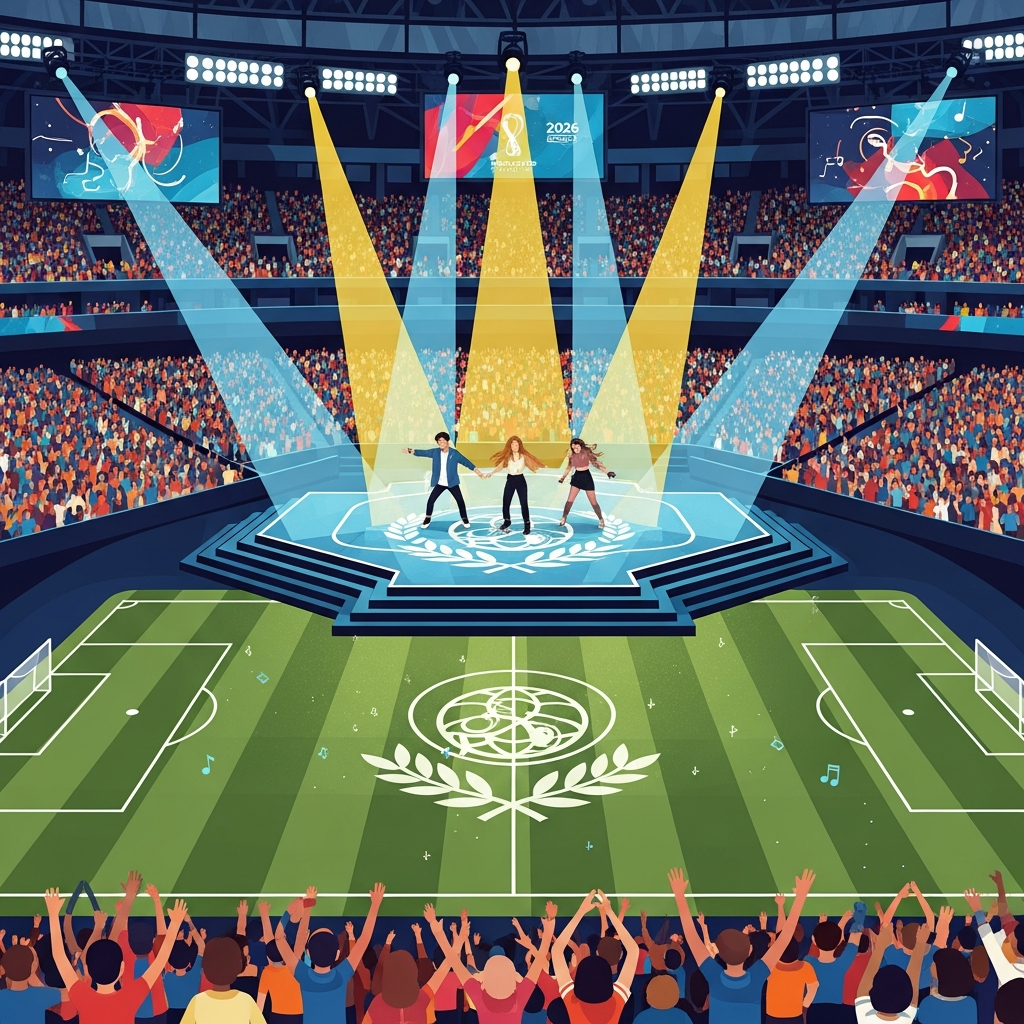
The 2026 FIFA World Cup final will feature the first-ever halftime show in the tournament's history, with BTS, Shakira, and Madonna performing under the creative direction of Coldplay's Chris Martin at MetLife Stadium in New Jersey on July 19. The announcement detonated a firestorm of backlash — particularly from European football communities — framing the event as the "Americanization" of the world's sport. Yet a closer look at the lineup, drawing from South Korea, Colombia, the United Kingdom, and the United States, exposes the foundational weakness of this framing: the "Americanization" label rests almost entirely on the format's Super Bowl origins while ignoring the genuine multicultural diversity of the actual performers. Beneath the surface controversy lies a deeper collision between sports purism and global entertainment economics, FIFA's relentless commercialization strategy, and a genuine identity crisis within European-centric football culture as it confronts the uncomfortable reality of a multipolar world. The halftime show is not the cause of these tensions but the latest and most visible symptom of FIFA's decades-long transformation into an entertainment empire — and the real conversation we should be having concerns governance, revenue redistribution, and what it actually takes for football to become genuinely world.
Key Points
The "Americanization" Label Is Structurally Flawed
When critics apply the "Americanization" label to the 2026 World Cup halftime show, the argument rests on a single premise: the halftime show format was popularized by the Super Bowl, which is American, therefore a World Cup halftime show constitutes the importation of American cultural norms into football. The problem is that format origin and cultural content are entirely different things, and the argument collapses the moment you look at who is actually performing. BTS is South Korean — they represent the global rise of a musical tradition built on entirely non-American cultural foundations, with an ARMY fandom of over 100 million people spanning Asia, Europe, North America, and Latin America. Shakira is Colombian, and she has already performed at the World Cup — "Waka Waka" at South Africa 2010 generated 4.4 billion YouTube views and zero meaningful "Americanization" criticism at the time. Chris Martin, the creative director shaping the entire show's artistic vision, is British. That leaves one American — Madonna — in a four-country lineup. The historical double standard in the reaction is equally revealing: the World Cup has incorporated musical performance into its ceremonial structure since the 1980s, including Pavarotti in Italy in 1990, Shakira in South Africa in 2010, and Pitbull with Jennifer Lopez in Brazil in 2014, none of which generated comparable backlash. What the "Americanization" frame ultimately reflects is a displacement of a more honest and more uncomfortable concern: European football culture's awareness that its long-held claim to define the sport globally is under structural pressure.
FIFA's Commercial Machine Was Running Long Before This Halftime Show
Framing the 2026 halftime show as "the moment FIFA sold out" requires ignoring a substantial record of prior commercialization. In 2022, FIFA held a World Cup in Qatar amid a documented human rights crisis connected to migrant worker conditions. The 2026 tournament features 48 teams for the first time, expanding total matches from 64 to 104 in a change driven entirely by commercial logic. Official resale prices for the 2026 final have reached $33,000 per ticket. The financial trajectory under Infantino makes the pattern undeniable: FIFA's annual revenues grew from approximately $5.1 billion in 2015 to approximately $7.8 billion by the mid-2020s — an increase of more than 53% in under a decade. That growth did not come from improvements in football's sporting quality or genuine expansion of grassroots participation globally. The halftime show is simply the newest item in this catalog, not a departure from an otherwise restrained institutional culture. The practical implication is that criticism of the halftime show should be directed at structural accountability rather than symbolic opposition to this specific event. FIFA's annual revenues approaching $8 billion come from football — from players, from fans, from communities that built the sport's culture over generations. If the critics of the halftime show directed equal energy toward demanding FIFA governance reform and mandatory revenue redistribution requirements, the conversation would be far more productive.
The BTS-Shakira-Madonna Lineup Encodes a Geopolitical Cultural Statement
This combination of performers is not a random commercial booking. Reading it as cultural geography, the lineup represents the convergence of three distinct axes of global popular music's ongoing de-centering from Anglophone dominance. BTS is the most commercially successful product of the Korean Wave — a cultural export phenomenon that has systematically challenged the global music industry's foundational assumption that English-language artists command universal appeal. Their 2025 comeback album "Arirang" debuting at number one on the Billboard 200 was commercially significant; more significant was the cultural signal about where energy and creative vitality in global pop currently reside. Shakira carries equivalent symbolic weight: as a Colombian artist whose musical heritage draws from both Latin pop and Middle Eastern traditions, she represents the more than 2.5 billion people for whom Spanish is either a first or second language. Madonna rounds out the lineup as a trans-generational cultural institution — a performer whose significance has always been about boundary-testing and connecting audiences across generational divides. Together, these three artists represent Asia, Latin America, and the cross-generational legacy of Western pop — three distinct cultural communities, not one American monolith. The more accurate characterization is that this lineup represents the first time the world's biggest sporting event has explicitly acknowledged that global pop culture has become genuinely multipolar.
Player Welfare and Pitch Integrity Are Legitimate and Operationally Solvable
Among the objections raised to the halftime show, two warrant genuine serious engagement: athlete welfare during the extended break and the physical condition of the playing surface at MetLife Stadium. Sports medicine literature consistently documents that sustained inactivity of 15 or more minutes during high-intensity athletic activity increases skeletal muscle stiffness by measurable amounts, with published research indicating increases in hamstring and calf muscle rigidity of up to 23% and corresponding elevations in acute soft-tissue injury risk during resumed activity. World Cup finalists are at the physiological ceiling of their capacity — having played six matches over six weeks. A halftime extending from 15 minutes to potentially 35-40 minutes creates conditions meaningfully different from normal halftime preparation. The MetLife Stadium surface concern compounds the issue: this venue was designed and optimized for American football, not association football, and the 2024 Copa América generated genuine public complaints about surface quality from players including Lionel Messi. A full concert production adds significant physical stress: staging equipment weight, hundreds of crew members traversing the turf, and high-intensity lighting infrastructure. The critical distinction, however, is that both concerns define operationally demanding but genuinely solvable problems — dedicated warm-up corridors, strict limitations on staging equipment footprint, enhanced turf maintenance protocols, and a hard cap on total halftime duration are engineering solutions, not philosophical compromises.
The Controversy Reveals European Football's Identity Crisis in a Multipolar World
The most analytically informative fact about the halftime show controversy is not what is being said but who is saying it and where. Opposition is concentrated overwhelmingly in Europe — specifically England, Germany, and Spain — while reaction in Asia ranges from enthusiastic to neutral, reaction in South America is broadly positive particularly around Shakira's inclusion, and reaction in Africa and the Middle East is largely observational. This geographic asymmetry is not coincidental. It reflects a structural reality that European football culture is only beginning to fully absorb: the global authority to define what football is, who it belongs to, and what its premier moments should look like is no longer exclusively European. The historical record shows the double standard clearly: Pavarotti's performance in Italy in 1990 was received as culturally appropriate, Shakira in South Africa in 2010 was celebrated internationally without significant European objection. The structural pattern extends well beyond the halftime show: the 2034 World Cup has been confirmed for Saudi Arabia, the Asian Football Confederation's World Cup allocation has expanded from 4.5 to 8.5 slots, and the Club World Cup expanded to 32 teams with significant increases in Asian and African club representation. Calling it "Americanization" is a way of naming the threat from a direction that feels more legible than "de-Europeanization."
Positive & Negative Analysis
Positive Aspects
- Accelerating Football's True Globalization
Football has claimed the title of the world's sport for decades, but the honest accounting of who actually watches its premier events and who feels culturally centered in its narrative has always been more European-weighted than that universal claim implies. The BTS halftime performance alone has the potential to draw tens of millions of viewers in South Korea, Japan, China, and Southeast Asia who have no established relationship with football — audiences representing enormous untapped commercial and cultural potential. ARMY's organizational capacity is well-documented: when BTS announced their involvement, fan communities across Asia immediately began coordinating around the final in ways that no football marketing campaign could replicate organically. Shakira's involvement extends the same logic to Latin America, where her cultural authority runs decades deep and her "Waka Waka" connection to the World Cup already exists as a cultural reference point. The demographic groups most likely to engage with the halftime show — Asian women aged 15-30 following BTS, Latin American audiences following Shakira — are precisely the groups FIFA's internal data identifies as most underrepresented among core football viewership relative to their global population size. If the 2026 final draws 1.5 billion or more simultaneous global viewers, it will represent a genuine expansion of football's audience footprint — a potential structural shift in who considers themselves part of the sport's global conversation.
- Elevating Non-Anglophone Pop Cultures to the World's Largest Stage
The cultural significance of K-pop and Latin pop headlining the most-watched single global broadcast in history extends far beyond music industry metrics. BTS's 2025 return with "Arirang" — an album whose title directly references a foundational piece of Korean cultural heritage — topping the Billboard 200 was commercially meaningful; their World Cup final performance would be symbolically transformative in a different order of magnitude. The Grammy Awards and Billboard charts are industry institutions watched by music professionals and dedicated fans. The World Cup final is a global event watched simultaneously by a billion people who have no particular investment in those industry institutions. Korean-language and Spanish-language music has achieved commercial dominance in their respective markets and growing global recognition — but neither has been placed at the center of the world's most universal shared cultural moment. The broader implication is a visible, institutional challenge to the English-language dominance of global entertainment's most prestigious stages. Having BTS and Shakira perform at the World Cup final represents an acknowledgment that the cultural map of global audiences no longer centers on the English-speaking world. The downstream effects on non-Anglophone artists' expectations, opportunities, and self-positioning within the global entertainment industry could be substantial and lasting.
- Significant Economic Ripple Effects Across the Entertainment Ecosystem
The financial implications of the World Cup halftime show are measurable, documented, and substantial across multiple dimensions of the entertainment and sports industries. Super Bowl halftime performers historically experience streaming volume increases averaging around 45% in subsequent weeks, and concert tour ticket sales have risen by as much as threefold in the aftermath. Usher's Super Bowl LVIII appearance in 2024 preceded a 280% increase in world tour revenue on a year-over-year basis. The World Cup final reaches approximately five times the Super Bowl's global audience, suggesting amplification effects could be dramatically larger in absolute terms. HYBE's stock price jumping 7.2% on the announcement date reflects sophisticated market recognition of exactly this dynamic. The broadcasting rights economy represents perhaps the most consequential economic downstream effect: analyst projections suggest the 2030 World Cup broadcast rights could command $5-6 billion, up from the already-record $4 billion for 2026. Halftime show-adjacent sponsorship revenue estimated in the hundreds of millions represents an entirely new commercial category for the World Cup that did not exist before 2026. Whether those revenues flow in ways that benefit football broadly — or concentrate in FIFA's institutional accounts — depends on governance decisions that have not yet been made, but the economic scale of the opportunity is real and significant.
- The Natural Evolutionary Logic of 21st-Century Mega-Events
The trajectory of major global sporting events toward entertainment integration is not a choice; it is a structural feature of the contemporary attention economy that has already reshaped every comparable institution. The Olympics invests billions in opening and closing ceremonies that have become cultural events in their own right. The IPL has so thoroughly integrated Bollywood performance into its event structure that the entertainment component now generates 15% of overall tournament revenue. Formula 1's evolution from a niche technical sport into a global entertainment brand has produced approximately $80 million in concert revenue at a single Grand Prix weekend. Football's resistance to this trajectory is increasingly the exception rather than the rule, and maintaining that resistance requires not just institutional will but a genuine argument for why football specifically should be exempt from dynamics that have reshaped every comparable major sporting event. That argument is difficult to make convincingly when the actual viewing behavior of football audiences suggests they are consuming the same entertainment ecosystem as everyone else. Engaging proactively with that question is more productive than relitigating whether the merger should happen at all.
- Generational Expansion and Demographic Diversification of Football's Fanbase
Football faces a well-documented demographic challenge: its core fanbase is aging, its viewership skews heavily male, and its success in recruiting fans from demographics that haven't traditionally followed the sport has been limited. FIFA's internal data indicates that the average age of World Cup TV viewers has risen from 38 in 2010 to 42 in 2022 — a trajectory that, if continued, points toward a structurally older and less commercially attractive audience over time. BTS's core fan demographic — women aged 15-30, concentrated in Asia and North America — represents almost the precise inverse of this profile and is exactly the growth demographic football needs to reach. The halftime show is, in demographic terms, a targeted attempt to introduce football to an audience that has not historically been the sport's primary constituency. Fans recruited through a cultural entry point — a halftime show, a global performing artist, a social media moment — do not automatically become deep football followers, but the ones who do represent genuine, durable additions to the sport's fanbase. Every major consumer brand pays significant sums to achieve the kind of audience exposure that the World Cup halftime show generates as a byproduct of the performance itself.
Concerns
- Real and Medically Documented Risk to Player Conditioning and Match Quality
The concern about player welfare during an extended halftime is grounded in well-established sports medicine research and applies with particular force to the specific physiological context of a World Cup final. Academic literature on the effects of sustained inactivity during high-intensity athletic competition consistently documents increases in skeletal muscle stiffness following breaks of 15 or more minutes, with multiple studies reporting hamstring and calf rigidity increases in the range of 20-25% and corresponding elevations in acute soft-tissue injury risk. World Cup finalists are operating at the absolute physical ceiling after six weeks of tournament competition. A halftime extending from the standard 15 minutes to potentially 35-40 minutes to accommodate concert production creates a physiological environment qualitatively different from normal halftime conditions. The operational challenge of managing player conditioning during a 35-40 minute halftime is demanding but solvable — dedicated warm-up corridors adjacent to the pitch, allowing players to maintain muscle temperature throughout the concert, are a standard facility management solution. Strict time-boxing of the concert's duration, with clear protocols for production to yield to player preparation needs, requires contractual and operational discipline. The fact that these solutions exist does not mean they have been implemented, and accountability for solving this problem specifically and verifiably should be a centerpiece of legitimate pre-show scrutiny.
- Venue Infrastructure Challenges at an Already-Compromised Stadium
MetLife Stadium was engineered for American football and has consistently demonstrated meaningful limitations as a football venue. The surface quality complaints generated by the 2024 Copa América — including Messi's publicly stated dissatisfaction with playing conditions — are not ancient history; they are recent documented experience at the same venue that will host the most important single match in world football two years later. The physical addition of a full concert production to this surface compounds the existing risk. Concert staging infrastructure involves significant equipment weight distributed across the pitch, potentially including scaffolding, rigging points, stage decking, and power distribution equipment that creates localized pressure points on the turf. The crew required to set up and break down this infrastructure during halftime will traverse the entire pitch under extreme time pressure — an operation that at the Super Bowl involves approximately 640 workers completing their work in roughly eight minutes. High-intensity lighting and pyrotechnic equipment generates localized heat that can affect both natural and artificial turf integrity. The 2024 Copa América experience suggests that FIFA and U.S. Soccer have already demonstrated a willingness to proceed with matches at MetLife despite surface quality concerns, which makes independent verification of pre-match surface conditions all the more essential for the final.
- FIFA's Commercial Agenda Dressed in Cultural Language
The financial architecture of the halftime show is straightforward: sponsorship revenue estimated in the hundreds of millions flows to FIFA's Zurich headquarters, with limited structured return to host communities, grassroots football development, or player compensation. The cultural framing of the show — 'global football festival,' 'celebration of music and sport,' 'bringing football to new audiences' — is not inaccurate, but it is incomplete. These are genuine outcomes that the show may produce, and they have genuine value. They are also exceptionally convenient outcomes for an organization that needs to justify adding a revenue-maximizing commercial event to the most protected sporting moment in its calendar. The governance context amplifies this concern significantly. FIFA's annual revenues have approached $8 billion under Infantino's leadership — an organization this financially resourced does not add revenue streams out of institutional necessity. Final ticket prices at $11,000-$33,000 on official resale markets represent the market's assessment of the event's total commercial value. The fans priced out of the stadium by that commercial premium are disproportionately the football supporters whose multi-generational commitment built the cultural value being monetized.
- The Precedent Trap and the Risk of Irreversible Commercial Escalation
The most consequential risk of the 2026 halftime show is not the show itself but what it institutionalizes and what follows from it. Commercial logic in sports media organizations operates consistently: successful revenue experiments become templates, templates become standards, and standards become non-negotiable components of event packages. If the 2026 halftime show delivers the viewership and commercial results FIFA is projecting, the organization will face intense internal and external pressure to expand the format — to the semifinals in 2030, to the quarterfinals beyond that. The Super Bowl has already reached a state where approximately 30% of American viewers self-report watching primarily for the halftime show and the commercials rather than for the football. The institutional safeguard against this trajectory is governance accountability — the capacity of FIFA's membership, its national associations, and ultimately its fans to constrain the commercial escalation through mechanisms that don't currently exist in effective form. FIFA's track record on maintaining commitments to football's values against commercial pressure is not encouraging. Once this precedent is set, "here is where we stop" becomes a promise made under different commercial conditions than the ones that will actually govern the next decision.
- Risk of Hollowing Out Football's Specific Identity and Alienating Its Core Fans
Football's specific cultural power derives substantially from what it does not have: no commercial timeouts, no scripted entertainment interludes, no institutionally sanctioned pauses in the sporting drama for non-sporting content. The sport's 90-minute narrative compression — two halves, one interval, one result — is the formal structure that makes football's drama feel urgent, democratic, and uncurated. The halftime show does not eliminate that structure, but it introduces into the sport's most important match an institutionally sanctioned interruption of the sporting narrative with non-sporting content, which is a qualitative change even if the quantitative impact seems modest in isolation. The risk of fan alienation is not distributed equally across football's global audience. The fans most likely to experience the halftime show as a genuine cultural intrusion are those with the deepest existing investment in football's specific identity — the ultra communities, the supporter groups, the multi-generational families for whom the World Cup final has always been a purely sporting pilgrimage. These are not the audiences FIFA is trying to attract with the halftime show; they are the audiences whose loyalty was never in question and whose continued engagement is being taken for granted. Alienating your core audience while courting peripheral audiences is a recognized strategic risk in any cultural institution.
Outlook
In the two months between now and the July 19 final, the controversy surrounding the halftime show is likely to operate in FIFA's favor by every measurable metric. The logic is simple: controversy drives attention, and attention drives viewership. Every "#NoHalftimeShow" hashtag, every outraged column from a European football pundit, every petition urging FIFA to "protect the sport" — all of it increases awareness of the event and, by extension, viewer intent for the final. BTS's ARMY fandom is already organizing ticket-purchase and streaming coordination campaigns, while the boycott movements among traditional football fans are historically loud and practically ineffective when measured against actual viewing numbers. My projection: the 2026 final will set a new global viewership record, surpassing the 1.5 billion who watched the 2022 Qatar final.
The single most important short-term variable is the quality of the performance itself. If BTS, Shakira, and Madonna deliver a genuinely memorable set — the kind of multi-artist performance that becomes a cultural reference point — opposition will dissolve faster than almost anyone currently expects. The precedent for this pattern is well-established: when Shakira and Jennifer Lopez co-headlined Super Bowl LIV in 2020, there was real pre-performance skepticism about whether Latin pop belonged on that stage. Within 48 hours, the show was being called one of the greatest halftime shows in Super Bowl history. BTS's live performance credentials are beyond serious question; Shakira has existing World Cup stage experience; Madonna has defined major stadium performance for four decades.
The risk scenario that could turn this moment toxic has less to do with artistic quality than with operational execution. If the halftime show setup visibly compromises the MetLife pitch, and players in the second half of the final are clearly struggling with the surface, the narrative shifts completely and permanently. If a significant injury during the second half gets connected — even circumstantially — to the extended halftime break, Infantino faces a governance crisis. MetLife's surface quality was publicly criticized by players at Copa América 2024, and adding a full concert production to an already-vulnerable surface is a compounding physical risk.
Looking at the medium-term picture — the six months to two years following the final — the aftermath will largely determine the shape of the 2030 World Cup. If 2026 works commercially and culturally, FIFA will announce halftime shows for the 2030 semifinals within six months of the final. I put the probability of halftime entertainment expanding to the semifinals by 2030 at 70% or higher. The more structurally interesting question involves UEFA's response. The Champions League and FIFA's World Cup exist in a continuous, low-level institutional competition for audience attention and commercial prestige. I expect UEFA to make some form of move in this space between 2027 and 2029.
The broadcasting economics of the medium term deserve close attention. The 2026 World Cup broadcast rights were sold at approximately $4 billion — already a record. The halftime show is expected to increase the 2030 rights valuation by at least 20-30%. A 2030 rights deal in the $5-6 billion range is plausible, and that revenue increase will translate into upward pressure on subscription pricing. In the UK, Premier League broadcast rights have already become a political issue around public access. If World Cup access follows the same commercialization trajectory, the debate about universal viewing rights will become a mainstream policy conversation in multiple countries.
Looking at the longer arc of the next five to seven years, the World Cup is on a trajectory I'd describe as "Coachellafication" — the gradual emergence of a multi-day cultural ecosystem in which the football is the gravitational center but not the only content. Stadium-adjacent music festivals, culinary markets, technology exhibitions, and fan activations running parallel to the tournament. This isn't unique to football: the IPL is already India's largest entertainment event, with entertainment-related events generating 15% of overall revenue. Formula 1 race weekends have become cultural festivals generating $80 million in concert revenue at a single Grand Prix weekend.
The most fundamental long-term shift is the movement of football's cultural center of gravity from European near-monopoly to genuine multipolarity. BTS performing at the 2026 final is a clear institutional signal that the Asian market has risen to the top of FIFA's strategic priority hierarchy. The 2034 World Cup has been confirmed for Saudi Arabia. The Asian Football Confederation's World Cup allocation has expanded from 4.5 to 8.5 slots. The Club World Cup expanded to 32 teams in 2023. All of these institutional decisions point in the same direction: the political and commercial map of global football is being redrawn.
Putting this all together in scenario terms: the bull case — probability approximately 35% — sees the 2026 halftime show land as an undisputed cultural success, with viewership records broken and FIFA reporting meaningful new fan acquisition. The base case — probability approximately 45% — sees the show deliver adequate results but with partial operational complications that sustain the critical conversation. The bear case — probability approximately 20% — involves either a significant operational failure or a second-half match quality collapse clearly connected to the extended halftime. Even here, however, the broader commercialization of football does not reverse — the direction changes but the underlying trajectory does not.
There are honest limits to these projections worth acknowledging directly. If the 2026 final produces a genuine safety crisis traceable to the halftime show, my support for the concept loses significant credibility. There is also a real possibility that BTS fans' engagement proves to be a K-pop cultural moment rather than a football conversion. The most honest statement I can make is this: on July 19, a billion people will form their own verdict, and whatever they decide to do afterward will tell us far more than any analysis written before the show begins.
Sources / References
- WION News — WION News
- CBS Sports — CBS Sports
- World Soccer Talk — World Soccer Talk
- Sport World News — Sport World News
- CNN — CNN
- Creative Bloq — Creative Bloq
- SSBM — SSBM