
The Algorithm Sets Your Pay, Then Fires You — And It Owes You Absolutely Nothing
Summary
The International Labour Organization is convening its 114th Session in June 2026 to debate, for the very first time in its 107-year history, a binding convention on platform labor — a framework that would govern the working conditions of up to 435 million people, representing 12.5 percent of the global workforce. Platform companies like Uber, Deliveroo, and DoorDash deploy AI algorithms that perform every core function of an employer — assigning work, setting pay rates, monitoring performance in real time, and effectively terminating workers through account deactivation — yet legally classify their workers as "independent contractors" to evade minimum wage, social insurance, and workers' compensation obligations. The central battleground in Geneva is whether algorithmic transparency and the right to contest automated decisions will appear in the binding convention text or be quietly demoted to a non-binding recommendation, a distinction that could determine whether the entire agreement has any real teeth at all. A geopolitical fault line has emerged, with the United States, Argentina, and Pakistan pushing for weaker enforcement while the EU, Brazil, and Mexico demand strong worker protections — a split that reflects not philosophical differences about labor but the direct financial interests of the nations that host the world's largest platform companies. This analysis argues that if algorithmic transparency is stripped from the binding text, the resulting convention risks becoming another paper victory in the long history of international labor agreements that look impressive in press releases but fail to reach the workers they were designed to protect.
Key Points
Algorithms Perform Every Employer Function While Accepting Zero Employer Accountability
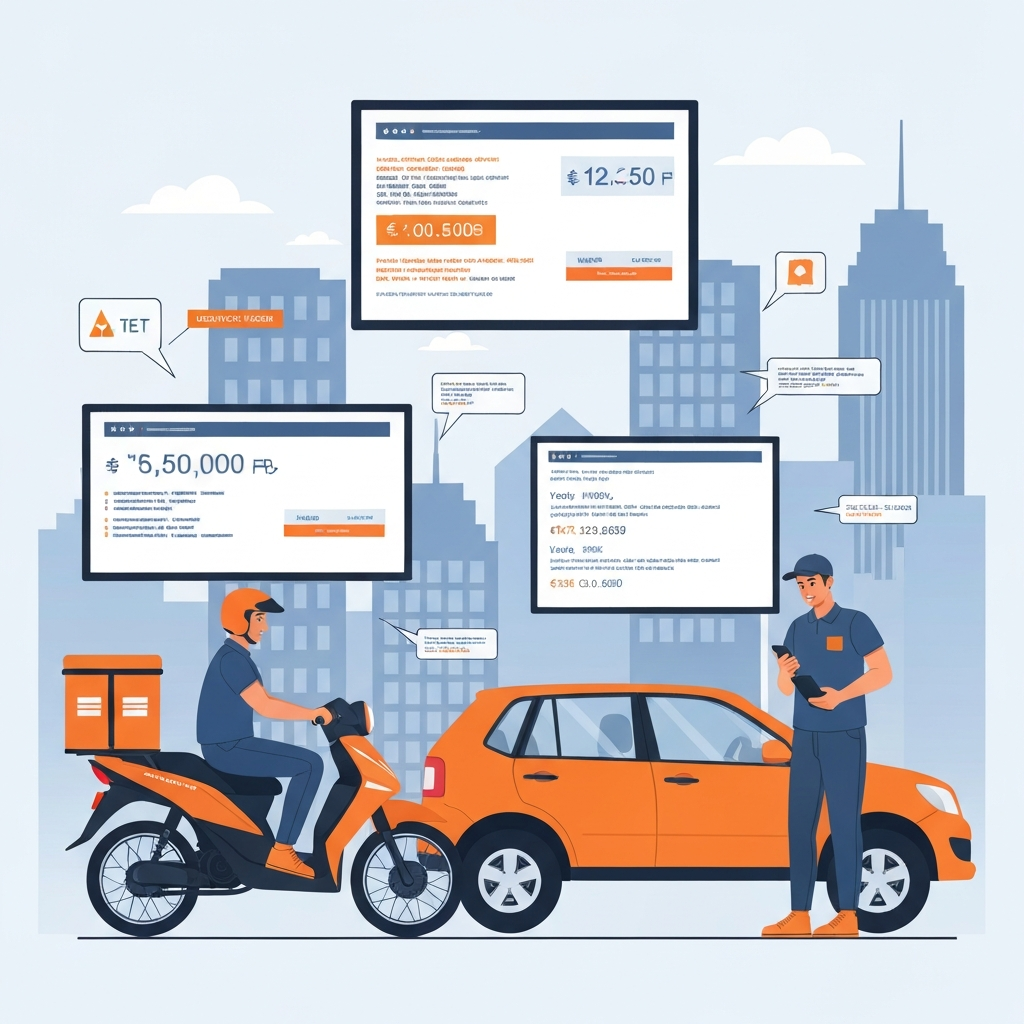
Platform companies' AI systems allocate who gets which jobs, determine pay rates, monitor performance in real time, and effectively terminate workers by deactivating accounts when ratings fall below internal thresholds. These are, unambiguously, the core functions of an employer: assignment, supervision, compensation setting, and dismissal authority. Yet the moment the same company labels its entire workforce "independent contractors," all the obligations that accompany those functions — minimum wage compliance, social insurance contributions, workers' compensation coverage — disappear from the company's legal ledger entirely.
The structural asymmetry here is not an oversight or an edge case. It is the designed architecture of the business model. Platform companies have taken every power of an employer while refusing every responsibility of one, and they've done so by placing an algorithm in the employer's seat and declaring themselves a neutral matching platform. Labor law built over a century of hard-won battles rests on one foundational assumption: an identifiable employer exists and can be held accountable. That assumption has been quietly dismantled in the platform economy, replaced by a system where accountability dissolves into code.
Until the legal definition of "employer" explicitly covers entities that use algorithms to perform employer functions, every other labor protection clause will remain circumventable through the same mechanism. The algorithm is both the instrument of exploitation and the wall behind which accountability permanently hides. I believe this definitional gap is the single most important thing the ILO convention needs to close, and I believe closing it in binding — not merely recommendatory — language is the only version that counts.
Low Pay Is the Symptom — Algorithmic Opacity Is the Disease
Human Rights Watch surveyed 127 gig workers in Texas and found a median effective hourly rate of just $5.12 including tips — nearly 30 percent below the federal minimum wage of $7.25 and approximately 70 percent of the local living wage. A Columbia Business School analysis of 24,532 Uber rides documented the company's commission rate rising from 32 percent in 2022 to 42 percent in 2024, with 82 percent of experienced drivers reporting that their hourly earnings actually declined after dynamic pricing was introduced. The National Employment Law Project found cases where Uber retained more than 60 percent of what the customer paid for a single ride.
These numbers are damning on their face. But they are symptoms of a more foundational problem: workers cannot verify any of these figures in advance because the algorithm that sets their pay is entirely opaque to them. They don't know before accepting a job what it will pay. They don't know why they were passed over for a better assignment. They don't know on what basis their rate was reduced or their account restricted. Researchers have called this "algorithmic price discrimination" — the quiet dismantling of the principle that equal work earns equal pay, conducted invisibly inside proprietary software that no regulator and no worker can inspect.
When exploitation is structurally unmeasurable, it is also structurally unregulatable. Transparency is the prerequisite for every other labor protection to function, not an optional add-on. Without the right to see and challenge algorithmic decisions, any minimum wage provision can be circumvented by adjusting assignment patterns in ways that are invisible until long after the fact. This is why the fight over the algorithmic transparency clause in Geneva is not a side argument — it is the central argument, the provision that everything else depends on.
The ILO Convention's Most Critical Provision Is Under Threat
The ILO's 114th Session in June 2026 represents the first time in the organization's 107-year history that a binding international convention specifically addressing platform labor has been under active negotiation. Representatives from all 187 member states are participating in the second round of deliberations, aiming to establish core labor rights, fair wages, and safe working conditions for the platform economy globally. The ambition of the undertaking is real, and the fact that it has reached this stage at all is significant.
The problem is what is being stripped from the binding text in the process of building consensus. The provisions governing algorithmic control, transparency requirements, and workers' right to challenge automated decisions are at serious risk of being downgraded from binding convention language to the non-binding recommendation annex. Human Rights Watch researcher Lena Simet has issued a direct warning: this is "a core provision that needs to be vigorously defended to keep it in the convention." The International Trade Union Confederation, Privacy International, and a coalition of human rights organizations have aligned behind the same demand.
In my assessment, this downgrade, if it happens, represents a decisive defeat regardless of how the rest of the convention reads. The historical pattern is clear: when powerful interests cannot block a convention entirely, they identify its single most operationally significant provision and make it optional. Everything else can remain in the binding text, and they will press-release the adoption as a win for workers. But a convention that doesn't touch the algorithm — the actual mechanism through which 435 million workers are managed, paid, and terminated — is a convention that has been hollowed out at the point that matters most.
US and Chinese Opposition Follows Corporate Interest, Not Labor Philosophy
The negotiating alignment at Geneva is not a debate between competing philosophies of labor regulation. It is a conflict between the economic interests of countries that host the world's largest platform companies and the interests of the workers those companies employ. The United States, Argentina, and Pakistan are advocating for the least restrictive enforcement mechanisms available. The EU, Brazil, Mexico, and Spain — which has explicitly warned against using "simplification" as cover for deleting fundamental rights provisions — are pushing for robust binding obligations. The International Organisation of Employers, representing companies from 150 countries, has publicly characterized the draft convention as "too long and too prescriptive."
Now consider the geography of platform company headquarters. Uber, DoorDash, DiDi, and Meituan — the four companies that between them account for the largest share of the world's 435 million platform workers — are based in the United States and China. This alignment is not coincidental. Just as the Trump administration withdrew from climate agreements to protect domestic fossil fuel industry interests, the countries most aggressively weakening this convention happen to be the ones with the most to lose financially from strong international enforcement standards.
The consequence is structural and severe. If the United States and China do not ratify the resulting convention, the legal obligations it creates will not apply to the very companies whose practices most urgently require constraining. That outcome isn't a flaw in the design of international labor law — it is the entirely predictable result of allowing national industrial interests to dictate the strength of global labor standards. I believe this dynamic is the single greatest long-term threat to the convention's real-world effectiveness, and any honest analysis must treat it as a central feature rather than a peripheral concern.
Misclassification as Independent Contractors Eliminates Every Safety Net
The practical consequences of "independent contractor" status extend far beyond administrative classification. An ILO global survey found that only 35 percent of platform workers have any form of pension or retirement savings. More than half lack health insurance. More than two-thirds lack workers' compensation coverage. More than four-fifths lack old-age pension entitlements. The Economic Policy Institute has calculated that construction workers misclassified as independent contractors lose up to $19,526 annually, and misclassified truck drivers lose up to $21,532 — the value of benefits and protections they would receive as employees.
These statistics have specific human faces. Abraham, a 74-year-old Uber driver in Beirut, was threatened at knifepoint by two passengers in October 2024, who stole both his car and his phone. Because Uber classifies him as an independent contractor, he had no legal basis to seek compensation from the company. He is now driving his brother's car and says he is afraid every time he gets in the vehicle. HRW's broader research found that one in three platform workers has experienced a work-related traffic accident, and one in five has encountered harassment or dangerous situations on the job — all without the safety net that employment status would provide.
The misclassification problem is not a paperwork error or a legal technicality. It is a mechanism for transferring risk from corporations with enormous legal and financial resources onto individual workers with essentially none. And the costs of that risk transfer don't disappear — they get absorbed by public social insurance systems, emergency medical infrastructure, and family networks, effectively subsidizing platform companies' profit margins through collective resources. The social cost of misclassification is ultimately borne by everyone except the companies that created it.
Positive & Negative Analysis
Positive Aspects
- A Historic First: International Recognition That Platform Labor Deserves Protection
The sheer fact that the ILO is debating a binding convention on platform labor for the first time in 107 years carries genuine normative significance. Until now, platform labor has been governed by a fragmented patchwork of inconsistent national court rulings and administrative interpretations, with no global floor whatsoever. I believe that even an imperfect convention sends an irreversible international signal: platform labor is real labor, and real labor requires real protection. The authority of a 187-member-state ILO convention, once adopted and incorporated into domestic law, can function as a powerful catalyst for national legislation that domestic political dynamics alone would never produce.
It's worth remembering that ILO standards on child labor and forced labor were also imperfect and incomplete when first adopted. Over decades, they became the baseline against which every country's labor law is measured, shaped legal norms, and supported litigation and advocacy in ways their drafters couldn't fully anticipate. A convention that establishes the principle — even weakly at first — that 435 million platform workers are entitled to minimum protections creates a reference point that future negotiations, court cases, and labor organizing campaigns can build upon. Having a reference point that can be strengthened over time is categorically different from having no reference point at all.
- The EU and Mexico Have Already Proven That Strong Protection Is Achievable
Critics of strong platform labor regulation often argue that meaningful protections would destroy the platform economy's business model. The EU's 2024 Platform Work Directive and Mexico's December 2024 legislation have directly falsified this claim with real-world evidence. The EU directive introduced a genuine presumption of employment, shifted the burden of proof onto platform companies to demonstrate that no employment relationship exists, banned algorithmic terminations, and mandated human oversight of automated management decisions. Every EU member state must implement it into national law by December 2, 2026.
Mexico, a developing economy with a large informal sector and significant economic dependencies on the platform industry, classified platform workers as employees and granted them social insurance and collective bargaining rights without dismantling the flexible, on-demand structure of gig work. The argument that strong protection and platform-style flexibility are mutually incompatible is directly contradicted by the Mexican experience. An ILO convention can translate these successful national frameworks into a global minimum standard, ensuring that workers in countries without Mexico's or the EU's political will still have an enforceable baseline — rather than being entirely dependent on the goodwill of the platform companies operating in their country.
- Growing Scale Creates Political Gravity That Eventually Becomes Unstoppable
The World Bank projects platform workers could exceed 1 billion people by 2030. The World Economic Forum suggests gig workers could account for half of all global employment by that same year. The platform economy market is expected to grow from $485 billion in 2025 to $875 billion in 2030, a compound annual growth rate of 11.1 percent, potentially reaching $1.39 trillion by 2035. In the EU, platform workers grew 52 percent in just three years. These growth trajectories represent a constituency that, at sufficient scale, simply cannot be sustained as a political nonentity.
I believe this demographic and economic gravity will eventually force legislative action even in countries that are currently the most resistant to regulation. A workforce of 435 million people can be marginalized in political debate with effort. A workforce approaching 1 billion cannot. As this constituency grows, so does its electoral weight, its union organizing capacity, its ability to coordinate consumer pressure, and its visibility to legislators who need votes. The question is not whether platform workers will eventually gain meaningful legal protections — I believe that outcome is structurally inevitable given the scale. The question is how many years it takes and how much is extracted from workers in the meantime.
- Labor, Human Rights, and Digital Rights Organizations Have Formed a Unified Coalition
One of the most structurally significant developments of this negotiation is the coalition that has assembled around the defense of algorithmic transparency provisions. The International Trade Union Confederation, Human Rights Watch, Privacy International, and an expanding network of platform-based unions including Mexico's UNTA are coordinating advocacy across labor rights, human rights, and digital rights frameworks simultaneously. This cross-domain alliance represents a meaningful development in the politics of gig economy regulation.
I believe this coalition matters beyond its immediate advocacy role in Geneva. When courts and unions operate in jurisdictions where convention ratification has stalled or domestic legislation has failed, this international network provides the institutional infrastructure to enforce accountability from the bottom up — through targeted litigation, collective bargaining campaigns, regulatory complaints, and consumer pressure coordinated across national borders. The fact that labor rights, human rights, and digital rights organizations are jointly fighting for algorithmic transparency also signals a reframing of the gig economy question: it has moved from a narrow wage dispute to a fundamental rights issue involving privacy, dignity, and due process. That reframing makes the argument harder to dismiss and strategically more durable.
Concerns
- If the Algorithmic Transparency Clause Is Downgraded, the Convention Loses Its Core
If algorithmic transparency and workers' right to contest automated decisions are relegated to the non-binding recommendation, the convention is functionally hollowed out at the point that matters most. What remains might look credible in a press release, but it leaves the actual mechanism of exploitation — the algorithm — entirely outside the reach of legal obligation. I recognize this playbook from labor history. When powerful interests cannot block a convention outright, they identify the single provision that would genuinely constrain their behavior and make it optional. Everything else can stay in the binding text. Without the algorithmic transparency provision, workers still have no legal right to know why they were denied a job, why their rate was cut, or why their account was restricted. They have no legally enforceable basis to demand human review of automated decisions. The entire accountability structure the convention was designed to create collapses at its foundation.
Human Rights Watch researcher Lena Simet has explicitly flagged this as the moment to fight hardest. I believe she's right, and I believe the stakes extend beyond this specific negotiation. If the ILO convention — the strongest international labor framework attempted in over a century — cannot maintain algorithmic transparency as a binding obligation in 2026, it will establish a precedent that algorithmic decision-making is not subject to the same transparency requirements as human decision-making. That precedent will be cited in every subsequent regulatory context where platform companies and their allies argue against meaningful algorithmic accountability. The downgrade of a single clause could reverberate far beyond the platform labor context.
- ILO Convention 189's Track Record Is a Cautionary Precedent
The 2011 Domestic Workers Convention — ILO Convention 189 — is the most directly relevant precedent for how this kind of ambitious international agreement tends to play out. A full decade after its adoption, only 35 countries had ratified it, approximately 19 percent of all ILO member states. Academic research examining the convention's impact found that even formal ratification had "no measurable effect" on domestic labor practices in a significant number of countries. Nations tend to ratify ILO conventions selectively, gravitating toward those already broadly consistent with their existing domestic law — which means ratification often confers international legitimacy on practices that would have continued unchanged regardless.
The platform convention faces the same structural problem, compounded by the fact that the economic interests opposing it are incomparably more powerful than those that opposed Convention 189. The Domestic Workers Convention covered a vulnerable, politically invisible workforce in a sector with modest lobbying resources. Platform workers are more organized and more vocal — but the companies opposed to their protection have revenue streams in the tens of billions, sophisticated legal teams, and demonstrated willingness to spend hundreds of millions in single-jurisdiction political campaigns. Convention 189 represents the realistic baseline template: adopted with genuine international optimism, ratified slowly by a minority of states, and substantially disconnected from actual workplace conditions for years or decades in most jurisdictions.
- Platform Companies Have Demonstrated They Can Spend Their Way Out of Legislation
California's Proposition 22 in 2020 provides the clearest and most precisely documented case study for what awaits strong platform labor legislation in every major jurisdiction. Uber, DoorDash, Lyft, Instacart, and Postmates collectively spent more than $205 million — the most expensive ballot measure campaign in California history — to overturn AB-5, the law that would have classified platform drivers as employees. They ran coordinated pro-Prop 22 messaging directly through their own apps to users during active rides, blurring the boundary between corporate political campaigning and customer service communication in ways that had no legal precedent.
This strategy is exportable to any democratic jurisdiction. Every time a legislature advances toward meaningful platform worker protections, a version of the Prop 22 campaign can be deployed — targeting voters with distorted economic impact claims, pressuring legislators through coordinated business lobby coalitions, and using the platforms' own user relationships as distribution channels for political messaging. The financial asymmetry is stark. Uber alone generated $43.9 billion in gross bookings in 2023. Even a small fraction of that revenue vastly outweighs the advocacy budgets of labor unions and human rights organizations in any country where it operates. The result is that even democratically achieved legislative victories are structurally vulnerable to reversal in ways that workers' organizations simply cannot match resource-for-resource.
- US and Chinese Non-Ratification Leaves the Largest Platform Companies Legally Untouchable
Uber, DoorDash, DiDi, and Meituan — the four companies that between them dominate global platform labor — are headquartered in the United States and China. If neither country ratifies the resulting convention, those companies face no binding legal obligations under the framework, regardless of how strong its written provisions appear. The US is already negotiating for the weakest possible enforcement mechanisms. China has shown no appetite for external constraints on its platform industry. Without these two countries inside the framework, the convention covers workers in EU member states, Mexico, and sympathetic developing nations, while leaving the dominant players in the global platform economy entirely outside its reach.
This creates what I consider the most structurally fatal paradox of the entire endeavor: the convention is most urgently needed precisely in the jurisdictions where it will have the least legal force. Platform workers in Spain and Germany may gain enforceable protections. Platform workers employed by US and Chinese companies across Africa, Southeast Asia, South Asia, and Latin America — who collectively constitute the majority of the 435 million — will not. International labor standards historically achieve their broadest transformative impact when the most powerful economies adopt them first and the largest companies face compliance pressure from their home regulators. Here, the most powerful economies are the most resistant, and the largest companies are headquartered precisely where the political will to ratify is lowest. I believe this asymmetry is the convention's most structurally intractable weakness, and no honest assessment of its long-term impact can avoid confronting it directly.
Outlook
## Short-Term Outlook (1–6 Months)
The first verdict arrives in Geneva. The 114th ILC is effectively finalizing the structural architecture of the platform convention between June 1 and 11, 2026, and in this short-term window, I believe the dual structure — a binding Convention paired with a non-binding Recommendation — is likely to survive as a framework. The real fight is over what ends up inside each document. Whether algorithmic transparency and workers' right to contest automated decisions appear in the binding convention text, or get quietly shuffled into the recommendation column, will set the direction of platform labor law for the next five years at minimum.
My base case for this short-term window is what I'd call a "half-win": the convention gets formally adopted, but its most critical transparency provisions end up in the non-binding annex rather than the binding text. The current negotiating dynamics point clearly toward this outcome. The United States, Argentina, and Pakistan are pressing for the weakest possible enforcement mechanisms, and the International Organisation of Employers — representing companies from 150 countries — has publicly complained that the draft is "too long and too prescriptive." On the other side, the EU, Brazil, Mexico, and the International Trade Union Confederation are pushing hard for robust provisions. With that split, the realistic short-term outcome is a diplomatic compromise: strong principles announced in the preamble, weak enforcement in the operative clauses.
There's one important wildcard in this short-term picture, and I think it gets underestimated: the speed and precision of the public reaction. The moment it becomes widely reported that algorithmic transparency has been quietly downgraded to a recommendation, labor unions and digital rights organizations will launch counter-campaigns almost immediately. I expect a very specific, unified demand — "restore algorithmic transparency to the binding text before the final plenary vote" — to become a prominent international talking point within days of that news breaking. Whether that concentrated pressure is enough to flip even a small number of delegations before the final vote is genuinely uncertain, but I wouldn't call it impossible, especially if EU member states hold firm and the coalition coordinating around Human Rights Watch and Privacy International maintains its discipline.
## Mid-Term Outlook (6 Months to 2 Years)
Adoption is only the opening act. ILO conventions carry no legal force until individual countries formally ratify them and transpose them into domestic law. Over the next two years, ratification dynamics will almost certainly polarize sharply, mirroring the split we already see in platform labor regulation more broadly. EU member states will face internal pressure to ratify quickly, propelled by the December 2026 Platform Work Directive implementation deadline. Countries like Mexico, which has already enacted employee classification legislation, are natural early movers with little political cost to ratification.
The EU directive implementation will be the most closely watched test case of the mid-term period. When all member states are legally required to ban algorithmic terminations and mandate human oversight of automated decisions by December 2026, the world will see for the first time, at large scale, whether those requirements can actually be enforced in practice. If EU implementation succeeds and creates measurable improvements in platform workers' conditions, it becomes a powerful demonstration effect for countries still deliberating. If enforcement proves toothless or inconsistent even within the EU's strong regulatory framework, it will hand ammunition to skeptics everywhere who argue that algorithmic regulation is inherently impractical.
Meanwhile, the US and China — home to Uber, DoorDash, DiDi, and Meituan — are likely to delay ratification indefinitely or reject it outright. This matters because regulatory vacuum compounds over time. Uber's commission rate climbed from 32 percent to 42 percent between 2022 and 2024 even as public pressure grew. In a prolonged absence of binding legal constraints, the algorithmic extraction of worker earnings becomes progressively more sophisticated and harder to reverse. I expect some platforms to breach the 50 percent take-rate threshold on specific route categories within the next two years in markets without strong regulation — and once that level becomes normalized, the political effort required to push it back down increases substantially.
A second important mid-term variable is worker organizing capacity. Platform-based unions like Mexico's UNTA, founded in 2020 and already influential in its domestic context, are beginning to spread their model to other developing economies. EU algorithmic transparency requirements will generate litigation as workers and unions use the new legal framework to challenge specific algorithmic decisions in court. I expect the next two years to produce a pattern where courts and unions accomplish through enforcement pressure what regulation alone hasn't yet managed — establishing real accountability for algorithmic management decisions, case by case, jurisdiction by jurisdiction.
## Long-Term Outlook (2 to 5 Years)
Let's start with the number that changes everything structurally: one billion. The World Bank projects that platform workers could exceed 1 billion by 2030. The World Economic Forum suggests the gig economy could represent half of all global employment. The platform economy market is projected to grow from $485 billion in 2025 to $875 billion in 2030 at a compound annual growth rate of 11.1 percent, potentially reaching $1.39 trillion by 2035. My core long-term argument is straightforward: you can politically ignore 435 million gig workers, but you cannot politically ignore 1 billion of them. That constituency, at sufficient scale, generates enough electoral weight, union organizing capacity, and consumer leverage to move legislative bodies that are currently unmovable.
But scale doesn't automatically translate into rights, and the long-term picture forks into three distinct scenarios. In the bull scenario, the EU's platform work directive and Mexico's employee classification legislation become the effective global template. Countries that initially hesitated ratify the ILO convention as domestic political pressure builds with workforce growth. The weak clauses of the ILO framework get strengthened through national legislation, and algorithmic transparency gradually becomes recognized as a foundational labor right. Within five years, the employment presumption principle has become common sense in the majority of jurisdictions accounting for most platform work volume, and platforms are legally required to explain algorithmic decisions that affect workers' livelihoods.
In the base scenario — which I consider most probable — a Rajasthan-style compromise becomes the international template. Just as India's state of Rajasthan introduced a welfare levy of 1 to 2 percent per transaction in 2023, many countries settle for creating welfare funds without touching the underlying employment classification structure. Social insurance coverage rates inch upward. The fundamental architecture — algorithm acting as employer, corporation evading employer obligations — remains intact. This compromise is politically easy to achieve. A small per-transaction levy is something even major platforms can absorb as a cost of doing business, and it provides governments a headline win without requiring a direct confrontation with powerful tech industry lobbying operations. But this approach leaves workers as beneficiaries of a welfare fund rather than citizens with rights, and it sidesteps the central question rather than answering it.
In the bear scenario, this convention follows the path traced by Convention 189. Adopted with optimism, celebrated in press conferences, and then quietly left to gather dust as ratification stalls at a fraction of member states. With the United States and China outside the convention's legal framework, the world's largest platform companies face no binding obligations. The $205 million Prop 22 playbook gets replicated in jurisdiction after jurisdiction — every time a legislature comes close to meaningful platform worker protections, a well-funded campaign emerges to soften, delay, or reverse the legislation. The current baseline — only 35 percent of platform workers with any pension coverage, more than half lacking health insurance, more than two-thirds without workers' compensation — carries forward five years virtually unchanged, while algorithmic systems for extracting labor value grow more refined and harder to detect.
My actual expectation is that none of these three scenarios plays out uniformly across the globe. The most likely outcome is a fragmented future, with bull-adjacent protections taking hold in the EU and parts of Latin America, while the US and most of Asia remain in base-to-bear territory. The same Uber driver experiences radically different rights depending on whether they work in Madrid or Houston, Lagos or Mexico City. Algorithms cross borders instantly and operate identically everywhere; labor rights remain stubbornly imprisoned within national boundaries. That specific contradiction — and the ongoing effort to bridge it — will define platform labor governance throughout the late 2020s and into the 2030s.
## Cascading Effects and Recommendations
This issue does not stay neatly inside the category of labor policy. Once we legally accept the premise that an algorithm can perform all the functions of an employer without bearing any employer responsibilities, that logic migrates. It will spread to hiring decisions, credit scoring, insurance underwriting, housing applications, and every other domain where algorithmic systems are replacing human decision-makers. We already live in a world where recruitment algorithms screen résumés before any human sees them, and credit algorithms deny loans without providing meaningful explanations. If we fail to establish legal accountability for algorithmic management in the labor context, we lose the opportunity to set the precedent that will govern every other domain of algorithmic decision-making that follows.
My recommendation is straightforward, and I'd make it to every stakeholder involved in this negotiation. Before debating wage tables or arguing about the length of convention text, concentrate every available political resource on defending a single sentence: "A company that uses algorithms to perform employer functions is an employer." Make that sentence legally binding. Every other labor protection — minimum wages, social insurance contributions, injury compensation — only becomes enforceable once there is a clearly identified party to enforce it against. Governments should adopt the EU employment presumption principle as the non-negotiable floor, not the aspirational ceiling. Labor organizations should concentrate their advocacy firepower on algorithmic transparency rather than spreading thin across dozens of secondary provisions.
For the rest of us — consumers, voters, everyday users of gig economy apps — the sense of helplessness is at least partially an illusion. Every time you choose a platform with transparent driver policies over one that doesn't explain its practices, every time you ask your elected representative where they stand on convention ratification, you are exercising a form of meaningful pressure. The order you place tonight is, in a small but real sense, a vote for which labor model gets to define the economy of the next decade. The ILO is fighting right now over whether a single word — "binding" — survives intact in an international treaty. That word determines whether 435 million people have legal recourse or just a piece of paper. And I believe this is the most consequential AI governance decision of our current moment, even if most people will never read a sentence about the negotiations taking place in Geneva.
Sources / References
- World Bank estimates 435 million online gig workers globally — Staffing Industry Analysts / World Bank "Working Without Borders" report: 154 million to 435 million online platform workers worldwide, representing 4.4 to 12.5 percent of the global workforce
- ILO closes in on global ground rules for gig economy — Geneva Solutions: country-by-country negotiating positions, risk of algorithmic transparency demotion to non-binding recommendation, $10.2 trillion market valuation
- Algorithms of Exploitation — Human Rights Watch 2026: Abraham's story (74-year-old Beirut Uber driver attacked at knifepoint with no legal recourse), EU platform workers growing from 28 million to 43 million (52 percent increase)
- The Gig Trap — Human Rights Watch Report: Texas survey of 127 workers, $5.12 median effective hourly rate including tips, 30 percent below federal minimum wage of $7.25
- Uber algorithm exploitation — Cybernews / Columbia Business School: analysis of 24,532 Uber rides, commission rate 32 percent (2022) to 42 percent (2024), algorithmic price discrimination findings
- 114th Session ILC — Decent work in the platform economy — ILO Official: 114th ILC binding Convention plus Recommendation, second-round deliberations, 187 member states participating
- EU Platform Work Directive confirmed — European Council: employment presumption principle, algorithmic transparency and termination ban, December 2026 national implementation deadline
- Misclassifying workers is costly — Economic Policy Institute: annual loss of $19,526 for misclassified construction workers, $21,532 for truck drivers, plus social insurance system costs
- California Proposition 22 — Wikipedia: platform companies spent $205 million in lobbying campaign, most expensive ballot initiative in California history, overturning AB-5 worker classification law
- Platform workers and social protection — International Social Security Association / ILO global survey: only 35 percent of platform workers have pension coverage, majority lack health insurance, workers' compensation, and old-age pension entitlements