
$100 Million Per Episode: HBO's Harry Potter Remake Is the Most Expensive Gamble in TV History
Summary
HBO's Harry Potter remake at $100M per episode splits the fandom in half — the peak of nostalgia business meets creative bankruptcy.
Key Points
$100M Per Episode — An Unprecedented Production Budget in TV History
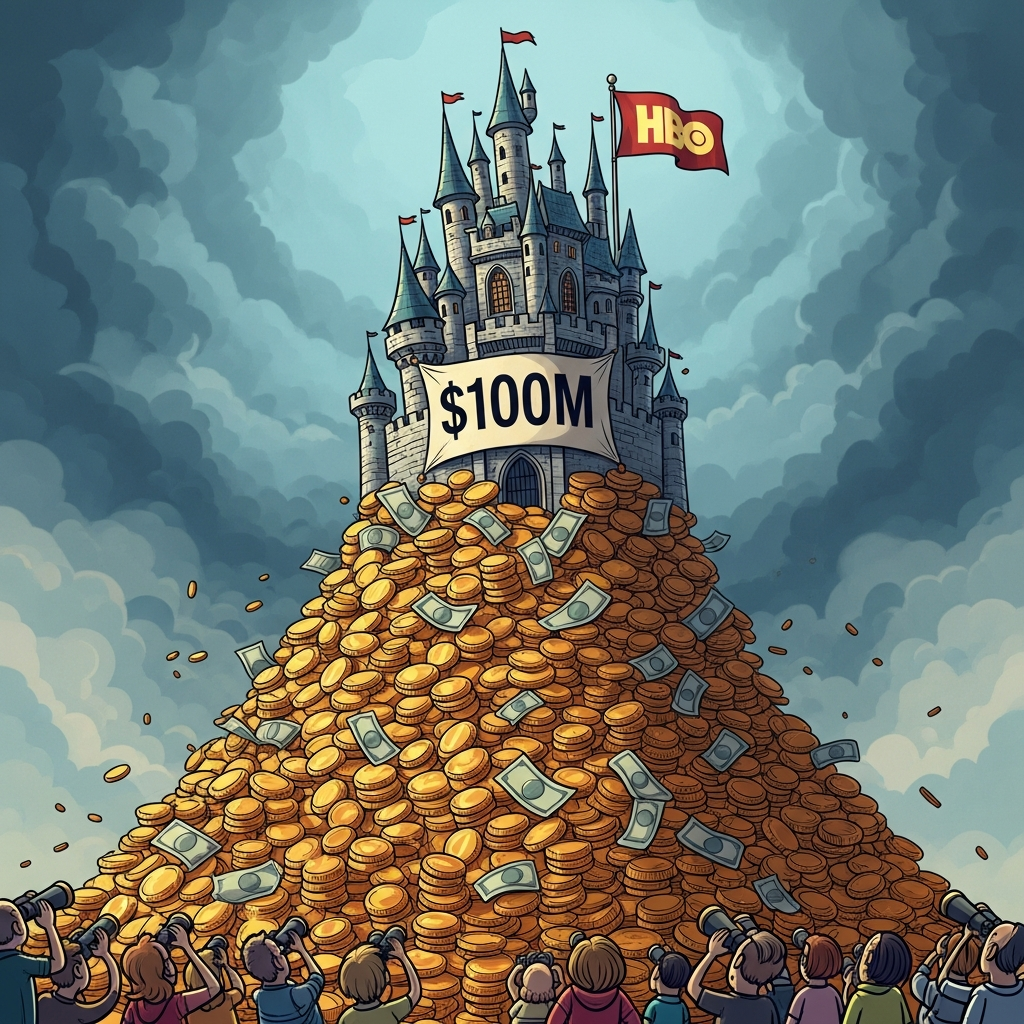
HBO's Harry Potter remake is reportedly costing $100 million per episode, nearly double Amazon's Rings of Power ($58M) and five times HBO's own House of the Dragon ($20M). If all seven seasons and 56 episodes are produced, total investment could reach $5.6 billion, plus a $1.25 billion purpose-built production facility in the UK. While HBO has officially disputed the $100M figure, the scale of infrastructure investment tells its own story. The original eight Harry Potter films cost $1.2 billion total to produce — the remake's single season could cost two-thirds of that. With Hans Zimmer composing the score, the ambition of this project is undeniable.
277M Trailer Views vs. Fandom Split — Explosive Interest, Zero Consensus
The first trailer, released March 26, 2026, garnered 277 million organic views in 48 hours — the most-watched trailer in HBO history by a factor of two. But the 174K likes versus 67K dislikes ratio reveals a deeply divided fandom. Some fans wept with joy while others labeled the series 'depressing' and 'millennial slop' for replacing the original films' warm orange tones with cold grey-blue grading. The casting of Paapa Essiedu as Snape has drawn racial controversy, and J.K. Rowling's role as executive producer has sparked boycott movements.
WBD's Survival Strategy Meets Paramount Merger Uncertainty
Warner Bros Discovery agreed to be acquired by Paramount Skydance for $110 billion in February 2026, even as the Harry Potter remake pushes forward. This positions the series as more than content — it's a corporate value proposition. HBO Max holds 132 million subscribers targeting 150 million by year-end, with the UK market launch strategically timed to coincide with the trailer drop. However, post-merger management may not honor the $5.6 billion budget commitment. Global ARPU has fallen to $6.64, down 16% quarter-over-quarter.
Symbol of IP Exhaustion — Original Content in Crisis
Only one original film — Ryan Coogler's Sinners — made the 2025 US box office top 10. Parrot Analytics data shows Hollywood's original content ratio is in steady decline. The Harry Potter remake represents the apex of this trend: maximum money poured into maximum-familiarity IP. Netflix is remaking Narnia with Greta Gerwig, Disney is doing live-action Moana — every studio is running the same playbook. The $100M per episode benchmark accelerates the content industry's arms race and further squeezes out space for original storytelling.
Casting Controversy and a Decade-Long Culture War
Snape actor Paapa Essiedu has publicly revealed receiving death threats including 'Quit or I'll murder you.' The backlash stems from casting a Black actor in a role described as pale-skinned in the original books. Dumbledore actor John Lithgow admitted he considered quitting due to intense public backlash. HBO has increased security, but social media toxicity remains beyond institutional control. With Essiedu signed to a 10-year contract spanning all seven seasons, every new casting announcement risks reigniting cultural warfare.
Positive & Negative Analysis
Positive Aspects
- TV Format Unlocks the Books' Full Depth
The original films' 2-hour runtime forced the cutting of characters like Peeves, Winky, and Charlie Weasley, along with countless subplots. A TV series with 8 episodes per season finally has the breathing room to do justice to the rich narrative tapestry, especially for the later, more expansive entries like Order of the Phoenix and Deathly Hallows. This could finally deliver the 'complete edition' fans have wanted for two decades.
- Generational Gateway to the Wizarding World
Gen Z and Gen Alpha audiences who never experienced the original films now have a contemporary entry point into the franchise. The 277 million trailer views prove the wizarding world's cultural relevance remains formidable. The series creates a cross-generational viewing experience where parents can share the wizarding world with their children in real time.
- Key Driver for HBO Max European Expansion
HBO Max launched in the UK, Germany, and Italy in early 2026, and Harry Potter serves as the undeniable flagship content. The strategic timing of the UK launch on March 26 — the same day as the trailer drop — was calculated to maximize subscriber acquisition in the franchise's cultural homeland. For the target of 150 million subscribers by year-end, Harry Potter offers differentiation no competitor can match.
- Permanent UK Film Industry Infrastructure
The $1.25 billion production facility being constructed in the UK will remain as permanent film industry infrastructure long after the series concludes. With talent like Hans Zimmer and world-class production teams, this project raises the quality bar for premium TV production worldwide. Thousands of direct jobs and filming location tourism revenue are additional benefits.
- Platform Engagement Ecosystem — The Wizarding World Hub
Bundling the new series with all 8 original films and the Fantastic Beasts franchise creates a comprehensive Wizarding World Hub that dramatically increases platform engagement time. Disney+ proved this ecosystem model works with Marvel and Star Wars. The trailer alone pushed 20-year-old films back into the streaming top 10, validating this approach.
Concerns
- Structural Difficulty in Cost Recovery
Season 1 alone could cost $800 million at $100M per episode. HBO Max's global ARPU has dropped to $6.64 — roughly half of Netflix's approximately $12 — and fell 16% quarter-over-quarter. Netflix's Squid Game cost about $200 million per season; an $800 million TV season exists in territory where no existing streaming business model computes.
- Persistent J.K. Rowling Boycott Risk
Rowling's controversial comments on transgender issues have made her a cultural lightning rod. Her role as executive producer creates an unavoidable association between watching the series and financially supporting her platform. Multiple original film stars have publicly distanced themselves from her statements, signaling a generational divide.
- Accelerating the IP Surplus Feedback Loop
If Harry Potter succeeds, every studio rushes to announce mega-budget franchise remakes. If it fails, defeatism spreads. Either outcome squeezes original storytelling further to the margins. The $100 million per episode benchmark creates a dangerous new tier in the content arms race.
- Paramount Merger Creates Existential Uncertainty
The $110 billion Paramount Skydance acquisition, expected to close after September 2026, means an entirely new management team will inherit the project. Post-merger cost-cutting is virtually inevitable, and a $5.6 billion long-term content commitment is a prime target for new executives.
- Realistic Doubt About Completing Seven Seasons
There is virtually no precedent for a high-budget TV series maintaining quality across 7+ seasons. Game of Thrones managed 8 seasons but suffered severe quality decline in its final season. Amazon's Rings of Power saw sharp viewership drops by Season 2. Harry Potter faces similar 'magic fatigue' risk by Seasons 5-6.
- Chronic Casting Controversy Over a Decade
Paapa Essiedu's revelation of receiving death threats exposes how emotionally volatile this franchise territory has become. Over a 10-year, 7-season run, every new character introduction risks reigniting cultural warfare across social media platforms. The psychological toll on cast members is significant.
Outlook
In the immediate months ahead, marketing will ramp up significantly toward the Christmas 2026 premiere. The first trailer hit 277 million views in 48 hours, so full trailers and character spotlights could push total promotional views past 500 million. But the critical metric isn't views — it's subscription conversion. Watching a trailer on YouTube doesn't translate to an HBO Max signup. The key question is how many net new subscribers will sign up specifically for Harry Potter.
The casting controversy will intensify rather than subside before the premiere. Paapa Essiedu's portrayal of Snape polarized fans after the trailer, and every subsequent promotional clip will reignite the debate. HBO has announced enhanced security measures for the cast, but toxic discourse on social media exists beyond anyone's control. The original films' streaming resurgence is a genuine short-term win for HBO Max. The fact that 20-year-old movies returned to streaming top 10 charts just from a trailer suggests that the platform's overall engagement time could spike significantly once the series actually airs.
Looking at the medium term, Season 1's report card after it concludes in early 2027 will determine the project's fate. The most critical variable is the WBD-Paramount Skydance merger. With the $110 billion acquisition expected to close after September 30, 2026, a new management team will inherit the Harry Potter project before Season 1 even finishes airing. Corporate acquisitions almost invariably trigger cost-cutting, and a $100 million per episode cost structure could be the very first target. The creative team will be producing Season 2 content under the specter of corporate restructuring.
On the subscriber front, if Season 1 performs well, HBO Max could reach 160-170 million subscribers by mid-2027. But the ARPU problem persists ��� with global average ARPU at $6.64, down 16% quarter-over-quarter, even 170 million subscribers may not guarantee profitability for a show this expensive. Compare this to Netflix's approximately $12 ARPU, and HBO Max sits at roughly half.
Season 2 onward will see fierce budget negotiations. Once Season 1's viewing data is in, HBO or its new parent company will push to reduce per-episode costs to the $60-80 million range, inevitably leading to scaled-back visual effects and production scope. This might be manageable for earlier, smaller-scale books like Chamber of Secrets or Prisoner of Azkaban. But as the story progresses to Goblet of Fire's Triwizard Tournament and the sprawling war sequences of Deathly Hallows, budget cuts will show on screen.
Looking 3-5 years out, whether this series can actually complete all seven seasons is genuinely uncertain. There's virtually no precedent for a high-budget TV series maintaining quality across 7+ seasons. Game of Thrones managed 8 seasons but suffered severe quality decline in its final season. Amazon's Rings of Power saw viewership drop sharply by Season 2. Harry Potter faces a similar risk of 'magic fatigue' by Seasons 5-6, compounded by likely budget reductions.
The more fundamental question is what this project means for the content industry's future direction. When $5.6 billion gets allocated to recycling existing IP, that's $5.6 billion not being spent on new stories. Studios are using the logic of 'why take risks when we have proven IP?' to slash investment in new writers and new worlds.
Scenario analysis: The bull case (20% probability) sees Season 1 succeeding with both critics and audiences, HBO Max breaking through 180 million subscribers by end of 2027. The base case (50% probability) sees middling results with Season 2 budgets cut 30-40% and the series reduced to 4-5 seasons. The bear case (30% probability) sees the Rowling boycott and casting controversies eating into viewership, with post-merger management canceling after Season 2 or 3.
One prediction I'm confident about: the Harry Potter remake will come to symbolize 'peak IP' in the content industry. Just as the most overvalued companies received the biggest investments at the peak of the 2000 dot-com bubble, $100 million per episode represents both the apex and the turning point of IP-dependent strategy. For investors, watch the Season 1 scorecard in Q1 2027 closely. Net new subscribers below 5 million signals failure; above 10 million signals success.
Sources / References
- Harry Potter's Snape Actor Paapa Essiedu Reveals Death Threats — Variety
- Harry Potter Trailer Breaks HBO All-Time Record With 277M Views — Deadline
- Original Harry Potter Films Surge on Streaming After Reboot Trailer — Collider
- HBO Max Hits 132 Million Subscribers in WBD Earnings Report — Variety
- The Decline of Originality in Hollywood: A Look at the Numbers — Parrot Analytics
- Hollywood's Box Office Problem: The Limits of the Sequel Strategy — CNBC
- Harry Potter Fans React to HBO Trailer: 'I've Cried Three Times' — The Hollywood Reporter
- Harry Potter Trailer Hits 277M Views in 48 Hours — HBO's Biggest Ever — TheWrap
- Hans Zimmer Confirmed to Score HBO's Harry Potter Series — Variety
- John Lithgow Considered Quitting Harry Potter Over J.K. Rowling Backlash — Variety
- HBO Max Launches in UK and Ireland — The Hollywood Reporter
- Harry Potter TV Series Building $1.25 Billion Mini-City for Production — Collider
- Ryan Coogler's Sinners Debuts at No. 1 With $48M Opening Weekend — Variety
- Warner Bros Discovery and Paramount Skydance Announce Acquisition Deal — CNBC
- HBO Harry Potter Series Trailer Shatters Game of Thrones Record — Collider