
South Africa's Empty Venice Pavilion Just Became the Biennale's Most Talked-About "Exhibit" — Minister, That Wasn't Really the Plan, Right?
Summary
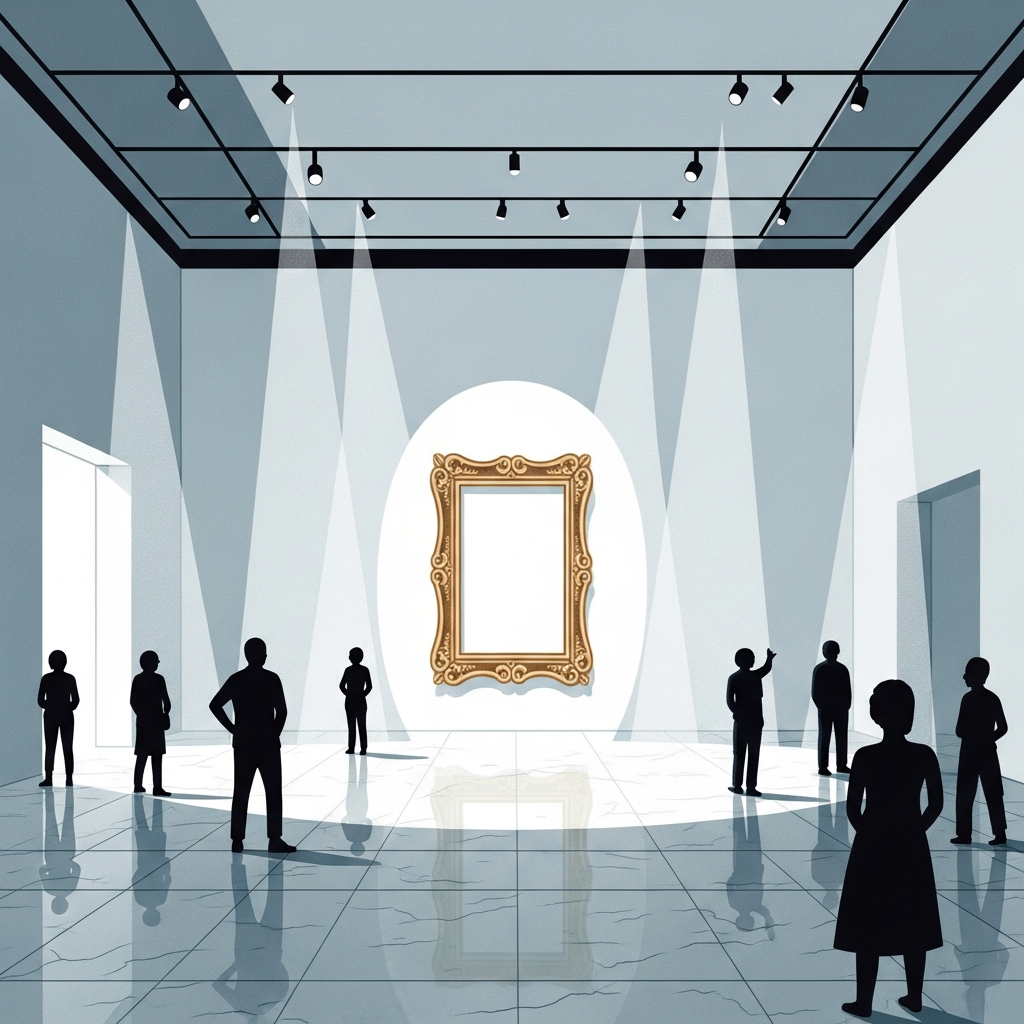
At the 2026 Venice Biennale, South Africa's national pavilion stands completely empty — a vacancy created when Sports, Arts and Culture Minister Gayton McKenzie canceled multimedia artist Gabrielle Goliath's acclaimed decade-long project "Elegy," objecting specifically to a section memorializing civilian women and children killed in Gaza. The cancellation was delivered unilaterally just eight days before the national submission deadline, directly overriding the unanimous recommendation of South Africa's independent curatorial selection committee, triggering immediate international outrage. Goliath and curator Ingrid Masondo challenged the decision in court, but the North Gauteng High Court dismissed their emergency injunction in February 2026, offering almost no substantive legal reasoning while ordering Goliath to pay the government's legal costs. What followed defied all expectations: the international art world rapidly rallied around Goliath, funding a complete alternative exhibition at Venice's historic Sant'Antonin Church that attracted far more global media attention and public interest than any conventional pavilion appearance could have generated. This episode exposes fundamental structural weaknesses in South African cultural governance, illustrates the enduring paradox of censorship amplifying the very voices it seeks to silence, and raises urgent questions about the relationship between democratic governance and artistic freedom that reach well beyond any single nation's borders.
Key Points
A Single Minister's Letter Overrode an Independent Committee's Unanimous Judgment
Gabrielle Goliath was selected to represent South Africa at Venice through a rigorous, professional process: an independent curatorial panel evaluated candidates on artistic merit and international significance, reached a unanimous decision, and formally nominated her for the country's 2026 submission. That process existed precisely to ensure that South Africa's international artistic representation was determined by artistic judgment rather than political convenience. When Minister Gayton McKenzie sent his letter in December 2025 demanding removal of the Gaza commemorative section and, upon Goliath's refusal, canceling the entire project unilaterally, he effectively declared that the independent committee's professional judgment was subordinate to a single politician's preference. This is not merely a procedural irregularity — it strikes at the foundational purpose of having an independent selection system at all. If a minister can override a unanimous expert panel by letter, the existence of that panel becomes a procedural fiction rather than a meaningful structural protection.
The precedent this sets extends far beyond Goliath's specific case. Every South African artist who aspires to international representation now operates with the knowledge that curatorial independence has no practical binding authority over ministerial preference. The incentive structure this creates is deeply corrosive: artists learn, without anyone needing to say so explicitly, that work likely to attract ministerial attention carries professional risk. The selection process may continue to exist on paper while functioning very differently in practice — as institutions and candidates internalize the new reality and self-select accordingly. This invisible shift is significantly more difficult to document, challenge, or reverse than an explicit prohibition, and may prove to be the most lasting damage this incident causes to South African cultural life.
South Africa's Constitutional Artistic Freedom Was Effectively Sidelined by the Courts
South Africa's 1996 constitution includes one of the most explicit protections for artistic freedom of any national charter. Section 16 names artistic creativity, academic freedom, and press freedom as protected expressions, and these protections were written specifically as a repudiation of apartheid-era censorship — a deliberate commitment that the new republic would be a categorically different kind of state. When Goliath and Masondo filed their emergency interdict, they were asking the courts to enforce that constitutional commitment in a concrete case. The North Gauteng High Court's response — a dismissal in two sentences, with no substantive engagement with the constitutional questions at stake, accompanied by a costs order against Goliath — was not simply a procedural outcome. It was a signal that the courts were not prepared to provide meaningful protection to artistic expression when the government's position was on the other side.
Legal experts who observed the proceedings noted that the court appeared to sidestep the constitutional analysis entirely, treating this as an administrative rather than a rights-based dispute. This creates a troubling gap in the practical application of Section 16: the protection exists on paper but was not available to Goliath when she actually needed it. The costs order added a further dimension, effectively penalizing the artist for attempting to exercise constitutional rights — a signal with strong deterrent effects for any future artist who might consider challenging state intervention. The combination of ministerial override and judicial deference reveals not a single bad actor but a system in which multiple layers of supposed protection failed simultaneously. That systemic failure is more difficult to remedy than a single decision.
The Empty Pavilion Paradoxically Became the Most Powerful Political Statement at the Biennale
There is a particular irony worth sitting with. The minister's goal was to prevent a work of art from being seen. The result of his intervention is that Goliath's work — and the story behind it — reached an audience many times larger than a conventional national pavilion exhibition would ever have generated. The Art Newspaper, Artforum, Artnet, and Hyperallergic all ran substantial coverage. International art media ran follow-up analyses for weeks. Photographs of the empty pavilion circulated widely on social media, with visitors posting images of the bare walls as a form of silent protest. The Sant'Antonin Church alternative exhibition drew visitors specifically because of the controversy, operating with an intensity of attention that few officially selected artists ever experience. This outcome exemplifies what has come to be called the Streisand Effect — the documented phenomenon in which attempts to suppress information or creative work generate far more exposure for the suppressed material than it would have received without intervention.
This dynamic is not historically new. Salman Rushdie's "The Satanic Verses" sold in numbers it would never have reached without the fatwa. Ai Weiwei's international profile rose dramatically after the Chinese government demolished his studio and detained him. The pattern is consistent across decades and across very different political contexts: censorship, particularly when it generates media attention, tends to amplify the censored work. What is distinctive about the South Africa case is that the amplification occurred through institutional channels — major arts publications, gallery networks, and arts foundations — rather than solely through grassroots social media. The quality and depth of the resulting coverage meant that Goliath's work was introduced to a global audience with substantial analytical context, not simply as a controversy but as a serious body of artistic achievement worth understanding on its own terms. The minister inadvertently secured the most influential possible platform for exactly the work he was attempting to suppress.
Demanding the Removal of Mourning Is Not Neutrality — It Is a Political Choice
McKenzie's official justification for the cancellation centered on the concept of neutrality: the Gaza section concerned "an international conflict that divides the world," and he implied that removing it would keep South Africa's representation politically balanced. This framing has a superficial plausibility — it presents exclusion as a neutral act rather than a taking of sides. But the logic collapses under even basic examination. "Elegy" was not arguing for a political position in the Gaza conflict. It was commemorating specific individuals who died — including Hiba Abu Nada, a Palestinian poet and novelist killed in an Israeli airstrike in October 2023 — and civilian women and children more broadly. The decision to classify the mourning of civilian war dead as a politically partisan act is itself a political decision, not a neutral administrative judgment. Grief for individual human lives is not inherently a position in an interstate conflict.
The claim of neutrality becomes even harder to sustain when McKenzie's documented personal position is considered. He leads the Patriotic Alliance, and has publicly stated that his Bible "commands him to stand with Israel." The minister who defined the mourning of Palestinian civilian deaths as "divisive" had himself articulated an explicit partisan position on the underlying conflict — making the neutrality framing not merely logically weak but openly contradictory. There is a broader principle here that this case makes unusually visible: silence is never neutral. The decision about whose experiences are permitted to appear in public cultural spaces, and whose are excluded, is always a political act, regardless of how it is framed. Choosing not to mourn certain deaths while permitting others to appear is a statement of relative value about those lives. McKenzie's intervention, presented as an abstention from politics, was in fact a specific political assertion made through the mechanism of erasure.
The Structural Damage to African Contemporary Art May Far Outlast This Incident
South Africa has occupied a unique position in the African contemporary art ecosystem — functioning as the continent's primary institutional gateway for international engagement. The Johannesburg Art Fair and Cape Town Art Fair are Africa's largest regular international art events, and international galleries, collectors, and institutions have typically used South Africa's developed infrastructure as their initial entry point for African contemporary art broadly. The African contemporary art market reached an estimated $800 million in 2023, sustained by annual growth rates of 15 to 20 percent over multiple years — growth built on the accumulated credibility of South African institutions. When the government sends a signal that political considerations can override curatorial independence, it directly undermines the trust that underpins that credibility. International galleries making acquisition and partnership decisions will incorporate the new risk: South African-based artists or institutions may be subject to government intervention that disrupts exhibitions, partnerships, or market activities. That calculation does not need to materialize into many actual cancellations to exert a chilling effect on the pace and volume of international engagement.
The consequences extend beyond South Africa to the continent as a whole. Because South Africa has served as Africa's art market hub, a reduction in its institutional credibility slows the development of the entire regional ecosystem. Emerging art scenes in Nigeria, Kenya, Senegal, and Ghana have benefited indirectly from the infrastructure, collector networks, and market development that South Africa anchored. The acceleration of Lagos and Accra as alternative hubs may ultimately prove healthy for the diversity of African contemporary art — but the transition period, during which South Africa's institutional role contracts before alternative centers mature fully, represents a window of elevated vulnerability for artists across the continent. The structural damage from this incident, in other words, will likely not be contained within South Africa's borders or within the 2026 calendar year.
Positive & Negative Analysis
Positive Aspects
- The Streisand Effect Gave Goliath's Work Unprecedented International Visibility
Before McKenzie's letter, Gabrielle Goliath was a respected and established figure in South African contemporary art, with meaningful critical recognition within the professional field — but her international profile outside the specialist art world was relatively limited. The censorship controversy changed that completely and rapidly. Every major international art publication ran substantive coverage of the empty pavilion story, with Goliath's name, work, and decade-long practice introduced to global audiences through articles that provided genuine artistic context rather than treating her simply as a political symbol. The Sant'Antonin Church alternative exhibition attracted visitors specifically motivated by the story of what the South African government had tried to prevent — a form of audience composition that tends to generate unusually engaged, informed viewership. The Ai Weiwei comparison is apt and worth taking seriously as a precedent: following the Chinese government's repression of his work beginning in 2010, Weiwei's auction market prices rose by a factor of five to ten and his international institutional standing increased rather than diminished. The parallel trajectory for Goliath — October 2026 in London, likely followed by additional institutional invitations — suggests a career trajectory that, through a painful and unjust mechanism, has been substantially elevated by the act of suppression itself. The London exhibition at Ibraaz Gallery positions her work at the center of a major European art market audience precisely when the story's second chapter is most alive in public conversation, maximizing the impact of that platform.
- International Art Solidarity Proved That Meaningful Exhibition Can Operate Outside State Permission
The speed and depth with which the international art community mobilized around Goliath is one of the genuinely heartening dimensions of this story. From exhibition space provision at Sant'Antonin Church to operational funding, from institutional endorsements to critical publishing coverage, galleries, arts foundations, and individual practitioners around the world moved quickly and without fanfare to make the alternative exhibition a reality. This was not a symbolic gesture but a substantive act of professional solidarity that produced a functioning international exhibition within months of the cancellation. The result demonstrated something important: meaningful international cultural exchange does not, in fact, require the approval of a national government. The infrastructure exists, the professional networks exist, and the will to use them in service of suppressed work exists. This proof of concept matters considerably for artists in other contexts — including artists in countries with far more systematic cultural repression than South Africa — who face similar pressures. The Goliath case establishes a recent, well-documented model for how the international arts community can respond when state censorship attempts to remove a work from view. That model will be referenced in future cases, and its demonstrated success makes it more likely to be attempted again and more likely to succeed. The alternative pavilion also catalyzed broader conversation about whether the entire national pavilion system remains the most meaningful framework for international art exchange — a structural question the Biennale has been circling for years.
- The Incident Has Catalyzed Substantive Debate on Artistic Freedom and Legal Protection
This case has generated more than moral indignation — it has produced intellectual engagement with structural questions that matter for the long-term governance of artistic freedom. In South Africa's legal academy, scholars have begun examining the specific gap in Section 16 jurisprudence that the court's decision exposed: when state-funded cultural institutions are involved in selecting and presenting artistic work internationally, what is the precise scope of constitutional protection? That question did not have a clear answer before this case, and the court's failure to address it substantively has increased rather than resolved the uncertainty. Internationally, the case has renewed discussion about the efficacy of UNESCO's Convention on the Protection and Promotion of the Diversity of Cultural Expressions, which theoretically provides framework protection for artistic diversity but lacks enforcement mechanisms against state action. Arts advocacy organizations have used the incident as a concrete reference point in campaigns for formal protections for independent curatorial authority — a governance reform with implications well beyond South Africa. If this advocacy produces legislative or constitutional change anywhere, the Goliath case will be the catalyst, and the reform will extend protections to artists who never heard of the 2026 Venice Biennale. That kind of institutional legacy, slow to materialize but durable once established, represents a real potential positive outcome from a genuinely unjust set of events.
- The Incident Awakened Democratic Consciousness Among South Africa's Post-Apartheid Generation
A significant majority of South Africa's current population was born after the end of apartheid in 1994. For this generation, the constitutional protections established in 1996 have been the background conditions of life — present, assumed, and largely unexamined. The empty pavilion controversy has functioned as a civic education moment for many in this demographic, making visible that rights guaranteed on paper can be practically defeated through administrative action and judicial indifference. South African social media has carried active, substantive debate about the appropriate limits of ministerial authority over cultural institutions, the meaning of Section 16 in practice, and the historical parallels to apartheid-era censorship that older South Africans have drawn. The generation that did not live through apartheid is now engaging, in real time, with the question of how democratic protections actually work and what conditions allow them to erode. That is a form of civic learning with long-term value. A democracy is only as robust as the awareness of its citizens about the conditions required to maintain it, and the Goliath case has contributed concretely to that awareness in a generation that will shape South African governance for the next several decades. The fact that art was the mechanism through which this political education occurred is itself a demonstration of art's social function operating exactly as its most serious defenders claim it does.
Concerns
- Self-Censorship Will Quietly Spread Through South Africa's Arts Community
The most durable damage from this incident is unlikely to appear in any official document or policy statement. Now that it has been publicly demonstrated that a minister can cancel a nationally selected artist's work for politically inconvenient content — and that the courts will not intervene — every South African artist thinking about international representation carries a new internal calculation. Emerging artists face this pressure most acutely: those whose careers are not yet established cannot absorb the cost of losing a major international opportunity, and will rationally avoid subject matter that risks ministerial attention. The insidious quality of self-censorship is precisely its invisibility. No one announces it. Work that is never made generates no documentation, no protest, no legal challenge — it simply does not exist. Curators selecting for South African pavilions at future international events will face subtle institutional pressure to prioritize politically uncomplicated work, without that pressure being named or formalized. Artistic practices that would have explored contested terrain will quietly drift toward safer ground, and the cumulative effect will be a measurable reduction in the critical ambition and political engagement of South African contemporary art over the following decade. This suppression of creative energy is considerably more difficult to document, challenge, or reverse than any explicit prohibition, and may prove to be the most lasting consequence of McKenzie's decision.
- South African Artists Face New Reputational Risk Calculations in International Markets
International galleries, curators, and institutional programmers making decisions about collaboration with South African artists now carry a new risk factor in their calculations. The question — whether a given South African artist's work might be subject to government intervention that could disrupt an exhibition, partnership, or institutional relationship — has been concretely raised by this case and cannot be un-raised. For established artists with strong international reputations, this risk is manageable; their track records and existing institutional relationships provide a buffer against reputational contagion. For emerging and mid-career artists, the calculus is more difficult. An international gallery considering a first collaboration with a South African artist now has a documented reason to add the question of political risk to its due diligence. That the risk may in practice be low does not prevent it from being incorporated into decision-making. There have already been informal reports from gallery professionals indicating recalibration of South Africa-related programming decisions. The artists most damaged by this signal — as with most adverse market effects — are not those who are already established but those who are at the stage of their careers when international visibility matters most for development and who are least able to absorb additional barriers to engagement. The unintended consequence of McKenzie's decision is to make the international art market incrementally less accessible to exactly the South African artists who most need access to it.
- The Government's Power to Censor State-Represented Art Has Been Established as Practical Precedent
McKenzie's decision, upheld without substantive challenge by the courts, has created a real precedent: a democratic government can legally cancel a state-funded international cultural representation, override an independent selection committee's unanimous judgment, and impose legal costs on the artist who challenges the decision — and the courts will accept it. This precedent does not affect South Africa alone. Political actors in other democracies who wish to remove politically inconvenient content from state-sponsored international cultural programming now have a documented case to reference. The pattern has already been developing across multiple countries — Germany's cancelation of Palestinian solidarity exhibitions, the UK's reduction of public arts funding for politically sensitive programming — but these occurred in the absence of a clear test case that passed through courts. South Africa has now provided exactly that test case. Once a legal and political precedent is established, the scope of its application tends to expand. The content subject to removal does not remain limited to the specific political dispute that produced the first case. The same logic that excluded Gaza content from state representation can be applied to climate, to labor rights, to immigration, to racial justice, to any subject that generates sufficient political discomfort in a given moment. What begins as a boundary around one specific conflict can, over successive applications, become a boundary around political contestation itself. The trajectory of that expansion, once begun, is difficult to arrest.
- The Ripple Effect on Africa's Contemporary Art Ecosystem Could Prove Lasting
South Africa has functioned as the anchor institution for African contemporary art's international engagement, and the damage to that institutional role does not stay within South Africa's borders. International collectors and galleries that use Johannesburg and Cape Town as their primary entry points to African art more broadly will reassess those relationships in light of demonstrated government intervention risk. The African contemporary art market's growth trajectory — 15 to 20 percent annually, reaching an estimated $800 million in 2023 — was built on the accumulated credibility of South African institutions. When that credibility is publicly undermined, the growth projections for the broader regional market become uncertain. Alternative hubs in Lagos, Accra, and Nairobi are developing, and over a longer horizon may provide the structural diversity that makes the African contemporary art ecosystem more resilient. But the transition period — during which South Africa's anchor role contracts before alternative centers reach comparable institutional maturity — represents a period of heightened vulnerability for artists across the continent who depend on the market infrastructure and collector networks that South African institutions have historically supported. The artists most harmed in this scenario are not the established names who already have international gallery relationships, but the emerging talent across the continent whose pathway to international visibility runs through institutions that are now carrying a new layer of institutional risk. The ministerial decision that aimed to remove a single section from a single artwork has set in motion consequences that will affect artists who have never heard of Gabrielle Goliath or the 2026 Venice Biennale.
Outlook
The immediate short-term picture: Goliath's "Elegy" continues at Venice's Sant'Antonin Church through July 31, 2026, and that window carries more weight than it might initially appear. International art media reviews and critical responses will accumulate throughout this period, and each published piece adds force to the central narrative — that independent, community-funded exhibition can match and in this case dramatically exceed the visibility of official national pavilions. My expectation is that total attendance for the Sant'Antonin exhibition will reach somewhere above 50,000 visitors. That estimate is grounded in precedent: in 2024, several unofficial parallel exhibitions at Venice drew between 30,000 and 40,000 visitors each, and none of those carried the global press amplification that censorship controversy has generated for Goliath's show. The appeal proceedings filed by Goliath and Masondo remain active in parallel. A successful appeal would be historically significant — it would produce South Africa's first clear constitutional ruling on artistic freedom specifically in the context of state international representation, a precedent that currently does not exist. Realistically, given average processing timelines in the South African judicial system, any substantive ruling is unlikely before late 2026 or early 2027.
The second half of 2026 will see the effects of this incident radiating outward in several distinct directions. The October exhibition at London's Ibraaz Gallery places Goliath's work inside Europe's art market infrastructure at a critical moment, when serious collectors and institutional acquisition committees are paying attention. My expectation is that the market valuation of Goliath's work will rise by a factor of three to five relative to its pre-incident baseline — not because of the artistic change, but because censorship and documented suppression function as a perverse premium signal in the contemporary art market. The Ai Weiwei precedent is directly instructive: following the Chinese government's sustained detention and repression of his work, Weiwei's auction prices increased by a factor of five to ten and his international institutional standing rose sharply rather than falling. Within South Africa itself, this incident carries potential to surface as a live political issue. If McKenzie's Patriotic Alliance sees its coalition position weaken, a shift in cultural policy direction becomes genuinely possible. If the governing coalition consolidates, the interventionist tendency could intensify further. South Africa's domestic political dynamics represent the single most consequential near-term variable.
Looking toward 2027, the question of whether South Africa returns to Venice Biennale in 2027 or 2028 will be closely observed by the international arts community. After experiencing the reputational cost of an empty pavilion, will the South African government choose to re-engage — and if so, on precisely what terms? My estimate is approximately 50-50: roughly half probability that South Africa does re-participate but selects an artist whose work carefully avoids politically charged content, effectively institutionalizing self-censorship inside the selection process itself. That scenario would appear to resolve the crisis on the surface while actually deepening the underlying problem. Separately, South Africa's arts community is expected to pursue formal legal protections for independent curatorial decision-making — specifically, statutory or constitutional mechanisms preventing a minister from overriding a selection committee's judgment unilaterally. This would require either legislative action or a Constitutional Court ruling establishing the principle directly. Given the current political landscape, the probability of meaningful reform success over a five-year horizon sits around 35 percent. The institutional resistance will be real, sustained, and well-resourced.
At the level of the broader African continent, this incident carries implications for the contemporary African art ecosystem as a whole. South Africa has historically served as the primary international gateway for African contemporary art — the Johannesburg Art Fair and Cape Town Art Fair are the continent's largest regular art events, and international galleries and collectors have typically used South Africa's institutional infrastructure as their initial entry point for the region. The African contemporary art market was estimated at approximately $800 million in 2023, with annual growth rates of 15 to 20 percent sustained over multiple years. Signals of government intervention in artistic independence can measurably cool institutional investor confidence, and a growth rate deceleration — from double-digit to single-digit annual expansion — is a plausible consequence of this incident. There is an offsetting dynamic, however: Lagos and Accra are actively developing as alternative continental hubs, and South Africa's institutional instability may accelerate that process. Lagos Art Fair's international gallery participation rose by 40 percent between 2024 and 2025, a trend that bears some relationship to uncertainty about South Africa's stability. The African Union's ministerial meeting on culture in 2027 is a plausible venue for this to become a continental policy discussion.
Looking at the longer structural horizon, this incident will accelerate a question the Venice Biennale has been avoiding for decades: why should art still be organized primarily by national passport? The national pavilion system was designed in 1895, at the historical apex of nation-state ideology. It is now 130 years old, and the South Africa empty pavilion has forced the underlying tension into sharper focus than any previous episode. The probability that Venice Biennale pilots some form of thematic independent or transnational exhibition structure between 2028 and 2030 sits, in my assessment, at roughly 30 percent — not high, but real. This is not pure speculation: in 2024, the number of unofficial parallel exhibitions at Venice already exceeded the total count of official national pavilions. The greater frequency with which the national-identity frame produces incidents like South Africa's, the stronger the demand for structural alternatives. Separately, digital exhibition technology — blockchain-based gallery infrastructure, VR exhibition spaces, and AI-native art distribution — is expanding a display ecosystem that exists entirely outside state jurisdiction. Within five years, these formats may carry cultural weight approaching that of physical exhibitions. Digital space is not automatically free space, as China's internet controls demonstrate — but the governance frameworks for digital exhibition are still being written, and how they develop will significantly shape where artistic freedom actually lives in the decade ahead.
Mapping the scenario range honestly: the optimistic case — roughly 25 percent probability — has Goliath prevailing on appeal, the resulting ruling establishing robust constitutional protection for artistic expression in the specific context of state representation, and South Africa becoming a rare example of a country that passed through a censorship crisis and emerged with stronger institutional protections than it entered with. The incident becomes, in this scenario, a painful but ultimately transformative episode for South African cultural governance. The base case, which I estimate at 50 percent, sees the appeal delayed or dismissed, the legal landscape unchanged, Goliath's personal international profile rising substantially through London and subsequent exhibitions, while the underlying structural failure — ministerial override of independent curatorial authority — goes unremedied. South Africa quietly returns to Venice at some future edition with a politically cautious selection, self-censorship spreads informally without ever being officially named, and the apparatus of cultural governance in South Africa becomes measurably more risk-averse without anyone formally declaring it so. This is the most probable outcome, and the most dispiriting one.
The pessimistic case — roughly 25 percent — involves this incident functioning as active precedent that other governments cite when removing politically inconvenient art from state-sponsored international exhibition. The evidentiary base for this risk already exists: Germany has canceled multiple Palestinian solidarity exhibitions, the UK has cut public funding for politically sensitive programming. South Africa's case adds a specific and dangerous piece of legal precedent to that accumulation: a democratic government can do this, and courts will accept it. Once that door is established as open, the content subject to removal doesn't stay limited to Gaza. It extends to climate, to labor rights, to immigration, to whatever is most politically inconvenient in each specific moment. The largest long-term victims in that scenario are not Goliath, not South Africa, but all artists worldwide who work with politically contested material — which is to say, artists doing precisely what art has always done at its most essential.
I want to be honest about the limits of my own analysis here. If McKenzie's decision actually reflects what a majority of South Africans believe — and I don't have reliable national polling data to settle that question — then this is partly a story about democratic representation, not only about censorship. South African society may be more divided on Gaza than the international art world's unanimous response suggests. It is also honest to acknowledge that art media attention cycles are fast: by late 2026, other controversies may have displaced this story in global conversation, leaving its structural implications unaddressed and largely forgotten by outside observers. Neither of these possibilities changes what actually happened — but they are honest about what I don't know, and what remains genuinely uncertain.
The question I'd leave you with is the same one the empty room in Venice is silently asking every visitor who walks past it. Go find a gallery near you showing work that makes someone uncomfortable. Think about what made that exhibition possible. And consider how easily the conditions that allow it could shift. Artistic freedom doesn't maintain itself. It is held in place by institutions, by courts, by civic pressure, and by artists who refuse to comply. South Africa's empty pavilion is a photograph of what happens when one piece of that system fails. The room will be filled again eventually. But the truth it revealed — that even democracies can betray artistic freedom when political convenience demands it — will remain long after the Biennale closes.
Sources / References
- South Africa pavilion will be empty at 2026 Venice Biennale, culture ministry says — The Art Newspaper
- South African artist Gabrielle Goliath showing cancelled Venice Biennale project outside main event — The Art Newspaper
- South Africa Venice Pavilion Court ruling — Artnet News
- South African Court Rejects Gabrielle Goliath's Venice Bid — Artforum
- South Africa Pulls Out of Venice Biennale — Hyperallergic
- South Africa Venice Biennale Gabrielle Goliath banned work exhibition — ARTnews
- Gabrielle Goliath Venice Performance Poetry — Ocula Magazine
- South Africa arts censorship controversy — AllAfrica