
184 Hittite Tablets Just Surfaced — They Carry a Plague, a Dead Infant Princess, and Generals Begging for Backup
Summary
The 184 cuneiform tablets and fragments recovered at Kayalıpınar in Turkey's Sivas province — identified with the ancient Hittite city of Šamuḫa — constitute what Turkey's Ministry of Culture and Tourism has called the most comprehensive Hittite-language archive discovered in the twenty-first century. Dating to the mid-fourteenth century BCE under the reign of Tudhaliya II, these documents record a high-fever epidemic sweeping from city to city, divination rituals performed to determine the fate of ailing princes and a nursing infant princess, and urgent military dispatches from generals encircled in western Anatolia. Two tablets together trace an infant princess's arc from sickness to death to funeral rites — one of the rare moments in antiquity where a royal family's private tragedy was formally entered into the state record. Military correspondence from western Anatolian commanders warns that their forces face annihilation without reinforcements; some English-language reports have gone further, attributing additional statements to these letters that the original Turkish-language sources describe only with provisional, interpretive language. Written in both Hittite and Hurrian, the archive was produced at Šamuḫa during one of the most acute crises in Hittite history, when the empire faced simultaneous invasions from multiple directions and the royal court had relocated from the capital Hattusha. The excavation, led by Koç University's Associate Professor Çiğdem Maner since 2021, recovered 53 pieces in the 2025 season and 131 more from the same archival context in 2026, suggesting a coherent royal archive whose full extent remains to be excavated.
Key Points
The Archive: What Was Found and Where
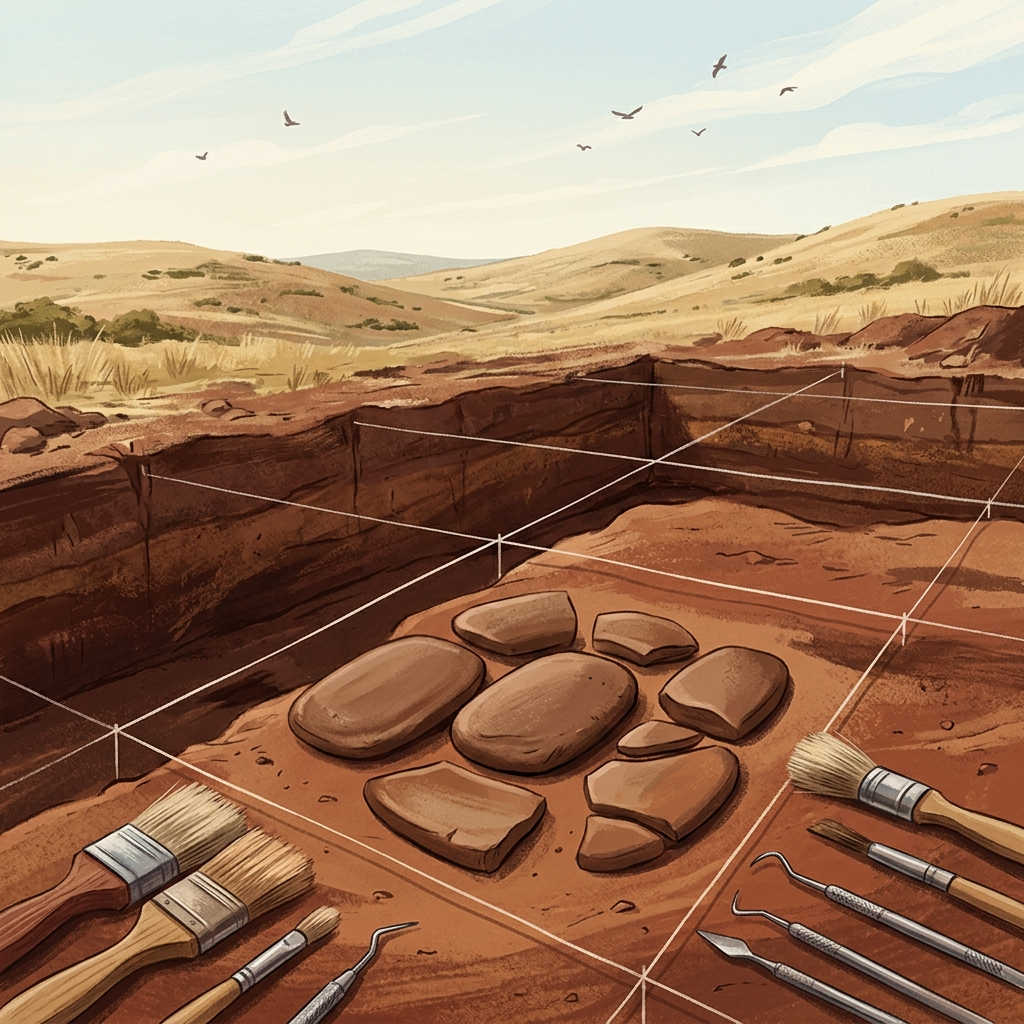
The 184 cuneiform pieces consist of 131 tablets and fragments recovered in the 2026 excavation season at Kayalıpınar in Turkey's Sivas province, combined with 53 pieces from the same archival zone in the preceding 2025 season. The site is identified by researchers as the ancient Hittite city of Šamuḫa, a strategically critical location that served as a wartime operational hub under Tudhaliya II during the mid-fourteenth century BCE. The excavation has been directed by Associate Professor Çiğdem Maner of Koç University since 2021, though the survey work that led to this discovery began in 2005, making this the culmination of over two decades of sustained fieldwork. Turkey's Minister of Culture and Tourism, Mehmet Nuri Ersoy, characterized the archive as "the most comprehensive Hittite-language archive discovered in the twenty-first century" — a claim calibrated against the fact that the two major comparative benchmarks, Hattusha's approximately 25,000 tablets and Šapinuwa's approximately 5,000, were both twentieth-century discoveries. The texts are written in both Hittite and Hurrian, spanning multiple document types including letters, prayer texts, ritual records, and oracle journals. The figure of 184 includes both complete tablets and fragments, meaning the number of fully legible, independently readable texts is likely smaller than the raw count suggests, and all current descriptions of content reflect preliminary rather than finalized scholarly readings.
The Epidemic: A Bronze Age Pandemic in Cuneiform
Preliminary readings of the Kayalıpınar tablets confirm descriptions of a high-fever epidemic spreading from city to city, with children and infants bearing a disproportionate share of the mortality. Turkish-language sources describe this as a "yüksek ateşli salgın" — a high-fever epidemic — consistent with what English-language coverage has translated as a febrile epidemic. The royal response, as recorded in the tablets, was to convene diviners who were asked to forecast the chances of survival for ailing princes and princesses; senior officials did the same for their own children. This epidemic is distinct from and predates the better-known Hittite plague of Mursili II's reign by approximately fifty to one hundred years, meaning the Kayalıpınar texts document an independent epidemic event in a period that previously had no documentary record of such an outbreak in Anatolia. The description of a disease spreading between cities provides indirect evidence about the density of inter-urban contact, trade routes, and population mobility in mid-fourteenth century BCE Anatolia — making these tablets valuable not only for medical and religious history but also for the broader study of Bronze Age urban networks and long-distance connectivity.
The Infant Princess: When State Records and Grief Become the Same Document
Among all the finds from the 2026 season, the tablets concerning the infant princess carry the most immediate human weight. One tablet documents concerns about a nursing princess who had fallen ill, apparently accompanied by a divination inquiry about her survival. A separate tablet records her death and the funeral rites that followed. The 2025 season had already surfaced references to royal family members and a young princess, establishing that this narrative runs across at least two consecutive excavation seasons and reflects a sustained archival thread rather than an isolated entry. The fact that a nursing infant's illness, death, and funeral could constitute official state documentation reflects the logic of Hittite kingship, in which royal bloodline continuity was structurally bound to state survival — making every heir's health a matter of administrative record as much as personal grief. The coexistence of these two registers — parental anguish and institutional necessity — in a single document tradition is historically unusual and comparatively rare even across the broader corpus of ancient Near Eastern royal archives, giving this material significant potential for cross-cultural comparative research on kingship and succession in the Bronze Age.
The Military Letters: Dispatches From the Brink
Western Anatolian commanders under siege wrote to request soldiers, horses, and chariots — the three essential components of Hittite combined-arms warfare. Preliminary readings suggest that at least some of these letters contained explicit warnings about the risk of their forces being annihilated if reinforcements did not arrive. Some English-language reports say the generals also warned they would not take responsibility for the consequences if left without aid, but that specific language does not appear in the Turkish-language sources consulted here; the Turkish coverage uses "değerlendirilen" — meaning "assessed as" or "interpreted to mean" — flagging this as a preliminary interpretation rather than a confirmed decipherment. What is not in dispute is that the letters demonstrate a functioning bureaucratic reflex at the edge of collapse: a besieged commander, with armies shrinking and supply lines cut, still filing formal written dispatches documenting the situation and requesting support. The discovery of these letters at Šamuḫa rather than Hattusha suggests that Šamuḫa functioned as a genuine military communication hub during this crisis period — the place where operational dispatches from the western front actually arrived, not merely where summarized reports were later filed.
The Omen Journals: Auditing the Decision-Making Process
Some of the tablets appear to record not just the results of bird-omen divination procedures but the process itself: which cities the diviners visited, which routes they traveled, and which birds they observed in designated observation zones. The University of Würzburg's Hittite omen text corpus describes the bird-omen system as highly structured — free-flying birds were observed in defined sectors, and outcomes were classified in a binary confirmation-or-elimination framework. The Hittite corpus typically preserves the outcomes of such procedures; what the Kayalıpınar journals may preserve, at least partially, is the operational log of the procedure itself. This distinction matters substantially. An audit trail of divination — recording who went where, what they observed, and how they classified what they saw — functions as documentation of the reasoning process behind state decisions, not just the decisions themselves. Once incorporated into the Würzburg corpus, these journals could allow systematic comparison of oracle procedures across different sites and periods, potentially revealing whether the system was standardized empire-wide or adapted to local administrative contexts — a question that has been essentially unanswerable until now.
Positive & Negative Analysis
Positive Aspects
- A Provincial Archive That Corrects the Capital Bias
Hittitology has long relied overwhelmingly on the approximately 25,000 tablets from Hattusha, which means the scholarly understanding of Hittite governance, religion, and military organization has been built primarily from a capital-centric viewpoint. The Šamuḫa archive is a provincial administrative record that directly counterweights that bias — preserving military communications, religious activities, and administrative decisions made at a distance from the capital, the kind of operational-level documentation that Hattusha's curated archive would have summarized or absorbed. The bilingual character of the texts, written in both Hittite and Hurrian, adds further value by documenting the multiethnic administrative reality of the empire at one of its regional hubs. The long-term contribution here could be a shift from understanding Hittite governance as a single-center system to understanding it as a genuinely networked one, with its own regional variation and local logic — and comparing Šamuḫa's records with Šapinuwa's would give scholars the first real multi-node picture of how the empire managed itself under extreme pressure. In short, this archive has the potential to do for Hittite provincial studies what the Dead Sea Scrolls did for Second Temple Judaism: not replace the canonical corpus, but dramatically complicate and enrich it.
- New Primary Sources for Ancient Epidemic History
The Bronze Age is nearly empty of epidemic documentation, which makes the Kayalıpınar fever records exceptional as primary sources. The description of a high-fever disease spreading between cities during the mid-fourteenth century BCE provides epidemiological detail — transmission routes, affected demographics, the scale of urban connectivity that enabled spread — that simply wasn't available before this archive surfaced. Moreover, this epidemic predates the better-documented Mursili II plague by roughly fifty to one hundred years, establishing that the Hittite world faced at least two distinct epidemic events from different sources across a relatively compact historical period. For researchers in ancient disease history, this multiplies the comparative data substantially. The tablets' description of royal and elite responses — specifically, the mobilization of divination as a probabilistic forecasting tool — also contributes to the history of how pre-modern states managed acute health crises, which has obvious resonance for scholars and general readers well beyond the study of the ancient Near East.
- Process-Level Evidence for Hittite Decision-Making
The oracle journals' potential to document the decision-making process rather than only its outcomes is genuinely underappreciated in the current coverage. Most Hittite oracle records that survive describe what was decided and what the divination result was — the equivalent of having a final ruling without the deliberative record. What the Kayalıpınar journals may provide is the procedural log: the field record of the work itself, including the diviners' movements, observation sites, and intermediate findings. For historians trying to reconstruct how Hittite state institutions operated at the level of daily practice, that procedural layer is far more valuable than any number of additional outcome records. Once the omen journals are integrated into the Würzburg Hittite omen text corpus and compared against known examples from Hattusha and other sites, they could clarify whether the oracle system was standardized across the empire or varied with local conditions — substantially advancing the study of Hittite religious administration.
- Evidence That More Archives Remain Underground
Perhaps the most practically significant implication of Kayalıpınar is what it suggests about other Hittite sites that haven't yet been systematically excavated. Before this discovery, the documented pattern was that major Hittite archives came from sites that had been excavated intensively for decades. Kayalıpınar demonstrates that a regional military and religious hub — the kind of site that might not receive priority attention in a survey focused on capital-tier locations — can harbor a coherent royal-grade archival deposit. The Hittite Empire extended from the Aegean coast to northern Syria, and the overwhelming majority of that territory has never been excavated for documentary material. If a site operating under the documented pressures of the mid-fourteenth century crisis preserved 184 pieces in just two excavation seasons, the case for similar finds elsewhere in the empire's provincial network is substantially stronger than it was before this archive came to light.
Concerns
- The "Greatest Archive" Claim Hasn't Been Independently Verified
The designation of the Kayalıpınar find as "the most comprehensive Hittite-language archive discovered in the twenty-first century" comes from the excavation team and Turkey's Ministry of Culture and Tourism. It has not yet been evaluated in a peer-reviewed scholarly publication or assessed by an independent panel of Hittitologists. The 2025 season report has been accepted for Anatolia Antiqua, but the 2026 season's 131 pieces have not yet entered the publication pipeline at all. This doesn't mean the claim is wrong — it may very well prove accurate once the scholarly community has proper access to the material. But grand designations made on the basis of preliminary readings, before peer review, should be treated as working hypotheses rather than established facts. The pattern of archaeological announcements overshooting the eventual peer-reviewed assessment is well documented in the literature on public archaeology, and this archive deserves to be held to the same evidential standards as any other major find.
- Publication Delay Is a Real and Documented Risk
The Šapinuwa parallel is sobering and specific. That site has been excavated since the early 1990s, has produced approximately 5,000 tablets, and as of 2014 remained largely unpublished in scholarly editions, with English-language access limited to a practical vocabulary list and a handful of individual texts. This reflects the structural gap between the pace of excavation and the pace of small-language philological publication — a gap constrained by the limited global community of Hittite and Hurrian specialists, which is very small worldwide. Kayalıpınar faces the same structural reality. In the meantime, the dramatic preliminary findings are already circulating widely in popular media: the dying princess, the generals under siege, the epidemic spreading through Bronze Age cities. If the eventual scholarly publications find that some of these preliminary readings require substantial revision, correcting the record in popular culture will be an uphill battle, and the original, more dramatic version may persist indefinitely in the public imagination.
- Political Framing Creates Interpretive Risk
The fact that a government minister announced this discovery and characterized it as part of a "golden age of archaeology" raises a question worth taking seriously. Archaeological findings are not automatically distorted by political attention, and government investment in excavation creates genuine material benefits for sites like Kayalıpınar. But when the primary public framing of a scholarly discovery happens through a ministerial press conference rather than through peer-reviewed publication, the risk of narrative running ahead of evidence increases. Political narratives tend to prefer clarity and drama; archaeological interpretation thrives on ambiguity, revision, and prolonged debate. The excavation is led by Koç University, a private academic institution with its own scholarly standards, which provides a structural buffer against direct state influence on interpretation. But the gap between state announcement and academic publication is a space where oversimplification can settle in and become conventional wisdom before the scholars have had a proper chance to weigh in.
- Conservation and Tourism Pressure on an Active Excavation Site
As Kayalıpınar's profile rises — and this discovery will raise it considerably — pressure to develop the site for tourism and cultural heritage programming will increase. Turkey's archaeological sites drew 34.8 million visitors in 2025, and the cultural tourism sector has obvious financial incentives to incorporate high-profile new discoveries into its offering. But Kayalıpınar is still an active excavation, and tourist infrastructure built into an active dig can permanently damage stratigraphic contexts, contaminate excavation zones, and create access pressures that compromise the methodological standards of ongoing fieldwork. The Hattusili III-era pottery vessel already found at the site confirms this is a multilayer deposit extending beyond the Tudhaliya II period — which means there may be material below the current excavation depth that requires slow, careful work that prematurely introduced visitor infrastructure could impede. Kayalıpınar has no UNESCO or equivalent international protection framework yet, and establishing one should be a priority before tourism development begins in earnest.
Outlook
The immediate academic horizon is dominated by the publication timeline, and the trajectory so far is genuinely encouraging. Daniel Schwemer at the University of Würzburg and Şevgül Çilingir Cesur co-authored the preliminary Hittite text report for the 2025 Kayalıpınar season, and that report has been submitted to and accepted for publication in Anatolia Antiqua 34 — the 2026 volume — which represents a remarkably fast turnaround from excavation to accepted print. That pace reflects the competence and discipline of this team, and it sets a standard for how this archive might eventually be disseminated. The important caveat is that an accepted preliminary report and a full scholarly edition of individual texts are separated by an enormous amount of work. The preliminary report establishes what the texts are and roughly what they contain. Full transliterations, translations, historical commentary, and critical apparatus come much later — often years, sometimes decades, after the dig season ends. Currently, everything the press has reported is based on these early-stage readings, and readers should hold those details with appropriate tentativeness.
For the 131 tablets from the 2026 season, the clock on even a preliminary report hasn't started yet. The 2025 finds made it into an accepted preliminary report the following year, which says something about this team's pace — but I wouldn't turn that into a calendar for the 2026 tablets. Full scholarly editions of individual texts will take considerably longer. Hittite and Hurrian are highly specialized languages with a global expert community that is very small. Every new document in either language has to find its place in a queue that already contains a backlog of unpublished material from Hattusha, Šapinuwa, Ortaköy, and other sites across Anatolia. This is not a criticism of the teams involved — it's a structural constraint of small-language philology that no single excavation can resolve on its own. The bottleneck is trained human expertise, not imaging capability, and that takes years to develop and remains in chronic short supply relative to the volume of material being excavated.
The Šapinuwa comparison casts a long shadow over all of this. That site has been excavated since the early 1990s and has yielded approximately 5,000 tablets — a corpus that would significantly reshape understanding of Hittite administration and religion if it were fully published. As of 2014, the bulk of it remained unpublished in scholarly editions, with English-language work limited primarily to a practical vocabulary list by Süel and Soysal and a small selection of individual texts. Decades of excavation work, and the archive is still not fully accessible to the global scholarly community. Kayalıpınar faces the same structural risk. The optimistic reading is that digital tools — high-resolution 3D scanning, remote collaboration platforms, and improved paleographic databases — will meaningfully shorten the publication cycle compared to the 1990s baseline. But until that improvement materializes in actual published editions, the risk of Šapinuwa-style delay should be taken seriously by anyone tracking this archive's scholarly trajectory.
Looking at a two- to five-year horizon, the comparative research potential is where I find myself most genuinely excited. The critical opportunity is triangulation between Hattusha, Šapinuwa, and Šamuḫa. All three sites have material from approximately the same era — the reign of Tudhaliya II and his immediate successors — but from three distinct administrative positions within the empire. Hattusha is the capital's curated archive, oriented toward the king and the great state temples. Šapinuwa is a provincial seat that served as one wartime relocation point. Šamuḫa is where the operational command moved when even Šapinuwa came under pressure. Comparing what the same state recorded simultaneously in three different places is the kind of documentary triangulation that historians rarely get to attempt with Bronze Age material. The omen journals from Kayalıpınar, once incorporated into the Würzburg Hittite omen text corpus, could shed light on how the oracle-consultation system functioned across dispersed administrative nodes rather than only at the capital — a question that has been essentially unanswerable until now.
The epidemic records open their own research trajectory. The plague associated with Mursili II — documented in the famous plague prayers — struck the Hittite world roughly fifty to one hundred years after the Kayalıpınar tablets were written, and it is traditionally linked to Egyptian prisoners captured during Suppiluliuma I's Syrian campaigns. The Kayalıpınar disease is an independent event, spreading through Anatolian cities by its own dynamics during the mid-fourteenth century crisis. Having two documented Hittite epidemics from different periods and different apparent sources creates an unusual opportunity for comparative ancient epidemiology: how did transmission patterns differ, which demographics were most affected in each case, what responses did the state adopt, and how did religious interventions — divination, prayer, ritual — vary between the two events? For researchers in Bronze Age disease history, this kind of multi-event comparative dataset is genuinely rare, and the Kayalıpınar texts could anchor an entirely new line of inquiry in ancient public health history.
Now let me lay out the scenario range. In the most optimistic scenario — adequate sustained funding, a productive site that continues yielding material, and digital collaboration that meaningfully accelerates publication — Kayalıpınar could emerge within a decade as a genuine second center of gravity for Hittite studies alongside Hattusha. If the military correspondence, the epidemic records, and the omen journals receive careful scholarly publication within the next four to six years, they would reframe the Hittite "survival war" period more vividly than any previously available source. Combined with Šapinuwa material, you would have a three-way documentary record of a Bronze Age state managing a multi-front existential crisis in near-real-time — the kind of synchronic source depth that historians of ancient empires can only dream about. Under this scenario, the infant princess tablets alone would likely generate a substantial comparative literature on the treatment of royal children in ancient Near Eastern archives.
In the base scenario — the most probable one, in my judgment — publication proceeds unevenly. The high-profile texts, particularly the generals' letters and the princess records, receive priority scholarly attention and appear in accessible editions within five to eight years. The omen journals and administrative texts follow at a slower pace, as funding cycles and personnel availability permit. The overall picture of Šamuḫa's strategic role clarifies gradually rather than in a single dramatic rewriting of the textbooks. This is how archaeology almost always unfolds, and it's not an unsatisfying outcome. Even at this pace, Kayalıpınar will have permanently shifted the center of gravity for mid-fourteenth century BCE Hittite research away from the capital monoculture and toward a more distributed, networked understanding of how the empire administered itself under pressure.
In the most cautious scenario — the one I'm actively watching for warning signs of — publication stalls as it did at Šapinuwa, and the dramatic preliminary findings circulate in popular culture for years without rigorous scholarly grounding. The "generals refusing responsibility" phrasing that already appears in some English-language coverage but is absent from the Turkish sources is an early indicator worth monitoring carefully. Preliminary readings sometimes contain interpretive shortcuts that don't survive full philological review; once those shortcuts are in wide circulation, corrections face an uphill battle against the inertia of established popular narrative. If certain details turn out to be misread and the correction appears only in a specialized journal several years later, the popular memory will still carry the original, more dramatic version. This failure mode is well-documented in the archaeology of high-profile discoveries, and Kayalıpınar deserves to be watched with that pattern in mind.
The ten-year and longer horizon is where I allow myself to be genuinely optimistic. The Kayalıpınar discovery has demonstrated with clarity that provincial Hittite cities can preserve royal-grade archival material. That changes what excavators look for at other unexcavated or partially excavated Hittite sites across Anatolia. The empire's administrative network extended from the Aegean coast to northern Syria, and the overwhelming majority of that territory has never been excavated for documentary material. Turkey's Ministry of Culture and Tourism was reporting 720 active archaeological projects per year as of 2023, with a stated target of 800 by 2026, supported by a budget that grew from 37.3 million Turkish lira in 2019 to 1.1 billion in 2023. The institutional capacity for long-term, large-scale excavation is growing, and the precedent set by Kayalıpınar raises the expected value of investing in other provincial Hittite sites. If a site under the documented pressure of the mid-fourteenth century crisis preserved 184 pieces in just two seasons of excavation, the probabilistic case for similar finds elsewhere in the empire's provincial network becomes substantially stronger.
The cultural dimension of the longer horizon also matters. Turkey's archaeological sites drew 34.8 million visitors in 2025, generating over 7.3 billion Turkish lira in revenue. Hattusha, which marks forty years as a UNESCO World Heritage Site this year, has been a central draw for decades. The Kayalıpınar discovery adds a new chapter to the Hittite story, and that narrative richness has real cultural and tourism value. The Hattusili III-era pottery vessel already found at the site — bearing that king's name, and dating more than a century later than the Tudhaliya II tablets — confirms that Kayalıpınar is a multilayer deposit extending well beyond the current excavation focus. Whether Kayalıpınar eventually joins the heritage circuit, becoming accessible to visitors the way Hattusha is, will depend on how the excavation and conservation work unfolds. The archive under Šamuḫa's soil isn't going anywhere. There's no reason to rush — and every reason to keep digging carefully.
Sources / References
- 184 Cuneiform Tablets Discovered in Hittite Royal Archive — HeritageDaily
- Kayalıpınar'da 21. Yüzyılın En Kapsamlı Hititçe Arşivi Gün Yüzüne Çıkarıldı — DHA (Demirören Haber Ajansı)
- Cuneiform tablets from Hittite king unearthed — Hürriyet Daily News
- Kayalıpınar Hitit arşivi salgın kayıtları (Turkish-language report) — Milliyet
- Hittite Site Yields Dozens of Cuneiform Tablets and Seal Impressions — Archaeology Magazine
- Bogazköy Archive — Wikipedia
- Sapinuwa — Wikipedia
- Culture Minister Ersoy unveils ambitious goals for 2024, declaring golden age of archaeology — Daily Sabah
- Publikationen – Prof. Dr. Daniel Schwemer (Report on the Hittite Text Finds from the 2025 Excavations in Kayalıpınar) — Universität Würzburg