
We Didn't Fail to Stop Ebola Bundibugyo — We Chose Not to Make the Vaccine for 19 Years
Summary
The 2026 Bundibugyo Ebola outbreak in the Democratic Republic of Congo has reignited urgent questions about the structural inequities embedded in the global health system. Bundibugyo ebolavirus (BDBV), first identified in Uganda in 2007, has claimed lives for nearly two decades without a single approved vaccine — a stark contrast to the COVID-19 pandemic, during which the world developed and deployed mRNA vaccines within nine months. The WHO's unprecedented decision to declare a Public Health Emergency of International Concern (PHEIC) without convening an emergency committee underscores the severity of the crisis while simultaneously exposing the system's failure to prepare for so-called "neglected" outbreaks. The Trump administration's USAID funding cuts created a nine-day surveillance blind spot after the WHO notified the United States of the outbreak, directly undermining early containment efforts. This outbreak is not a natural disaster — it is the product of decades of deliberate underinvestment shaped by pharmaceutical market logic, and it demands a reckoning with who gets to decide which lives are worth protecting.
Key Points
19-Year Vaccine Void — The Classic Market Failure
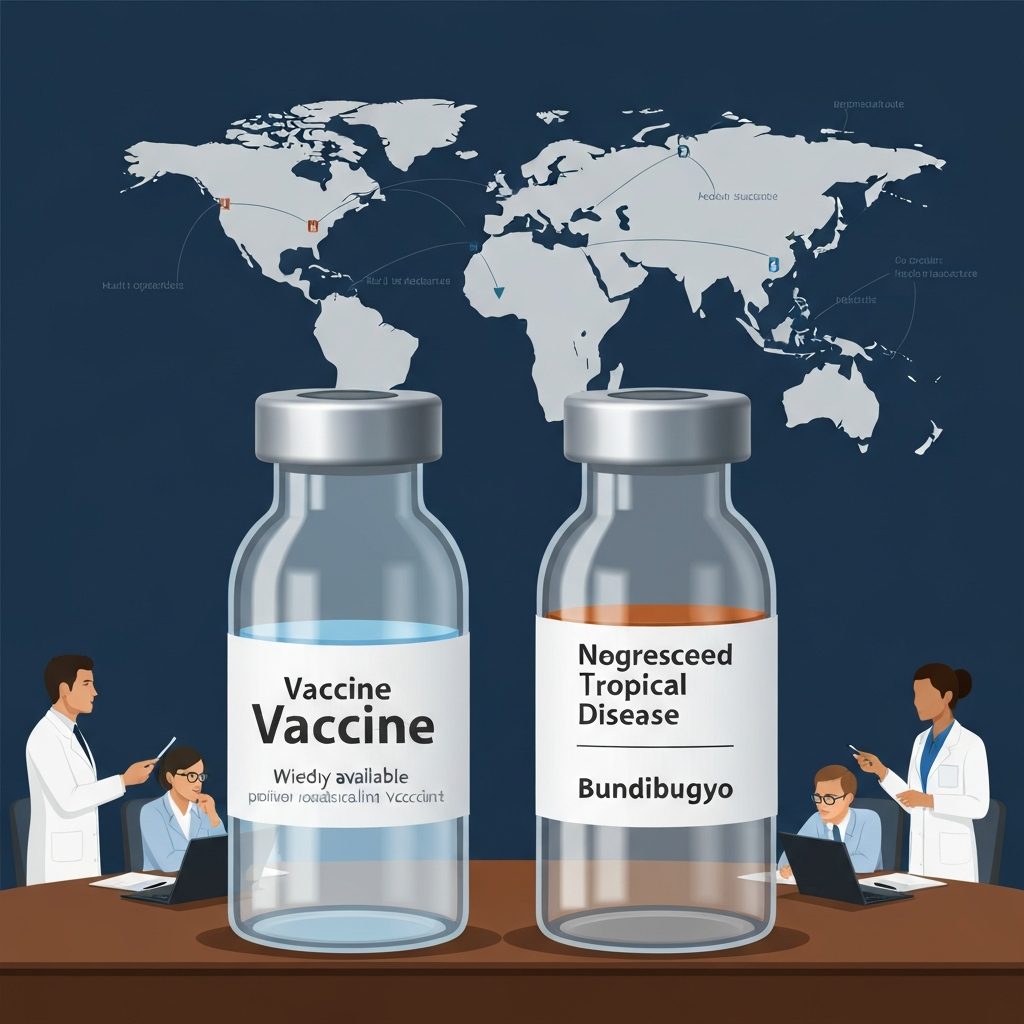
Bundibugyo ebolavirus has been documented in medical literature since 2007, yet as of 2026, not a single approved vaccine exists for it — and until this outbreak forced the issue, there wasn't even a meaningful R&D commitment underway from any major pharmaceutical company or international research institution. The contrast with COVID-19 is both the most obvious and the most damning proof point available: the same global pharmaceutical and public health infrastructure that produced multiple approved COVID vaccines in under nine months has spent nineteen years producing exactly nothing for BDBV. The reason isn't scientific complexity or technical impossibility — researchers understand Bundibugyo's molecular structure well enough to begin serious vaccine design work. The reason is that Bundibugyo's outbreaks have been confined to low-income regions of Central Africa, which means there is no viable commercial market for a vaccine. Global pharmaceutical companies evaluate R&D investments by expected commercial return on billion-dollar commitments; when the patient population has essentially zero purchasing power and outbreak frequency is low, the financial spreadsheet simply never greenlights the project. The global vaccine market was worth approximately $70 billion in 2025, yet less than 2% of that capital was directed toward neglected tropical disease R&D. Within Ebola-specific funding, the overwhelming majority targeted Zaire ebolavirus — the strain that threatened Western hospitals in 2014, the strain that created commercial urgency, the strain that got the vaccine. Bundibugyo, Sudan, Taï Forest, and the other Ebola species received investment approaching zero. The 2015 international promise to "never let this happen again" after West Africa's epidemic has been definitively and concretely broken by the 2026 outbreak.
What the WHO's First Solo PHEIC Declaration Actually Tells Us
WHO Director-General Tedros Adhanom Ghebreyesus declared a Public Health Emergency of International Concern — the highest-level global health alert available under international law — without convening an emergency committee of independent experts, a procedural step that has never been omitted in the organization's history since the International Health Regulations were updated in 2005. Every prior PHEIC — COVID-19, mpox, polio, H1N1, Zika — involved an emergency committee that reviewed evidence, deliberated independently, and issued a formal recommendation before the Director-General acted. The omission this time is being actively debated as either bold crisis leadership appropriate to the urgency or a troubling breakdown of procedural legitimacy, and I think both framings have real merit and both can simultaneously be true. The most important data point embedded in this decision is not which procedure was followed — it's that the situation was moving too fast for the standard process to function, which is itself a direct consequence of zero preparedness investment for this specific pathogen over nineteen years. A system that had pre-positioned monitoring protocols, approved diagnostics, and investigational vaccines for Bundibugyo would not have faced a situation requiring procedural improvisation at the Director-General level. The precedent this establishes may prove valuable: if it creates a recognized pathway for accelerated PHEIC declarations for non-mainstream outbreak pathogens, it could reduce response lag in future emergencies involving viruses that haven't been pre-identified as priority threats by the populations most likely to be affected. The procedural concerns deserve formal review and resolution through WHO governance. The underlying emergency that created the need for the procedural shortcut deserves the harder conversation.
The Nine-Day Blind Spot USAID Cuts Created
CNN's investigation into the 2026 DRC outbreak documented that the Trump administration's systematic dismantling of USAID created a nine-day gap during which the United States failed to register the outbreak — even after the WHO had formally notified U.S. authorities through established channels. USAID staff who would previously have been embedded in DRC Ministry of Health networks were no longer present. Africa CDC liaison capacity that would have picked up field-level signals was no longer funded. The information architecture that would have connected a declaration in Kinshasa to a policy response in Washington simply wasn't functioning. This nine-day surveillance void directly undermined early containment: those were nine days when contact tracing could have been activated with U.S.-funded support, isolation facilities established, and community health workers mobilized with direct external coordination. The deeper principle this exposes is that surveillance capacity — the ability to know that a crisis is occurring — is more operationally important than response capacity. You can deploy emergency response teams once you know where the crisis is. You cannot retroactively undo community transmission chains that multiplied during an information blackout. The U.S. has historically provided approximately 25–30% of global infectious disease surveillance infrastructure funding through USAID and CDC's Global Health Security programs. That isn't charity — it is self-interest institutionalized as public health investment. The 2014 West Africa Ebola epidemic ultimately cost the United States over $5 billion in emergency response; credible analysis suggests that sustained early surveillance investment amounting to a small fraction of that cost would have enabled containment before the epidemic reached catastrophic scale. The pattern is repeating, in slow motion, with the same structural cause and the same predictable consequence.
GeneXpert's Structural Blind Eye — Diagnostic Bias by Design
The most widely deployed rapid diagnostic platform for Ebola in DRC field settings — GeneXpert — cannot detect Bundibugyo ebolavirus, and this fact played a direct and documented role in the delayed outbreak recognition that allowed early community transmission to accelerate before appropriate containment responses were activated. The platform's detection cartridges were designed and optimized for Zaire ebolavirus, which received the overwhelming share of Ebola-related diagnostic R&D investment because Zaire represented the commercially justifiable development target. Adding a new pathogen detection target to these cartridge-based systems requires separate development cycles, clinical validation in affected field populations, regulatory approval processes, and manufacturing scale-up — a process that takes multiple years and tens of millions of dollars, with no meaningful commercial return in sight for a low-frequency pathogen with no wealthy-market exposure. As MSF has publicly documented, this is not a technical failure or an engineering limitation. It is a deliberate design-by-investment-priority: diagnostic manufacturers, like vaccine manufacturers, fund development based on expected commercial deployment volumes, and Bundibugyo simply did not clear that bar. The practical consequence in 2026 was that frontline clinicians using the best commonly available rapid diagnostic tool returned negative results for patients who were actively infected with Bundibugyo, leading to misdiagnosis as malaria, typhoid, or other endemic febrile illnesses — and continued community exposure as a result. There are six recognized Ebola species; exactly one has a complete suite of approved diagnostic tools and a licensed vaccine. The other five, including Bundibugyo, are functionally invisible to the health system's standard operational toolkit in the field.
Africa's Emerging Biopharmaceutical Capacity: Promise Versus 2026 Reality
The COVID-19 pandemic created a genuine institutional inflection point in Africa's vaccine manufacturing trajectory: the WHO's designation of South Africa's Afrigen Biologics as the mRNA technology transfer hub placed practical vaccine production knowledge, for the first time, in the hands of an African institution with an explicit mandate to disseminate that knowledge regionally across the continent. The African Union's Partnership for African Vaccine Manufacturing has set a formally adopted target of 60% continental vaccine self-sufficiency by 2040 — a goal that, if achieved, would fundamentally restructure the economics of pathogen-specific vaccine development for diseases currently ignored by global pharmaceutical companies, including pathogens exactly like Bundibugyo. The structural promise is real and important: if Africa can produce vaccines at continental scale for African epidemiological needs, the broken market logic that left Bundibugyo unvaccinated for nineteen years becomes at least partially bypassed by a different production model. But the honest assessment of where things actually stand in 2026 is difficult to make attractive without misrepresenting the reality. Africa currently produces roughly 1–2% of the vaccines it uses, compared to a 60% target set for 2040. Closing that gap requires technology transfer programs operating across dozens of partner institutions, cold-chain infrastructure development reaching communities far from major urban centers, regulatory harmonization across 54 separate national regulatory frameworks with very different standards and capacities, training of a biopharmaceutical manufacturing workforce at a scale that does not currently exist, and sustained domestic or regional investment capital that does not depend on the continued political goodwill of external donors. This is decades of sustained work even under optimistic resource scenarios. The PAVM trajectory is genuinely the right long-term strategic direction. It offers no near-term relief for any Bundibugyo outbreak likely to occur before the mid-2030s.
Positive & Negative Analysis
Positive Aspects
- MSF's Rapid Field Protocol Deployment
Médecins Sans Frontières and international field medical teams managed to adapt response protocols from extensive Zaire Ebola experience and deploy them in Bundibugyo-specific field settings within 24–48 hours of outbreak confirmation — a pace that MSF's own documentation describes as meaningfully faster than what was achieved during the initial operational phase of the 2014 West Africa epidemic. The core protocols — isolation facility setup and management, personal protective equipment procedures calibrated to Ebola transmission characteristics, safe and dignified burial practices, and survivor engagement frameworks for contact tracing — are not fully species-specific in their operational logic, and repeated Ebola response experience in DRC over the past decade has produced a level of institutional readiness that transfers across virus strains even when specific medical countermeasures for the particular strain are absent. This rapid adaptation directly suppressed healthcare worker infection rates in the early outbreak phase, which has enormous second-order significance: in 2014, healthcare worker deaths contributed to the collapse of healthcare system capacity across Liberia, Sierra Leone, and Guinea simultaneously, creating a catastrophic multiplier effect where the epidemic's secondary impact on non-Ebola healthcare delivery was as devastating as the disease itself. The accumulated institutional competence to prevent that cascade from happening again represents decades of painful learning that has real operational value. MSF's 2026 response demonstrates that organizational capacity built through sustained engagement doesn't disappear between outbreaks, and that this kind of institutional knowledge deserves sustained investment and recognition rather than episodic emergency funding.
- The PHEIC Declaration's Speed Dividend
Whatever procedural debate legitimately surrounds the WHO Director-General's unprecedented solo PHEIC declaration, the practical effect was to compress the international response mobilization timeline by an estimated one to two weeks compared to the standard emergency committee convening process — and in an active outbreak context, two weeks is a substantial clinical and epidemiological variable with direct mortality implications. PHEIC declarations under the International Health Regulations framework do far more than issue a formal warning: they create legally binding obligations on member states to report, respond, and in some cases redirect resources toward the declared emergency, which translates directly into authorized international medical supply chains, political-level engagement that bypasses normal bureaucratic timelines, and emergency funding mechanisms that can be activated without additional legislative approval in many jurisdictions. Multiple countries and multilateral institutions issued formal resource commitments within 48 hours of the 2026 declaration — a pace that historical precedent from previous outbreak responses strongly suggests would have been impossible under the standard committee deliberation timeline. The precedent set here — that a Director-General can declare a PHEIC under conditions of extreme urgency without completing the standard deliberative architecture — may prove to be one of the more important procedural adaptations to emerge from this crisis. If incorporated into revised International Health Regulations through the normal WHO governance process, it could meaningfully reduce response lag for future emergencies involving pathogens for which no pre-positioned monitoring or response infrastructure has been developed. In emergency medicine at every scale, speed is often the most important clinical variable.
- Pan-Ebola Vaccine Strategy Officially Elevated to Priority Research Agenda
CEPI's formal elevation of the pan-Ebola vaccine concept — a single immunization platform designed to confer cross-protective immunity against multiple Ebola species simultaneously, rather than requiring separate vaccine development for each species — to priority research agenda status represents perhaps the most significant structural shift to emerge from the 2026 outbreak in terms of long-term infectious disease prevention strategy. The concept directly addresses the fundamental economic flaw in single-species vaccine development for low-frequency pathogens: by aggregating the public health and commercial justification for protection against Zaire, Sudan, Bundibugyo, and potentially Taï Forest ebolavirus into a single investment case, a pan-Ebola platform creates an R&D commitment that serves a broader threat profile and is correspondingly more defensible to institutional and government funders. Early immunological research, including findings published in Nature Medicine following the outbreak's onset, has confirmed that Bundibugyo's glycoprotein surface structure — while differing from Zaire's by approximately 30–35% at the amino acid sequence level — shares enough conserved epitopes to make cross-reactive immune responses a technically realistic if demanding research target. The nineteen-year delay is inexcusable and should be named as such. But the formal commitment of CEPI, international academic medical centers, and government research funders to the pan-Ebola strategy initiates a paradigm shift: moving from species-specific vaccine development driven by commercial urgency toward a platform approach that could protect against the full Filovirus family. This same model, if successful, has potential applications for other virus families where multiple related species each pose meaningful outbreak risk.
- DRC Local Health Workforce's Autonomous Response
When international aid was delayed — in part because of the surveillance blackout created by USAID funding cuts and in part because of the inherent logistical lag in mobilizing international response teams — DRC's own community health workers, field nurses, local epidemiologists, and Ministry of Health staff led the critical early contact tracing and isolation work that prevented what could have been far more rapid initial community spread. These individuals brought something that no international deployment, however well-resourced, can replicate quickly: intimate operational knowledge of community trust dynamics in specific local contexts, awareness of local movement patterns and social networks, understanding of the kinship and community structures that determine whether quarantine recommendations will actually be followed in practice, and the personal relationships with community leaders that make health communication credible rather than suspect. The Kivu region's 2018–2020 Ebola outbreak produced a cohort of locally trained responders with direct, high-intensity operational Ebola experience — a form of hard-won human capital that proved essential to effective outbreak management in one of the world's most challenging operating environments in 2026. This dimension of the response makes a powerful and data-supported argument for a fundamental strategic shift in how global health systems approach outbreak preparedness: sustained multi-year investment in local health worker training, compensation equity, career development infrastructure, and operational support delivers compounding resilience returns that episodic emergency deployments from abroad simply cannot match. The DRC local health workforce is owed recognition and sustained investment on a scale commensurate with the burden they actually carry.
- Bundibugyo Reignites the Global Health Equity Debate
The 2026 Bundibugyo outbreak has succeeded — at least temporarily and perhaps more durably than previous crises managed — in forcing the global health equity conversation back to the center of international discourse in a way that hadn't been meaningfully achieved since the immediate and visceral period following COVID-19's vaccine access disparities became publicly undeniable. The specific empirical comparison this outbreak invites is the kind of concrete, quantifiable juxtaposition that cuts through policy abstraction: nine months to a COVID vaccine serving high-income markets, nineteen years and nothing for a Bundibugyo vaccine serving Central Africa. That comparison is simple enough to be understood immediately, specific enough to be verifiable, and stark enough to make the structural argument without requiring specialized knowledge. International media, major NGO campaigns, and academic commentary converged on this comparison with unusual coherence and sustained attention, creating a public narrative that frames Bundibugyo not as a remote African tragedy but as active evidence of a system that has assigned different values to different human lives in ways that are measurable and documented. Whether this sustained attention translates into durable policy change is genuinely uncertain — the historical record of post-outbreak public commitment followed by institutional amnesia is extensively documented and deeply discouraging. But the precondition for any structural reform is that the problem becomes visible and politically legible to audiences whose political pressure can actually force institutional change, and the 2026 outbreak has, at minimum, achieved that necessary precondition more effectively than any previous Bundibugyo event.
Concerns
- Structural Reform Historically Doesn't Survive the Outbreak's End
The most fundamental concern I have about the 2026 Bundibugyo outbreak is not what happens during the crisis itself — it is what reliably doesn't happen after it. The historical pattern following major Ebola outbreaks is clear, extensively documented, and deeply discouraging: intense international attention during the acute crisis phase, high-profile institutional commitments to structural reform during the immediate aftermath, followed by rapid and near-total institutional amnesia once the immediate threat visibly recedes from news cycles and political agendas. The 2015 post-West Africa Ebola reform agenda produced genuinely real institutions — CEPI, enhanced IHR frameworks, the Global Health Security Agenda with explicit country capacity targets — but failed to deliver on its core underlying promise of preparedness for non-Zaire Ebola variants and other low-profile outbreak pathogens, as the 2026 outbreak definitively proves. CEPI's own investment portfolio as recently as 2024 allocated less than 15% of R&D funding to pathogens endemic to Africa and not posing meaningful threat to high-income markets. The GHSA's monitoring data, more than ten years after the GHSA targets were formally established, shows that fewer than half of assessed countries have met minimum standards for early outbreak detection capability. These are not marginal failures — they are systemic failures that directly produced the specific conditions of the 2026 crisis. Without fundamental changes to the economic incentive structures that produce this pattern of neglect, the "crisis-attention-reform-forgetting" cycle will continue to run as reliably as it has for the past two decades.
- Diagnostic Gap Has No Short-Term Fix
Extending GeneXpert-compatible detection capability to Bundibugyo ebolavirus is not a quick software update or a minor platform extension — it requires designing a new detection cartridge architecture from scratch, conducting clinical validation studies in affected field populations under conditions that make research logistics genuinely difficult, navigating regulatory approval processes in multiple jurisdictions, manufacturing the new cartridges at a scale sufficient for field deployment, and distributing them through supply chains that may already be strained by the ongoing outbreak response. The total timeline for this process, even assuming adequate development funding materialized immediately and all regulatory processes proceeded without delays, would be measured in years rather than months. The fundamental commercial incentive problem — diagnostic manufacturers have no financial motivation to prioritize development for a low-frequency pathogen with no wealthy-market exposure — is structurally identical to the vaccine development incentive problem. CRISPR-based diagnostic platforms, particularly SHERLOCK and DETECTR, offer a fundamentally more flexible technical architecture where adding a new pathogen target sequence is dramatically less expensive and time-consuming than traditional cartridge development cycles. But these platforms, while scientifically mature and increasingly well-characterized in research settings, are not yet available as field-deployable, cold-chain-stable, low-cost kits suitable for mass deployment under resource-limited conditions in high-temperature, high-humidity environments like Eastern DRC. The diagnostic gap will persist through the current outbreak and through any Bundibugyo outbreak that occurs within the next several years, meaning continued misdiagnosis, continued delayed recognition, and continued lost containment windows. This is the same root structural cause expressed in the diagnostic domain.
- USAID Withdrawal's Cascading Effects on the Entire Surveillance Network
The damage from USAID funding cuts extends far beyond the documented nine-day blind spot in DRC Ebola surveillance — it represents a structural degradation of the entire global infectious disease early warning architecture across dozens of countries simultaneously, with effects that will compound over time as institutional capacity erodes and trained personnel disperse to other employment. The United States has historically provided approximately 25–30% of total global health surveillance infrastructure funding through USAID, CDC's Global Health Security programs, and bilateral health system strengthening investments that built laboratory networks, trained epidemiologists, and established disease reporting systems in more than 50 countries. When that funding is reduced or eliminated, the surveillance impact is not limited to Ebola: the monitoring capacity for Marburg virus, Nipah virus, Lassa fever, Crimean-Congo hemorrhagic fever, and other high-consequence pathogens degrades simultaneously because much of the underlying infrastructure — laboratory equipment, trained personnel, disease reporting systems — is shared across pathogen surveillance programs. The European Union faces internal budget constraints from escalating defense commitments and migration management costs that make fully compensating for the U.S. structural withdrawal politically and fiscally very difficult in the near term. Japan is navigating accelerating demographic aging costs that create persistent fiscal pressure on overseas development assistance. The World Bank's Pandemic Fund announced considerable commitments but held less than $2 billion in deployable capital as of 2025 — structurally insufficient to maintain surveillance networks across 54 African nations. This is not a gap that can be closed by any single alternative donor acting alone.
- Cross-Border Spread Risk Is Not Hypothetical
The DRC shares land borders with nine countries, and the Bundibugyo outbreak's geographic epicenter in Eastern DRC is in one of the most population-mobile regions on the African continent, with documented daily cross-border movement of tens of thousands of people between the DRC, Uganda, South Sudan, Rwanda, and Burundi through both formal border crossings and informal routes that are effectively impossible to monitor comprehensively under normal conditions, let alone during an active outbreak response. Suspected cases have already been reported in Uganda — which is also the country where Bundibugyo ebolavirus was first identified in 2007, confirming established precedent for Ugandan community transmission risk. If cross-border spread to Uganda or other neighbors is formally confirmed through laboratory testing, the response complexity grows nonlinearly: each additional affected country means navigating a distinct national health system bureaucracy, different regulatory frameworks for emergency medical interventions, separate political decision-making authority over public health measures, and different baseline health infrastructure capacity. Eastern DRC's overlap with active armed conflict — M23 and well over one hundred other armed groups operate across the region — creates fundamental operational constraints that limit what health responders can accomplish in contested areas, constraints that have previously manifested as armed attacks on Ebola treatment centers causing healthcare worker deaths and forcing temporary operational suspensions during the 2018–2020 Kivu outbreak. Multi-country spread creates a risk profile where the combination of absent diagnostics, absent vaccines, high cross-border mobility, porous surveillance, and active armed conflict compounds in ways that exceed any individual element's risk contribution.
- Africa's Vaccine Self-Sufficiency Gap Between Vision and Current Reality
The Partnership for African Vaccine Manufacturing's 60% self-sufficiency target for 2040 represents a genuinely important long-term strategic direction and deserves serious institutional and financial support, but the gap between that aspiration and current operational reality is so large that it provides essentially no near-term mitigation for the Bundibugyo crisis or for any major disease emergency realistically likely to occur within the next decade. Africa currently produces approximately 1–2% of the vaccines it uses — meaning the continent is nearly entirely dependent on external manufacturing for its entire immunization infrastructure, which is itself substantially dependent on external donor funding for both procurement and cold-chain logistics. The technology transfer challenge is not primarily a scientific complexity problem: the mRNA technology that Afrigen Biologics is working to master is well-documented and increasingly understood. The actual barriers are regulatory harmonization across dozens of national regulatory bodies operating under different legal frameworks with very different review capacities; cold chain infrastructure development capable of maintaining vaccine viability across supply chains serving remote, low-income communities in geographically demanding environments; trained biopharmaceutical manufacturing workforce at scale that does not currently exist in sufficient numbers anywhere in Africa; and sustained domestic or regional investment capital that does not depend on the continued political goodwill of external donors whose priorities shift. Even under highly optimistic assumptions about resource availability and execution, the gap from 2% to 60% self-sufficiency represents one of the most ambitious industrial capacity-building projects ever attempted in the developing world, and the timeline extends well beyond any outbreak that will occur in the next decade.
Outlook
Looking at the short-term picture — the next one to three months — the honest assessment is discouraging. The Bundibugyo Ebola outbreak in the DRC has almost certainly not yet reached its peak case count. Given the diagnostic blind spot created by GeneXpert's inability to detect BDBV, official case numbers are likely a significant underestimate of actual transmission; field epidemiologists working in environments where multiple febrile illness causes compete for clinical attention routinely identify substantial underreporting in the early outbreak phase. Eastern DRC's combination of active conflict zones, severely limited road infrastructure, and population displacement makes contact tracing and isolation extraordinarily difficult even when the surveillance architecture is functioning properly. I estimate roughly a 60% probability that cumulative confirmed cases double or triple from current levels within three months of the PHEIC declaration. WHO will issue emergency funding appeals, but based on the documented timeline from the 2018–2020 Kivu Ebola response — where the average gap between initial funding appeal and actual field disbursement was eleven weeks — that money will not reach operational teams fast enough to close the current containment gap. In practical terms, MSF and DRC local health workers will continue to bear disproportionate operational burden while the international funding machinery catches up to the urgency on the ground.
The border spread scenario is the single highest-acuity near-term development to monitor. Bundibugyo was first discovered in Uganda in 2007, and Eastern DRC shares a deeply permeable, high-traffic border with Uganda, South Sudan, Rwanda, and Burundi. According to UNHCR estimates, tens of thousands of people cross the DRC-Uganda border daily through both formal checkpoints and informal routes that are essentially impossible to monitor under normal conditions, let alone during an active outbreak response. Suspected cases have already been reported in Uganda, and if a confirmed cluster emerges there, the response complexity escalates exponentially — every additional affected country means navigating a distinct national health system, separate regulatory framework, different political decision-making chain, and varying baseline health infrastructure. I estimate the probability of confirmed cross-border spread to at least one neighboring country by August 2026 at roughly 35–40%. Factoring in South Sudan alongside Uganda, the probability of at least one country with confirmed cases by year-end exceeds 50%. Those are not comfortable numbers, and I want to be clear that 35–40% is not a low-probability tail risk — it is a near-even coin flip under current conditions. Eastern DRC's overlap with active armed conflict zones, including M23 operations, additionally limits health response options in ways that have already materialized as treatment center attacks in previous outbreaks.
In the medium term — six months to two years out — the most consequential question is not the DRC outbreak's trajectory but whether this crisis catalyzes genuine structural change in global health R&D investment patterns, or whether it follows the well-worn path of every previous Ebola outbreak and fades from international agendas once the acute crisis pressure eases. CEPI's formal elevation of the pan-Ebola vaccine strategy is directionally correct, with stated targets for entering Phase 1 clinical trials by 2027. I think that timeline is optimistic to the point of being misleading. A pan-Ebola platform must demonstrate cross-protective immunity against at minimum Zaire, Sudan, and Bundibugyo ebolavirus. Bundibugyo's glycoprotein surface structure differs from Zaire's by approximately 30–35% at the amino acid sequence level — a meaningful distance that means the rVSV-ZEBOV platform underlying the currently approved Zaire vaccine will not transfer without substantial engineering modification. My realistic estimate for Phase 2 clinical data is no earlier than 2028–2029, with regulatory approval most likely in the early 2030s. In the meantime, there will be at least one, probably multiple, additional Bundibugyo outbreaks managed with zero species-specific vaccine or therapeutic tools. The science is finally moving; the timeline simply does not match the urgency of the problem.
The mid-term funding picture presents a structural challenge that may prove more consequential than the vaccine development timeline. USAID's withdrawal is not merely a financial event — it represents the structural exit of the world's historically largest bilateral global health aid donor from the surveillance architecture it helped build over decades. The question of whether Europe and Japan can compensate is, in my assessment, essentially already answered in the negative. The EU is channeling unprecedented resources into defense spending following the restructuring of European security dynamics, and internal political pressure around migration is crowding out discretionary health aid budgets. Japan faces accelerating demographic aging costs that create persistent fiscal pressure on overseas development assistance expansion. The World Bank's Pandemic Fund — announced with considerable political momentum following COVID-19 — held less than $2 billion in total capital as of 2025, an amount structurally insufficient to sustain infectious disease surveillance networks across 54 African countries with their combined 1.4 billion people and dozens of high-priority zoonotic spillover zones. No combination of alternative donors currently available can fully replace the U.S. contribution, which historically covered roughly 25–30% of global infectious disease surveillance infrastructure funding. This means that for at minimum two years, and realistically longer, the global health early warning system will operate with a structural deficit that affects not just Ebola but every high-consequence pathogen monitored through shared surveillance networks: Marburg, Nipah, Lassa fever, Crimean-Congo hemorrhagic fever, and others all depend on the same degraded infrastructure.
The long-term view — two to five years out — offers a picture that is conditional on how this outbreak plays out on the world stage and in high-income policy environments. If Bundibugyo spread remains geographically contained to the DRC and perhaps one or two neighboring countries with sub-catastrophic total mortality, I estimate the probability of sustained, structural reform in neglected tropical disease R&D investment at roughly 15–20%. That range reflects the historical base rate of post-Ebola structural reform: the 2015 agenda produced real but incomplete institutional change; post-Kivu reform produced even less. The reform impulse consistently correlates with the degree to which high-income policymakers experience personal proximity to the threat — which is exactly the dynamic that allowed Bundibugyo to go unvaccinated for nineteen years in the first place. If the outbreak expands to multiple countries and generates the kind of visible, high-mortality crisis that dominates international news for sustained periods, the probability of genuine structural change rises meaningfully — perhaps to 30–35% — but still does not become a likely outcome even under that scenario. Breaking a structural cycle requires changing the incentive architecture, not just the narrative.
The structural bright spot in the long-term analysis is Africa's own emerging biopharmaceutical manufacturing capacity, and I want to give it the credit it deserves while being honest about its timeline. South Africa's Afrigen Biologics, designated as the WHO's mRNA technology transfer hub following COVID-19, represents a genuine institutional inflection point in the history of vaccine equity — the first time a major vaccine production technology has been deliberately transferred to an African institution with a regional mandate. The African Union's Partnership for African Vaccine Manufacturing has established a target of 60% continental vaccine self-sufficiency by 2040, and if that target is even approached, it changes the economics of pathogen-specific vaccine development in a fundamental way: pathogens like Bundibugyo that are commercially unviable for global pharmaceutical companies could be developed and produced to serve regional epidemiological demand, bypassing the market logic that has failed the continent for decades. The vision is right and worth building toward. The honest assessment is that Africa currently produces roughly 1–2% of the vaccines it uses, and closing that gap requires technology transfer, cold-chain infrastructure at continental scale, regulatory harmonization across 54 national regulatory bodies, and trained biopharmaceutical workforce development — a multi-decade project under even the most optimistic resource scenarios. The PAVM trajectory offers hope for the 2035–2040 timeframe. It offers no relief for the DRC in 2026, 2028, or likely 2032.
Three scenarios bracket the realistic range of outcomes. The bull case — roughly 15% probability in my assessment — sees the 2026 outbreak become a genuine policy inflection point: pan-Ebola vaccine development is accelerated with committed multi-billion-dollar public funding at Operation Warp Speed scale, WHO emergency response procedures are formally revised to reduce PHEIC activation time for non-mainstream pathogens, and cross-border surveillance networks receive durable, multi-year replacement funding commitments that partially offset the USAID structural withdrawal. The base case — roughly 55% probability — sees the outbreak contained within the DRC and one or two neighbors by year-end, a meaningful but incomplete international response that falls short of structural reform, CEPI's pan-Ebola program proceeding on a slower-than-projected timeline, and surveillance gaps persisting through at least 2027–2028 before alternative funding architectures can be partially assembled. The bear case — roughly 30% probability — sees multi-country spread across three or more nations, the absence of species-specific diagnostics and vaccines allowing outbreak scale to exceed anything seen in the region since 2014, fragmented and delayed international response due to the degraded surveillance and funding architecture, and a preventable humanitarian catastrophe that demonstrates in the most costly possible way what the structural underinvestment of nineteen years actually costs. I want to name the bear case probability explicitly: 30% is not a tail risk. It is a one-in-three outcome that should make policymakers deeply uncomfortable.
Two wildcard factors could materially shift these projections in ways that my base case doesn't capture. First, if field data confirms that the existing Zaire Ebola vaccine provides meaningful cross-protective efficacy against Bundibugyo in emergency use settings — some preclinical data has shown partial cross-species protection, and regulatory agencies are actively evaluating emergency use authorization options — even 40–50% efficacy in high-risk healthcare workers and close contacts would substantially alter near-term mortality trajectories and shift the short-term scenario toward the bull case. This is a genuine wildcard because the data could arrive relatively quickly, and its clinical impact could be disproportionately large relative to its technical imperfection. Second, if CRISPR-based field diagnostic platforms — SHERLOCK, DETECTR, and related approaches — achieve field-deployable scale faster than conventional diagnostic development timelines, the architecture for adding new pathogen sequences to these systems is dramatically more flexible than cartridge-based platforms, meaning a Bundibugyo-specific rapid diagnostic could reach prototype stage within six to twelve months. I hold these wildcards with genuine openness but also genuine caution: technology advancing faster than expected does not automatically mean technology reaching the communities that need it faster than expected. COVID-19 taught us that vaccines can be developed at record speed and still reach Africa twelve or more months after high-income countries. The speed of scientific innovation and the equity of access to that innovation are two completely separate problems that require two completely separate solutions. Solving the first is necessary but not sufficient for solving the second.
Sources / References
- MSF - Bundibugyo virus challenge: why this Ebola disease outbreak is different — MSF
- WHO Disease Outbreak News DON602 — WHO
- WHO Disease Outbreak News DON603 — WHO
- Nature Medicine — Bundibugyo ebolavirus immunological study — Nature Medicine
- CNN — Ebola outbreak: US aid cuts and DRC/Uganda response gap — CNN
- PreventionWeb — 2026 Bundibugyo Ebola R&D investment — PreventionWeb
- Global Policy Journal — A decade after West Africa — Global Policy Journal