
Did Blake Lively Lose? — The Legal Trap of 'Independent Contractor' Hidden Behind 10 of 13 Dismissed Claims
Summary
On April 2, 2026, federal Judge Lewis Liman issued a 152-page ruling dismissing 10 of 13 claims filed by Blake Lively against Justin Baldoni, primarily because Lively's independent contractor status placed her outside Title VII protections. The core legal reasoning was that Lively exercised substantial contractual control over hair, makeup, script changes, and scheduling — paradoxically, the very hallmarks of her star power that stripped her of federal harassment protections. However, three remaining claims — retaliation, aiding retaliation, and breach of contract — survive against It Ends With Us Movie LLC and Wayfarer Studios, with Baldoni personally removed from those claims. These proceed to a May 18 jury trial that could redefine how Hollywood addresses digital retaliation campaigns and the structural vulnerability of gig-based creative workers.
Key Points
The Essence of 10 of 13 Dismissals: The Legal Wall of 'Independent Contractor'
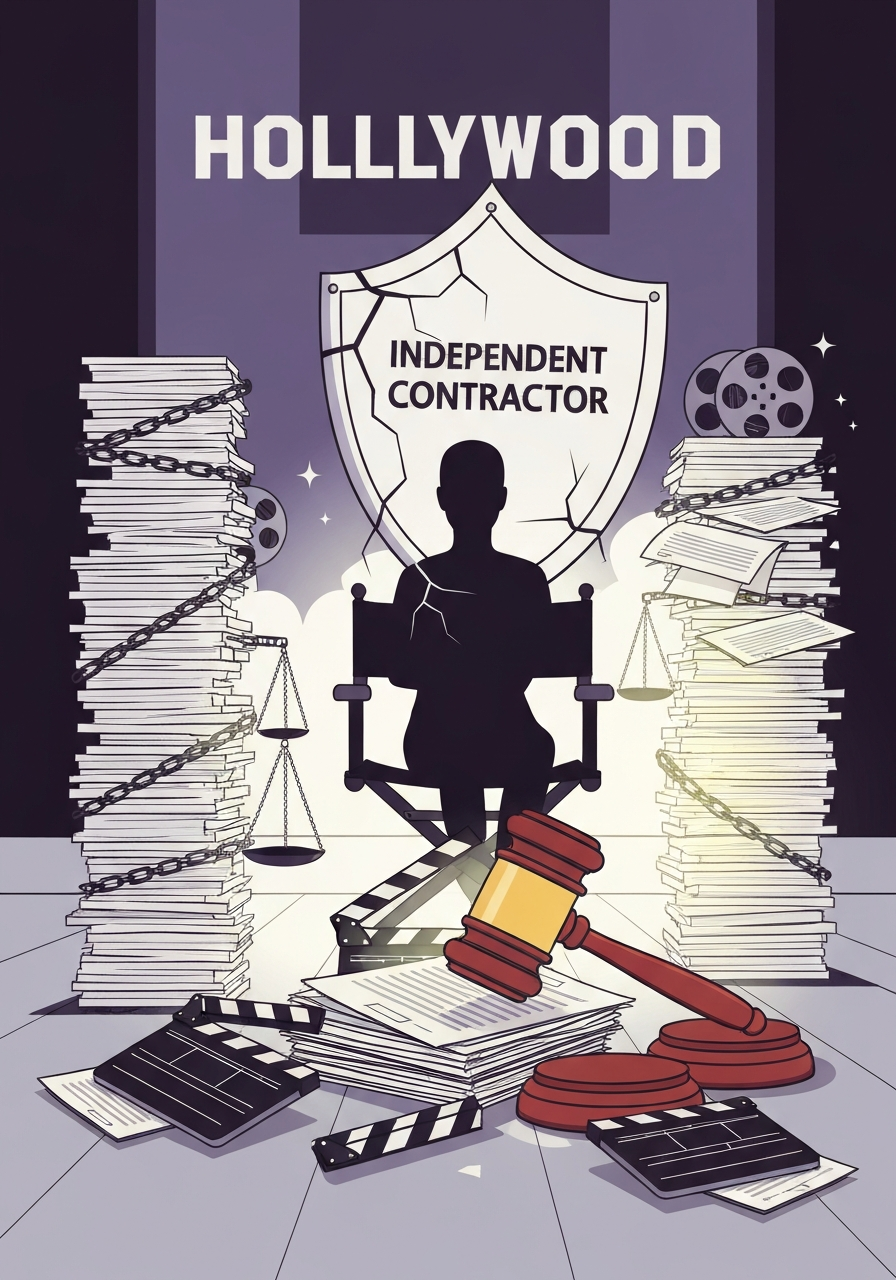
On April 2, 2026, Judge Lewis Liman of the Southern District of New York issued a sweeping 152-page ruling dismissing 10 of Lively's 13 claims, including sexual harassment, defamation, and conspiracy. The central legal reasoning was that Lively functioned as an independent contractor rather than an employee on the production of 'It Ends With Us.' Judge Liman cited Lively's considerable economic independence, pointing to her contractual approval rights over hair, makeup, script changes, scheduling, and even her decision to relocate production from Boston to New Jersey. Title VII of the Civil Rights Act only protects 'employees' at businesses with 15 or more workers, meaning independent contractors have no federal harassment protection regardless of how severe the alleged conduct may be. This ruling starkly demonstrates how an A-list actor's high compensation and extensive contractual power can paradoxically become the very barriers that deny them legal protection. The decision has sent shockwaves through the entertainment industry, forcing a reckoning with the gap between star power and legal vulnerability.
Filming Location vs. Residence: The Protection Gap Created by State Borders
Lively filed claims under California's Fair Employment and Housing Act (FEHA), one of the few state statutes that extends harassment protection to independent contractors. However, principal photography for 'It Ends With Us' took place in New Jersey, not California. Judge Liman ruled that 'none of these acts or occurrences provides the substantial connection to California needed' to invoke FEHA's protections. The irony runs deep: Lively herself had negotiated to move production from Boston to New Jersey to be closer to her family home — a perfectly reasonable personal choice that inadvertently placed her outside the jurisdiction of the very law designed to protect her. According to A Better Balance, only a handful of states and Washington D.C. currently extend harassment protections to independent contractors, with just four states — Maryland, Minnesota, New York, and Rhode Island — offering comprehensive coverage, and partial protections in California and several others bringing the total to roughly seven to ten jurisdictions. This case exposes the precarious patchwork of state labor laws, where a worker's protection can evaporate simply by crossing a state line.
Why the Remaining 3 Claims Are the Real War: Retaliation and Digital Violence
Overshadowed by the headline of 10 dismissed claims, the three surviving causes of action represent the true heart of this litigation. Breach of contract, retaliation, and aiding and abetting retaliation proceed to a May 18 jury trial — with It Ends With Us Movie LLC and Wayfarer Studios as the defendants, as Baldoni himself has been personally removed from these remaining claims. Lively alleges that Baldoni and Wayfarer Studios orchestrated a systematic digital smear campaign after she raised concerns about on-set conduct. Crisis PR experts Melissa Nathan and Jennifer Abel allegedly strategized attacks on Lively before the film's August 2024 premiere, with Nathan's firm proposing a four-month engagement at $175,000. Social media expert Jed Wallace was allegedly contracted at $90,000 for three months to deploy a 'digital army' — creating and distributing fabricated content designed to destroy Lively's public reputation. Lively claims $161 million in damages from this coordinated campaign. A February 2026 settlement conference between the parties proved unsuccessful, with reports indicating the sides failed to reach 'any kind of resolution,' setting the stage for what promises to be one of Hollywood's most closely watched jury trials.
Seven Years After #MeToo, Hollywood's Structural Gaps Remain
Nearly a decade after the 2017 #MeToo movement shook Hollywood to its foundations, this case reveals how fragile the fundamental legal protection framework remains for creative workers. In the entertainment industry, actors, directors, writers, and many crew members work as independent contractors on a project-by-project basis — a structure that places them outside Title VII's employee-only protections. In January 2026, the EEOC voted 2-1 to rescind its workplace harassment enforcement guidance on January 22, with Commissioners Lucas and Panuccio voting in favor of withdrawal and Commissioner Kotagal dissenting, further weakening the federal framework. The BE HEARD Act, first introduced in 2019 to extend workplace protections to independent contractors, was reintroduced in the Senate as S. 3865 on February 12, 2026 by Senator Patty Murray, but GovTrack estimates it has just a 1% chance of clearing committee. Only a handful of states and Washington D.C. currently offer harassment protections for independent contractors. With SAG-AFTRA's contract with AMPTP expiring on June 30, 2026, the question of whether independent contractor protections will reach the bargaining table has taken on new urgency.
Did Baldoni Really Win: Why Victory and Defeat Cannot Be Divided
Some media outlets have framed this ruling as Baldoni's decisive 'victory,' but the reality is far more nuanced than any headline can capture. While Baldoni was personally removed from the remaining three claims, his production company Wayfarer Studios remains squarely in the crosshairs as a defendant, as does the crisis PR operation he allegedly directed. If retaliation is proven at the May 18 jury trial, Baldoni faces potentially irreparable reputational damage regardless of his personal legal status — the court of public opinion draws no such neat distinctions. Conversely, Lively may face public backlash from the widely reported headline of dismissed harassment claims, even as the most consequential allegations proceed to trial. However, she issued a statement declaring that 'the physical pain from digital violence is very real' and vowing to 'never stop fighting to expose the systems that seek to harm, shame, silence and retaliate against victims.' The true outcome of this case will be determined by a jury on May 18, and until that verdict is rendered, neither side can credibly be declared winner or loser.
Positive & Negative Analysis
Positive Aspects
- Exposing Structural Legal Gaps for Independent Contractors
This ruling has brought into sharp public focus a legal blind spot that has quietly harmed workers across industries for decades. By making explicit that Title VII does not protect independent contractors — even those experiencing severe workplace misconduct — the decision creates a powerful catalyst for legislative reform. The case has already reignited congressional debate around the BE HEARD Act and prompted advocacy organizations like A Better Balance and Human Rights Watch to intensify their campaigns for expanded protections. Sometimes it takes a high-profile case involving recognizable names to illuminate systemic problems that affect millions of ordinary workers.
- Surviving Retaliation Claims Set Important Precedent
The fact that retaliation and breach of contract claims survived dismissal is legally significant in its own right. Judge Liman's 152-page ruling found sufficient evidence that a coordinated digital campaign may have been deployed against Lively after she raised workplace concerns — a finding that validates the legal theory that digital smear campaigns can constitute actionable retaliation. If the jury finds in Lively's favor on these claims, it would establish a meaningful precedent that orchestrated online harassment campaigns carry real legal consequences.
- Accelerating the Conversation Around Digital Violence
The detailed allegations in this case — involving crisis PR firms, contracted social media operatives, and systematic content fabrication — have pulled back the curtain on an entire industry of reputation destruction that operates largely in the shadows. The specifics are striking: a social media expert allegedly contracted at $90,000 for three months to deploy coordinated attacks, and a crisis PR firm proposing $175,000 for a four-month campaign. By attaching dollar figures and operational details to what is often dismissed as mere 'online drama,' this case forces a serious reckoning with digital violence as a structured, funded enterprise rather than spontaneous public backlash.
- Empowering Workers to Understand Their Legal Standing
Perhaps the most practical outcome of this case is the education it provides to workers across the gig economy about the actual boundaries of their legal protections. Many independent contractors — from ride-share drivers to freelance designers to Hollywood actors — operate under the assumption that federal anti-discrimination laws protect them. This ruling makes unmistakably clear that they do not. Armed with this understanding, workers can make more informed decisions about contract negotiations, jurisdiction selection, and the legal frameworks available to them.
Concerns
- Reinforcing the Protection Gap at the Worst Possible Time
The ruling arrives at a moment when the gig economy has expanded independent contractor status to tens of millions of American workers, making the Title VII gap more consequential than ever. By affirming that independent contractors fall outside federal harassment protections, the court has effectively reinforced a legal framework designed for a mid-twentieth-century employment model that bears little resemblance to today's labor market. With the EEOC having rescinded its harassment enforcement guidance in January 2026 and the BE HEARD Act facing a mere 1% chance of clearing committee, there is no legislative cavalry on the horizon.
- Creating a Perverse Incentive Structure for Employers
The ruling inadvertently creates a roadmap for companies seeking to avoid harassment liability: classify workers as independent contractors and ensure production occurs in states without independent contractor protections. The more contractual control and economic independence a worker demonstrates — the very qualities that make them valuable — the less legal protection they receive. This perverse incentive structure could accelerate the already prevalent trend of misclassifying employees as independent contractors, particularly in creative industries where project-based work is the norm.
- The Chilling Effect on Future Harassment Reporting
For every Blake Lively with the resources and public platform to pursue litigation through years of legal proceedings, there are thousands of working actors, crew members, and creative professionals who will look at this outcome and conclude that speaking up is not worth the risk. The message received by many in the industry is stark: even with substantial evidence, star power, and financial resources, 10 of 13 claims were dismissed on structural grounds having nothing to do with the merits of the allegations. This chilling effect may be the ruling's most damaging long-term consequence for workplace safety in Hollywood.
- Jurisdictional Complexity Undermines Access to Justice
The ruling highlights how the patchwork of state labor laws creates a system where legal protection depends more on geography than on the severity of alleged misconduct. Lively's decision to move production from Boston to New Jersey — motivated by the entirely personal desire to be closer to her family — had the unintended consequence of removing her from California's more protective legal framework. With only a handful of states offering independent contractor harassment protections, workers face an impossibly complex legal landscape where access to justice becomes a function of where you happen to work, not what happened to you.
Outlook
The April 2, 2026 ruling by Judge Lewis Liman represents far more than a procedural milestone in a celebrity lawsuit — it is a crystallizing moment that exposes deep structural fractures in American labor law, entertainment industry practices, and the legal system's capacity to address harm in the digital age. The 152-page decision methodically dismantled 10 of 13 claims not because the alleged conduct was found to be acceptable, but because the legal framework simply does not reach workers classified as independent contractors. Understanding what comes next requires examining multiple converging timelines and their potential interactions.
The most immediate focal point is the May 18, 2026 jury trial on the three surviving claims: breach of contract, retaliation, and aiding and abetting retaliation. These claims proceed against It Ends With Us Movie LLC and Wayfarer Studios as defendants — notably, Baldoni has been personally removed from these remaining causes of action, though his production company remains squarely in the litigation. The jury will evaluate whether a coordinated digital campaign was orchestrated to destroy Lively's reputation after she raised concerns about on-set conduct. The specifics are granular and damning if proven: social media expert Jed Wallace allegedly contracted at $90,000 for three months to deploy a network of accounts amplifying negative narratives, and crisis PR strategist Melissa Nathan's firm proposed a four-month engagement at $175,000 to manage the counter-narrative. The February 2026 settlement conference between the parties ended without success, with reports characterizing it as failing to reach 'any kind of resolution,' suggesting both sides are prepared for a full trial. If the jury finds in Lively's favor, the $161 million damages claim could result in one of the largest individual judgments in entertainment industry history, establishing that digital retaliation campaigns carry concrete financial consequences.
The legislative landscape offers little immediate comfort to those hoping for systemic reform. The BE HEARD Act, originally introduced in 2019 to extend workplace protections including harassment coverage to independent contractors, was reintroduced in the Senate as S. 3865 on February 12, 2026 by Senator Patty Murray. However, GovTrack estimates it has just a 1% chance of clearing committee — a sobering statistic that reflects the broader political reality of labor reform in the current congressional environment. At the federal administrative level, the situation has worsened: on January 22, 2026, the EEOC voted 2-1 to rescind its workplace harassment enforcement guidance, with Commissioners Lucas and Panuccio voting in favor of withdrawal and Commissioner Kotagal dissenting. This withdrawal removes even the soft guidance framework that had previously signaled federal interest in addressing workplace harassment comprehensively. The combined effect of legislative inaction and administrative rollback leaves independent contractors in a protection vacuum that only state-level action can partially fill.
On the state front, the picture is uneven at best. According to A Better Balance, only four states — Maryland, Minnesota, New York, and Rhode Island — offer comprehensive harassment protections for independent contractors, with partial protections in California and several other jurisdictions bringing the total to roughly seven to ten across the country plus Washington D.C. California's protections, while among the most robust, proved useless to Lively precisely because the alleged conduct occurred in New Jersey. This jurisdictional limitation is not merely a legal technicality — it represents a fundamental design flaw in a system where creative production routinely crosses state lines but legal protections do not follow. For the entertainment industry specifically, where productions regularly relocate based on tax incentives and logistical considerations, the state-by-state approach creates a protection lottery that workers cannot reasonably navigate.
The entertainment industry's own institutional response will be shaped significantly by the SAG-AFTRA contract negotiations with AMPTP. The current contract expires on June 30, 2026, creating a natural pressure point for addressing the independent contractor protection gap. However, collective bargaining has inherent limitations: SAG-AFTRA represents performers, not all creative workers, and negotiating structural changes to employment classification within the confines of an entertainment-specific labor agreement faces substantial legal and practical barriers. The union's leverage will depend in part on whether the Lively case generates sufficient public pressure to make independent contractor protections a priority issue — competing against more traditional bargaining concerns like streaming residuals, artificial intelligence usage, and minimum compensation rates. Whether SAG-AFTRA leadership chooses to make this a headline issue or treats it as secondary to more immediate economic concerns will signal a great deal about the industry's willingness to confront its structural vulnerabilities.
The broader implications extend well beyond Hollywood. The gig economy has expanded independent contractor classification across virtually every sector of the American economy — from technology platforms to healthcare to professional services. The legal reasoning in Judge Liman's ruling applies with equal force to any independent contractor in any industry: if you are not an employee, Title VII does not protect you. The irony embedded in this framework is particularly acute for high-skill, high-compensation workers: the more economic independence, creative control, and contractual authority a worker demonstrates, the more firmly they are classified as independent contractors, and the less legal protection they receive. This creates a perverse incentive structure where the qualities that make workers most valuable to employers are simultaneously the qualities that strip them of legal recourse.
Looking at the medium-term horizon, the Lively case has the potential to catalyze a broader reckoning with digital retaliation as a distinct category of harm. The detailed allegations — involving contracted social media operatives, crisis communications firms, and systematic content fabrication — provide an unusually clear window into the mechanics of reputation destruction campaigns. If the jury trial produces detailed findings about how such campaigns operate, it could provide the evidentiary foundation for future legislation specifically targeting coordinated digital harassment. Human Rights Watch and other organizations have already cited the case in advocacy materials arguing for expanded legal frameworks to address online harm.
The most likely scenario for the coming months unfolds in three phases. First, the May 18 jury trial will dominate public attention and establish whether digital retaliation claims can survive the rigor of jury scrutiny. A verdict for Lively would create powerful momentum for reform; a verdict for the defense would be portrayed as further evidence that the legal system cannot adequately address modern forms of workplace retaliation. Second, the SAG-AFTRA negotiations through June 2026 will reveal whether institutional actors are prepared to translate public outrage into structural change. Third, the longer-term legislative trajectory — both at the federal level with the BE HEARD Act and at the state level with expanded independent contractor protections — will determine whether this moment produces durable reform or fades into the background of an increasingly crowded news cycle.
What remains undeniable is that this case has accomplished something that years of academic commentary and advocacy campaigns could not: it has made the independent contractor protection gap viscerally real to a public audience. The question is no longer whether the gap exists — Judge Liman's 152-page ruling has made that incontestable. The question is whether the legal system, the entertainment industry, and the legislative process possess the will and the capacity to close it. The answer to that question will be written not in courtrooms alone, but in union halls, legislative chambers, and the broader public conversation about what protections workers deserve in an economy that increasingly refuses to call them employees.
Sources / References
- Blake Lively's Sexual Harassment Claims Against Justin Baldoni Dismissed by Federal Judge — Variety
- Judge Dismisses Most of Blake Lively's Claims Against Baldoni, Citing Contractor Status — NBC News
- Blake Lively Lawsuit: What the Ruling Means for Hollywood Workers — CNN
- Blake Lively-Justin Baldoni Lawsuit: 10 Claims Dismissed, 3 Head to May Trial — Deadline
- Why Blake Lively's 'Independent Contractor' Status Mattered More Than Her Allegations — NPR
- Inside the Lively-Baldoni Ruling: What Survives and Why It Matters — Hollywood Reporter
- State-by-State Protections for Independent Contractors Against Workplace Harassment — A Better Balance
- SAG-AFTRA Theatrical/Television Contract Information — SAG-AFTRA
- The Independent Contractor Harassment Gap: Title VII's Unfinished Business — Southern California Law Review
- Senator Murray Reintroduces BE HEARD Act to Protect All Workers from Harassment — Senator Patty Murray Official
- EEOC Votes 2-1 to Rescind Workplace Harassment Enforcement Guidance — HR Dive
- Entertainment Workers Face Widening Protection Gap, Rights Group Warns — Human Rights Watch