
The Day The Pokemon Company Held Competitive Play Hostage — Champions Is Not a Game, It's a Prepaid Reservation
Summary
Pokemon Champions sparked massive backlash by including only 187 of over 1,000 Pokemon (269 entries with Mega Evolutions), removing core competitive items, and forcing the VGC World Championship onto this platform. Combined with the Mega Raichu X false advertising controversy and a locked 30fps even on Switch 2, the game earned a dismal Metacritic user score of 4.2, alongside critic scores of 60 from Dexerto and 65 from Indigo GEEK. This unprecedented decision to stake esports on an unfinished non-mainline title — the first time since 2008 — marks a critical threshold in the neglect of the competitive scene.
Key Points
A World Championship Run on Just 187 Pokemon — The Smallest Competitive Roster in VGC History
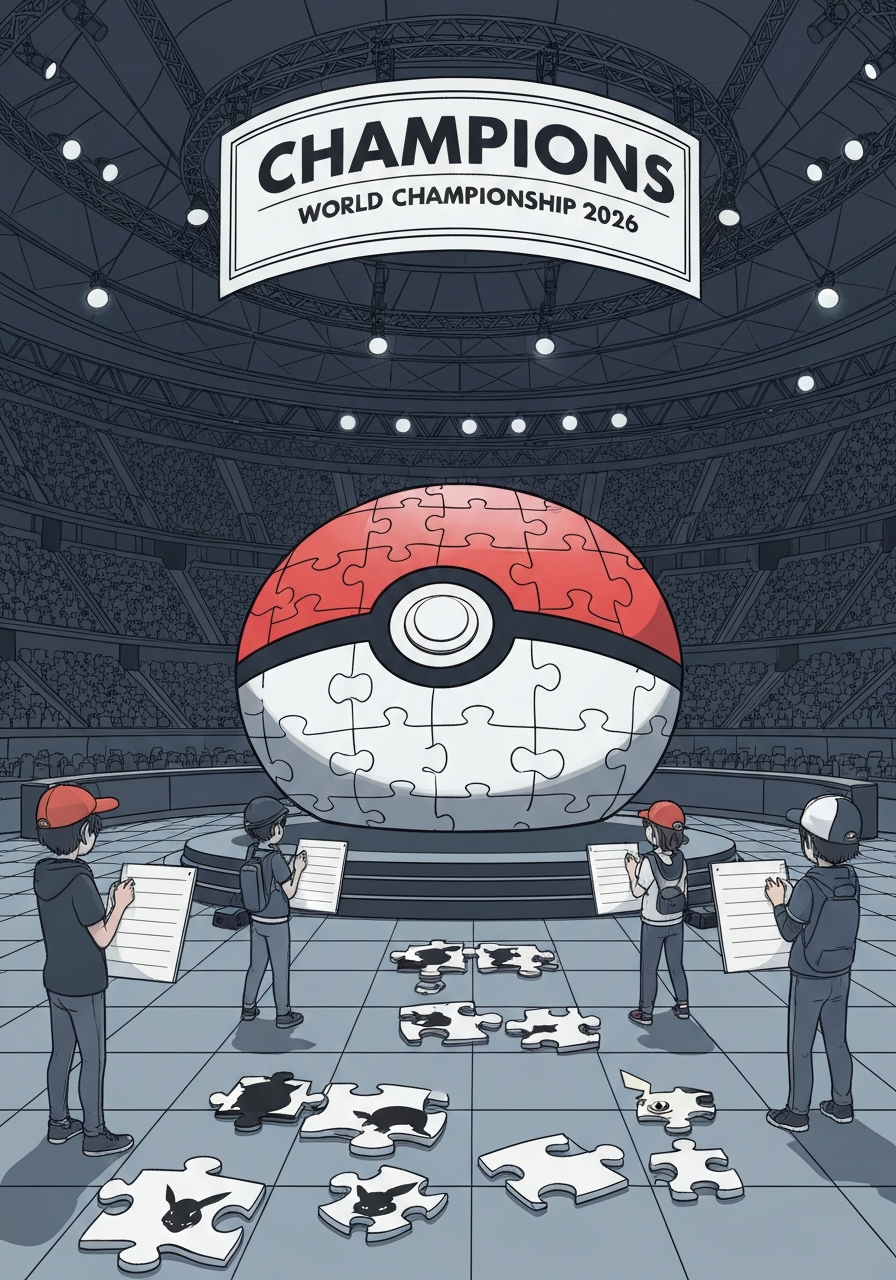
Pokemon Champions launched with a mere 187 Pokemon out of over 1,000 species in the franchise (per Bulbapedia and Serebii.net). Including the 59 Mega Evolutions brings the total to 269 usable entries, but the base roster represents only about 18.7 percent of the full Pokedex. Even accounting for the design philosophy of including only fully evolved forms (with Pikachu as the sole exception), this is the most anemic pool in VGC history, and not a single Legendary or Mythical Pokemon made the cut.
The damage runs far deeper than just a thin roster. The competitive items that have defined VGC strategy for years were gutted wholesale. According to Serebii.net's Joe Merrick, only 30 items remain in the game outside of Mega Stones and Berries. Life Orb, Choice Band, Choice Specs, Choice Scarf, Assault Vest, Rocky Helmet, Eviolite — every staple that shaped how players built teams and executed strategies for years — all gone. CentroLeaks' post on X announcing the removal of Life Orb, Choice Band, and Choice Specs from competitive Pokemon ignited an immediate firestorm of community outrage.
This is not a balance adjustment. This is a demolition of the competitive ecosystem's foundation. Thousands of hours of strategic knowledge that players painstakingly accumulated have been rendered worthless overnight. The Metacritic user score of 4.2 speaks volumes about the community's fury. For perspective, Scarlet and Violet VGC regularly featured over 400 usable Pokemon, with top-16 tournament compositions drawing from 50 to 80 unique species. In a 187-Pokemon sandbox with the core item toolkit stripped away, meaningful strategic diversity is structurally impossible.
A First Since 2008 — VGC Pushed Outside the Mainline Series
Since VGC was introduced to the World Championship circuit in 2008, every official tournament has been played on the current mainline series title. From Diamond and Pearl through Scarlet and Violet, VGC's identity was inseparable from battling within the main games. In 2026, The Pokemon Company shattered that 18-year tradition by forcibly migrating VGC to Champions, a standalone free-to-start competitive title.
The official Pokemon.com announcement laid out a phased transition: Regulation I events on Scarlet and Violet wrap up from April 1, then Online Global Challenges begin in May, leading through Asian Nationals to the first official live event in TPCi regions — the Indianapolis Regional on May 29-31 (confirmed by Victory Road). The Turin Special Event on June 6-7 and the North American International on June 12-14 follow, culminating in the World Championship on August 28-30 — all played on this unfinished game. Regulation Set M-A applies from April 8 through June 17 for official Ranked Battles and VGC format, with the 2026 season adopting an Open Team List format.
Players were given zero choice in this matter. They are effectively being told to abandon years of expertise honed in Scarlet and Violet and adapt to a beta-level game released three days prior. This decision reduces esports to a marketing appendage for a game launch. Starting from the 2027 season, Champions becomes mandatory for all Championship Point events, making this an irreversible transition. The competitive community's voice was absent from the entire decision-making process.
Shown in the Trailer, Missing from the Game — Walking the Line of False Advertising
Mega Raichu X, showcased prominently in the Pokemon Day trailer, does not exist in the launch version. Some Pokemon whose Mega Evolutions are technically in the game cannot actually Mega Evolve because their required Mega Stones are missing from the item pool. The Pokemon Company inserted a disclaimer at the bottom of the trailer stating that footage might include Pokemon unavailable at the time of the Nintendo Switch version's release, but this is a textbook case of deliberately inflating consumer expectations and then hiding behind fine print.
Kotaku used the term 'False Advertising' directly in their headline. GameSpot reported it under the title 'Pokemon Champions Players Say Content From Trailers Isn't In Game.' GAMES.GG published a separate article spotlighting the gap between trailer and launch content. NME described Champions as 'half-baked' while relaying fan criticism. A legal disclaimer might hold up in court, but it does nothing to shield consumer trust.
With the EU's Digital Fairness Act expected to be proposed in Q3 2026 (per the European Parliament Legislative Train Schedule), marketing practices like these carry escalating legal risk. The Stop Killing Games European Citizens' Initiative has secured 1,294,188 validated signatures, and a European Parliament public hearing is set for April 16, 2026, with the EU Commission required to respond by July 27. In a climate where consumer rights in live service gaming are gaining unprecedented political momentum, repeatedly advertising features that are absent at launch will structurally erode marketing credibility across the entire Pokemon franchise. Future trailer reveals risk being met not with excitement but with suspicion.
30fps on Switch 2 — When Legends Z-A Runs at 60fps, Why Can't the Battle-Only Game?
Pokemon Legends Z-A delivers a stable 60fps on Switch 2 and has been widely praised for it. Technical breakdowns confirm resolution scaling up to 2160p docked and 1080p handheld, along with improved shadows, textures, object draw distances, and foliage density. The enhanced Switch 2 version of Scarlet and Violet also runs at 60fps. Yet Champions, running on the exact same hardware, is locked to 30fps.
CentroLeaks remarked on X: 'Pokemon Champions runs at 30 FPS even on Switch 2. Considering Pokemon Winds/Waves trailer was also 30 FPS... RIP Pokemon 60 FPS era 2025-2025.' The post went viral. Nintendo Life's review flagged '30fps with clear frame pacing issues, and animations stuttering for no reason,' adding that even menu navigation exhibits subtle input lag. Screen Rant covered the regression under the headline 'Pokemon Fans Say Farewell To An Era.'
In a competitive battle game, frame rate directly determines response times and visual feedback clarity. Legends Z-A includes open-world exploration, catching, NPC interactions, and cinematic story sequences, yet still achieves 60fps. A game whose sole purpose is battles sitting at 30fps is technically inexcusable. This reveals a resource allocation problem and strongly suggests Champions did not receive adequate development time or optimization. In competitive gaming, 30fps in 2026 is an unacceptable specification.
Free but Not Free — The Dual Structure of Free-to-Start
Pokemon Champions uses the Nintendo-specific label 'free-to-start,' but in reality it is a multi-layered live service monetization machine. Nintendo Life's breakdown reveals a premium Battle Pass at $9.99, a monthly membership at $4.99 (annual at $49.99), and Starter Pack bundles. The membership is required to expand box capacity to 1,000 Pokemon and unlock 15 battle team slots. Per Game8's review, unlocking every purchasable item and feature costs approximately $67.
Battle Pass Season M-1 runs until May 13, with premium purchasers receiving exclusive Pokemon and Mega Stones as rewards. Leaked information from Insider Gaming about the next season's Battle Pass rewards suggests that the proportion of paid content will increase, not decrease. An additional monetization layer exists through Victory Points (VP), an in-game currency used to purchase Mega Stones, accessories, costumes, and music.
The Pokemon Company has stated that paid elements do not guarantee wins and that free players can build identical teams. However, the structural advantage of premium Battle Pass holders encountering their desired Pokemon more frequently at the Roster Ranch is undeniable. Pro players who are effectively forced to use this game for VGC now face the expectation of recurring payments just to access basic competitive features. This amounts to a pay-to-compete structure that directly violates the fairness principles of esports.
Positive & Negative Analysis
Positive Aspects
- The Direction of a Standalone Competitive Platform Is Fundamentally Sound
VGC tethered to the mainline series always suffered from the tension between story-mode balance and competitive balance. Building a dedicated competitive title is a strategy that the fighting game genre has validated for decades. League of Legends, Valorant, and Street Fighter 6 all succeeded in esports precisely because they were designed from the ground up for competition. The problem is not the vision but the execution's impatience.
- The Onboarding System for Competitive Newcomers Is Genuinely Impressive
Dexerto specifically highlighted the onboarding experience even while awarding only 60 out of 100. Champions built a remarkably well-designed tutorial and guided system for players new to competitive play. Individual Values, Effort Values, nature modifiers have been streamlined or automated. Nintendo Life's review title — 'The Most Accessible & Flawed Competitive Pokemon Has Ever Been' — captures this duality perfectly.
- Mega Evolution's Return and the Potential for Strategic Depth Expansion
Champions adopting Mega Evolution as its core battle mechanic addresses a long-standing demand from the competitive community. Since Generation VI, the constant rotation of gimmicks left Mega Evolution fans perpetually disappointed. If new Mega Evolutions are added and the pool expands, Champions has the potential to cultivate a distinctive competitive metagame entirely its own.
- The Live Service Model Could Enable Rapid Meta Refreshes
Mainline-series VGC had a chronic stagnation problem between DLC drops. A live service model theoretically allows Champions to deploy new Pokemon, items, and balance patches on a much faster cadence. If the Battle Pass seasonal structure introduces fresh content each cycle, the VGC metagame could be revitalized every season.
- Seeds of a Cross-Platform Competitive Ecosystem
Champions has a planned mobile launch following the Switch release. If Pokemon's competitive battling enters the mobile gaming market — valued at approximately $144 billion in 2025 according to Precedence Research — VGC's accessibility and participant pool could expand dramatically. If official VGC-format battles become available on smartphones worldwide, this entry barrier is fundamentally eliminated.
Concerns
- An Unfinished Launch That Fractured the Competitive Ecosystem
The problem with 187 Pokemon and gutted items is not simply 'lack of content' — it is an assault on what makes competitive Pokemon work. This is equivalent to removing the rook and bishop from chess and then hosting a tournament. Custom and private rooms do not even support 6v6 singles, and a rental team feature is entirely absent.
- Complete Erasure of Player Agency in the Forced Transition
VGC players had absolutely no voice in the decision to transition to Champions. Every major event of the 2026 season was locked to Champions without consultation. The first official live tournament arrives just seven weeks after launch, an absurdly compressed timeline. Starting in 2027, all Championship Point events mandate Champions, making the shift permanent.
- A Competitive Game at 30fps in 2026 Is an Anachronism
Releasing a game that claims to be built for competition at 30fps in 2026 is indefensible. The fact that Legends Z-A from the same franchise achieves 60fps on Switch 2 makes the comparison damning. The bugs catalogued in the developer's April 9 apology compounded this: dual Mega Evolution sequence randomization, UI freeze, Gallade displaying as female, and Encore not interacting correctly with Lightning Rod.
- Free-to-Start Is a Euphemism for Forced Monetization
Champions' revenue model fundamentally conflicts with competitive integrity. A membership is required to access basic competitive functionality. The shift from roughly $60 for the base game to a service demanding continuous seasonal spending has paradoxically raised the economic threshold for competitive entry.
- The False Advertising Controversy and Marketing Practices Hidden Behind Disclaimers
Mega Raichu X appeared in the Pokemon Day trailer but does not exist in the launch build. Kotaku called it false advertising outright. The regulatory landscape is closing in with the EU Digital Fairness Act and the Stop Killing Games ECI, carrying not just reputational risk but mounting legal exposure.
- Launching Immediately After Pokopia — The Worst Possible Timing
Pokopia achieved a Metacritic score of 90, making it the highest-rated Pokemon game ever. Champions launched exactly one month later on April 8. The quality gap between the two titles raises serious questions about development resource allocation within the franchise.
Outlook
The controversy surrounding Pokemon Champions will generate medium-to-long-term ripple effects along three distinct axes: the Pokemon franchise's competitive ecosystem, the game industry's launch practices, and the evolving relationship between esports and publishers. What follows is a detailed outlook across each time horizon.
In the short term — the next one to six months — the most critical inflection point is the Indianapolis Regional Championship on May 29. This tournament is the inaugural live VGC event using Champions, and it will serve as the first real-world stress test of the game's competitive viability. The central question is whether a metagame constrained to just 187 Pokemon (269 entries with Mega Evolutions) and a gutted item pool of only 30 items excluding Mega Stones and Berries (per Serebii.net) can produce meaningful competitive depth. I predict this event will display an extremely polarized metagame. With such a narrow species pool and the core item toolkit stripped away, the diversity of top team compositions will fall far below traditional VGC standards. Historical top-16 analysis across VGC seasons typically shows 50 to 80 unique Pokemon represented at the highest level of play. In the early Champions meta, I expect this figure to contract to 30 to 40 species or fewer, producing repetitive matchups that erode viewer engagement.
The developer's patch velocity is equally pivotal to the short-term trajectory. The April 9 apology issued one day post-launch, complete with a bug fix roadmap, signals awareness of the problem. But the fundamental distinction that must not be overlooked is that bug fixes and content additions are entirely different magnitudes of work. Hotfix patches for the listed bugs can realistically ship within weeks. Adding new Pokemon or reintroducing deleted items, however, requires balance testing, animation work, and competitive integrity verification that realistically takes two to three months at minimum. I therefore assess the probability of meaningful roster expansion before the August 28-30 World Championship as low.
The monetization trajectory in the immediate term also bears watching closely. Battle Pass Season M-1 ends on May 13, and the first season's revenue performance will set the tone for The Pokemon Company's content investment decisions going forward. If early monetization falls below internal targets — a plausible outcome given the Metacritic user score of 4.2 — the result could be reduced content budgets in subsequent seasons. This creates a potential vicious cycle: poor reception leads to lower spending, which leads to less investment, which further depresses reception.
The trailer false advertising controversy will manifest in the near term primarily through community boycott movements and social media campaigns rather than formal legal action. The 4.2 Metacritic user score represents a catastrophically poor first impression that will shadow Champions through its eventual mobile app store listing.
In the medium term — six months to two years — the outlook diverges into three distinct scenarios.
The Bull Case envisions The Pokemon Company executing an aggressive recovery. By late 2026, the roster expands beyond 400 Pokemon. Deleted core items are restored. A 60fps performance patch arrives for Switch 2. The mobile version launches successfully. VGC viewership actually increases. I assign this scenario a probability of roughly 20 percent.
The industry does offer precedents for successful post-launch recovery. No Man's Sky transformed itself through years of free content updates and eventually reached 80 percent positive reviews on Steam. Cyberpunk 2077 rebuilt consumer trust through extensive patching and the Phantom Liberty expansion. These examples prove recovery is possible but also reveal the enormous cost: years of sustained development investment, genuine humility, and a willingness to fundamentally rethink the product. The critical problem for Champions is that The Pokemon Company has never demonstrated this caliber of post-launch commitment.
The Base Case sees Champions reaching a functional but uninspiring level. By the 2027 season, the roster grows to between 250 and 350 Pokemon. Some deleted items return. The most disruptive bugs are patched. But the 30fps limitation is never fundamentally resolved. Monetization complaints persist. The VGC community adapts because it has no alternative, but competitive enthusiasm declines measurably. I assign this scenario the highest probability at 55 percent. The Pokemon franchise's inertia and monopolistic position in its niche virtually guarantee minimum survival. The absence of any competing platform for official competitive Pokemon is The Pokemon Company's most powerful structural advantage.
The Bear Case imagines Champions becoming a cautionary tale. Content updates arrive slowly. The monetization model intensifies. Professional players begin retiring or migrating to other games. VGC tournament viewership drops 30 to 50 percent. The World Championship's prestige erodes. I estimate this scenario at 25 percent, with probability increasing sharply if the developer's patch cadence fails to meet even modest expectations.
In the long term — two to five years out — the most consequential dimension is the precedent this event sets across the broader game industry. If The Pokemon Company's forced transition to Champions is ultimately judged as successful, other major publishers will take note. This would signal a new phase in the commercialization of esports where competitive integrity becomes increasingly subordinate to revenue model optimization.
Conversely, if Champions fails badly enough to contract the VGC scene, The Pokemon Company faces an uncomfortable reckoning. A mainline-series VGC revival around 2028 or 2029 is the most probable fallback. But rebuilding a fractured competitive ecosystem is categorically harder than building a new one.
The regulatory environment adds another long-term dimension. The EU's Digital Fairness Act, scheduled for a Q3 2026 proposal, is expected to include provisions directly targeting gaming: mandatory real-currency equivalence displays, restrictions on addictive design patterns, dark pattern prohibitions, and enhanced protections for minors. The Stop Killing Games ECI, having secured 1,294,188 validated signatures, has a European Parliament public hearing confirmed for April 16, 2026. On March 31, 2026, French consumer group UFC-Que Choisir filed suit against Ubisoft over The Crew's shutdown, establishing what may become a foundational legal precedent.
Ultimately, the Pokemon Champions incident illuminates a tension that has been building across the game industry for years: the growing imbalance between publisher power and player community rights. If the world's largest media franchise can treat its competitive community with this degree of institutional indifference, the implications for smaller franchises are stark.
One final critical dimension deserves attention: I believe Pokemon Champions' ultimate trajectory hinges on its mobile launch. The trailer disclaimer specifically referencing the Nintendo Switch version's release timing strongly implies that the mobile version will arrive with a substantially more complete feature set. Given the mobile gaming market's staggering scale — approximately $144 billion in 2025 per Precedence Research — The Pokemon Company's actual strategic objective may not be VGC preservation at all. It may be the conquest of mobile competitive gaming.
Viewed through this lens, the VGC transition starts to look less like a competitive scene decision and more like a mobile marketing strategy. VGC players and their tournaments become not the end goal but the marketing vehicle. Unless this structural reality is recognized and addressed transparently by The Pokemon Company, no volume of patches, content updates, or community engagement initiatives will resolve the fundamental trust deficit that now defines the relationship between the publisher and its competitive player base.
Sources / References
- Feels Like A Fleshed Out Beta - Fans Are Unhappy With Pokemon Champions At Launch — Nintendo Life
- Pokemon Champions Accused Of False Advertising As Fans Revolt — Kotaku
- Play! Pokemon Competitions Transition to Pokemon Champions on April and May 2026 — Pokemon.com
- Pokemon Champions Is The Official Competitive Software For Worlds 2026 — TheGamer
- Pokemon Champions Players Say Content From Trailers Isn't In Game — GameSpot
- Pokemon Champions Devs On Buggy Launch: We Sincerely Apologize — Kotaku
- Pokemon Champions: In-Game Purchases - Membership & Battle Pass Explained — Nintendo Life
- Pokemon Champions Makes Poor First Impression on Fans — GamesRadar+
- List of Pokemon in Pokemon Champions — Bulbapedia
- Pokemon Champions - Available Pokemon — Serebii.net
- Structure of the 2026 Season — Victory Road
- Pokemon Champions Review: An Unfinished Battle Sim With Huge Potential — Dexerto
- Pokemon Pokopia Is Currently the Highest-Rated Pokemon Game Ever on Metacritic — VGC (Video Games Chronicle)
- Pokopia Metacritic Score Makes It 2026s Highest-Rated Game and Best Pokemon Title of All Time — GamesRadar+
- Review: Pokemon Champions (Switch) - The Most Accessible & Flawed Competitive Pokemon Has Ever Been — Nintendo Life
- Pokemon Champions Faces Early Criticism Over Limited Pokedex, Performance Issues, And Cut Items — GameFragger
- Pokemon Fans Criticise Half-Baked New Game Champions — NME
- Pokemon Champions Dev Responds to Backlash With Major Bug Fix Update Coming Soon — Vice
- Pokemon Champions Bug Fixes Announced One Day After Release — Insider Gaming
- Digital Fairness Act - Legislative Train Schedule — European Parliament
- Stop Killing Games - European Citizens Initiative — Stop Killing Games
- Pokemon Fans Say Farewell To An Era: It Was Fun While It Lasted — Screen Rant
- Pokemon Champions Limited Pokedex and Performance Leave Some Fans Disappointed — Game Rant
- What's New for the 2026 Pokemon Championship Series? — Pokemon Championships Official