
India: $15/Month Anti-Aging Shot. U.S.: $1,027 — Insurance Denied. The Paradox Ozempic's Patent Cliff Created.
Summary
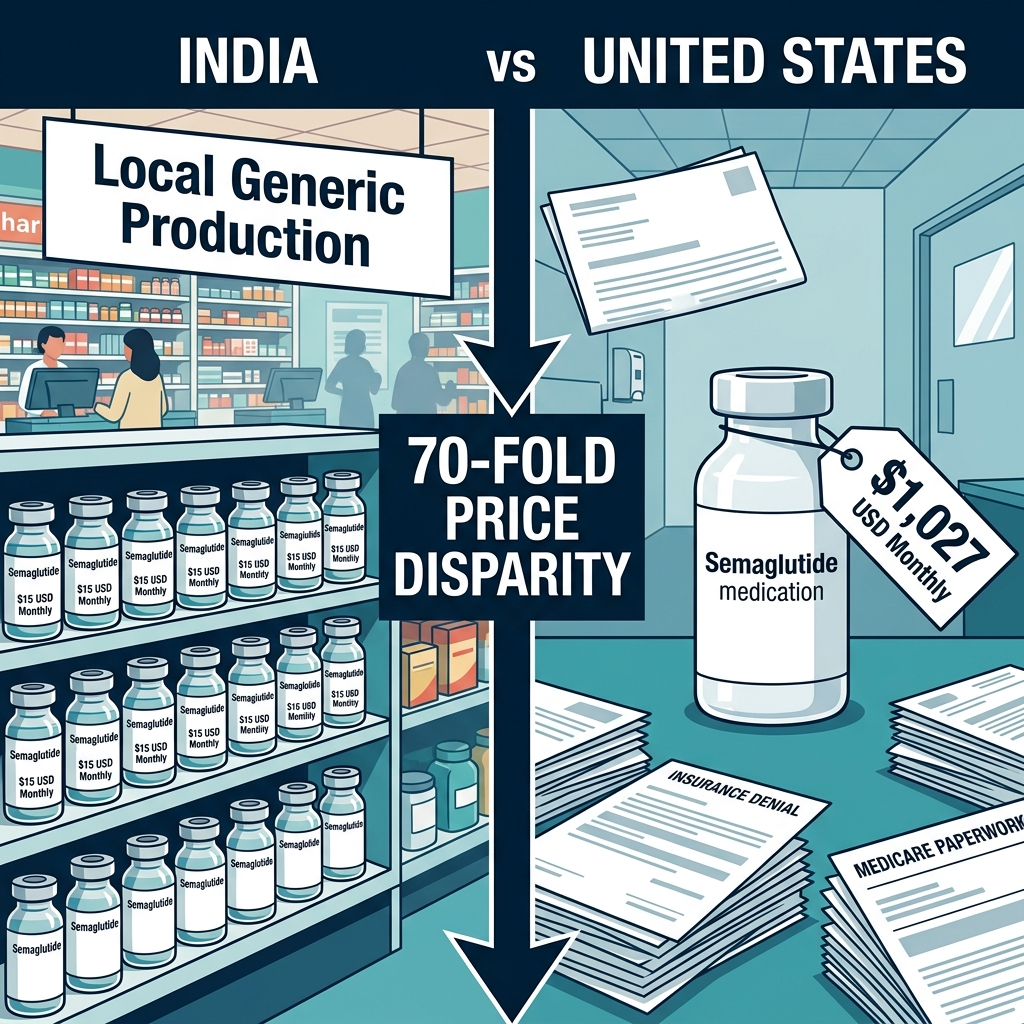
The first randomized controlled trial demonstrating that semaglutide slows epigenetic aging — with PCGrimAge declining by 3.08 years, PhenoAge by 4.90 years, and DunedinPACE by 9% — was published in Nature Communications, yet the study carries inescapable limitations: 84 HIV-associated lipodystrophy patients, a 32-week window, and aging measurements added as a post-hoc endpoint rather than the trial's primary objective. Lead author Michael Corley explicitly stated, "We are not saying that semaglutide reverses aging or makes people younger" — a caveat stripped from media headlines that instead proclaimed a 3.1-year biological age reversal. The divergence across three clocks — from 3.08 to 4.90 years of apparent benefit — itself exposes the interpretive limits of epigenetic timing tools, which capture population-level statistical associations rather than individual causal mechanisms. Far more transformative than this single study, however, is what happened on March 20, 2026: India's core semaglutide patent (IN 262697) expired, unleashing more than 55 generic brands at prices as low as ₹1,290 per month (~$15), while the United States maintains brand exclusivity through 2031–2036 at $1,027/month with Medicare obesity coverage legally excluded by a 2003 law. For the first time in biomedical history, the benefits of a major pharmaceutical innovation are reaching scale in a developing nation before they are broadly accessible to citizens of the country that built the regulatory system enabling that innovation — a structural reversal that mirrors Cipla's 2001 HIV drug revolution, which expanded African patient access from 8,000 to 12 million people.
Key Points
The First RCT Evidence — and Why the Post-Hoc Label Is Not a Technicality
Michael Corley's team at UC San Diego published this double-blind, placebo-controlled trial of 84 adults with HIV-associated lipodystrophy — 45 receiving semaglutide, 39 placebo — over 32 weeks in Nature Communications, reporting PCGrimAge declining 3.08 years (p=0.007), PhenoAge 4.90 years (p=0.004), and DunedinPACE slowing 9% (p=0.01). Critically, epigenetic aging was not the trial's original primary endpoint — visceral fat reduction was — and the aging analysis was added post-hoc, meaning the hypothesis was formed after researchers had already seen the data. This distinction matters enormously: post-hoc analysis is exploratory evidence, not confirmatory evidence, and cannot carry the evidentiary weight of a pre-specified endpoint. The lead author himself made this explicit when he stated, "We are not saying that semaglutide reverses aging or makes people younger" — a statement that headlines proclaiming a "3.1-year age reversal" directly contradict. Media outlets compounded the distortion by reporting "108 participants" when the actual epigenetic analysis covered 84, illustrating how press release inflation and unverified reproduction can transform a nuanced exploratory finding into a definitive-sounding mass-market claim. AdaptAge, CausAge, DamAge, and the Intrinsic Capacity clock showed no significant response, meaning the effect is pathway-specific rather than a broad-spectrum anti-aging signal, and the interpretation of even the positive clocks must account for the full pattern of responses and non-responses across the battery.
Epigenetic Clocks: The Most Accurate Biological Age Tool Available — With Critical Individual-Level Limits
The Generation Scotland cohort study of 18,859 people confirmed DunedinPACE as the strongest predictor of all-cause mortality among 14 aging biomarkers, and GrimAge v2's C-statistic of 0.808 is clinically impressive by established standards. A ScienceDirect Q1 2026 systematic review concluded that "epigenetic age is not synonymous with aging itself, but it is the most accurate measure of biological age currently available" — acknowledging both the tool's predictive power and its conceptual separation from aging as a direct measurable outcome. The critical limitation articulated in a PMC-published academic review is that these clocks "capture population-level statistical associations" and lack "the validation framework needed for individual-level clinical decision-making," meaning a clock can tell you your aging pace has probably slowed relative to the group average but cannot tell you that you are genuinely 3.1 years younger in any clinically actionable sense. The divergence in this study itself — PCGrimAge at −3.08 years, PhenoAge at −4.90 years, DunedinPACE at a 9% rate change — represents a 58% relative spread in effect size between the smallest and largest positive readings from the same patients, drug, and timeframe. Until the field reaches consensus on which clock most accurately predicts meaningful aging outcomes, translating any single clock's reading into an individual life-extension claim remains scientifically unjustifiable. The 9% DunedinPACE reduction is a meaningful statistical signal worth investigating — not a proven personal outcome.
India's Patent Cliff: 55+ Generics, 80–90% Price Drop, 236 Million Potential Beneficiaries
On March 20, 2026, India's core semaglutide patent (IN 262697) expired, and within days Dr. Reddy's, Zydus, Alkem, Sun Pharma, Glenmark, and Natco launched generics simultaneously, with more than 55 competing brands entering the market and prices falling from ₹8,800–11,175/month (~$105–133) to as low as ₹1,290/month (~$15) — an 80–90% reduction against the originator. Sun Pharma's Sematrinity offers weekly injections at $8; Dr. Reddy's Obeda at ₹4,200/month ($50) still represents a 60%+ discount; and even Zydus's Semaglyn at ₹2,200 ($26) sits at roughly 25% of the original price. Every company launching a generic holds DCGI approval and an established global active pharmaceutical ingredient supply record, providing baseline institutional quality assurance even if cold-chain integrity at the final mile remains a risk to monitor. India's 100+ million diabetics and 136+ million pre-diabetics represent a demand pool whose cardiovascular and metabolic gains from accessible semaglutide — at prices already proven in SELECT's 17,604-patient trial — constitute a major public health event regardless of how the anti-aging question eventually resolves. The WHO projects overweight population exceeding 50% of all adults globally by 2035, and India's generic manufacturing infrastructure is the same supply network that exported HIV generics across Africa — meaning the access impact may extend well beyond India's own borders. At $15/month, the barrier to semaglutide's already-proven benefits is no longer efficacy doubt: it is purely cost, and that barrier has now been removed for the world's most populous democracy.
The U.S. Self-Imposed Access Prison: How a 2003 Law Is Costing American Patients Decades
Ozempic's U.S. uninsured cash price stands at $1,027/month on GoodRx; Wegovy's manufacturer-disclosed price is approximately $1,400; even cash-pay discounts bottom out at $499/month — placing the same molecule at a minimum 33 times more expensive in the United States than in India and up to 93 times more at list price. The structural cause is the 2003 Medicare Modernization Act, which explicitly excludes GLP-1 drugs prescribed for obesity from Medicare Part D, a legal exclusion that cannot be reversed by regulatory decision and requires Congressional legislation to change. The Trump administration formally declined to expand this coverage in April 2025, the CMS BALANCE Model was indefinitely postponed, and the only remaining Medicare pathway — the GLP-1 Bridge Program at $50/month co-pay — is scheduled to end in late 2027. Formulation and method patents protect through 2029–2033, placing realistic generic entry at 2031–2036 at the earliest, during which time Indian and Chinese patients will have had a decade of affordable access before most Americans gain a comparable option. Kaiser Family Foundation analysis has confirmed this structure constitutes a systematic coverage gap affecting tens of millions of Medicare-eligible Americans for whom cost is the sole barrier to a drug with clinically proven cardiovascular mortality benefit. The ultimate irony is structural: the country whose regulatory infrastructure made semaglutide's global approval possible has constructed the fewest accessible pathways for its own elderly citizens to benefit from it.
Cipla's 2001 HIV Precedent: The Same Playbook, the Same Companies, 25 Years Later
When India's Cipla offered triple antiretroviral therapy for $350 per year in 2001 — under $1 a day, at roughly 3% of GSK's price — WIPO formally recognized that decision as having "brought accessibility and affordability to the center of the medicines movement," and African HIV treatment coverage grew from 8,000 to 12 million patients as a direct consequence. The structural mechanism now playing out with semaglutide generics is identical: India's major pharmaceutical manufacturers entering a market en masse at patent expiry, driving prices to 10–15% of originator levels using production infrastructure built and refined during the HIV revolution. The same companies — Dr. Reddy's, Sun Pharma, and the extended Cipla-era manufacturing network — are executing the same playbook, demonstrating that India's pharmaceutical industry has institutionalized this access-acceleration capability as a repeatable strategic competency. The key difference worth acknowledging is that HIV was a life-or-death infectious disease while semaglutide's anti-aging effects remain under investigation in a general population; the drug's cardiovascular and metabolic benefits, however, are already validated at scale in SELECT's 17,604 patients. Whether the semaglutide access revolution ultimately parallels the HIV revolution in its public health impact will be answered not by headlines but by five to ten years of population-level data from the streets and clinics of India, China, and the other markets that will follow. The mechanism is proven; the scale of benefit depends entirely on how well the evidence — both clinical and real-world — continues to develop.
Positive & Negative Analysis
Positive Aspects
- Biomedical Innovation Democratizing in the Developing World First — A Historic Structural Inversion
Virtually every pharmaceutical innovation of the last century reached wealthy countries first, with developing nations gaining access a decade or more later if at all. Semaglutide generics in India represent the first large-scale inversion of this pattern: at $15/month in Mumbai versus $1,027/month in New York, affordable access now exists in the lower-income country while the wealthier one is locked out by its own patent system. The cardiovascular and weight-management benefits confirmed in SELECT's 17,604-patient trial are not speculative — they translate directly to clinically proven public health gains for India's 236 million diabetic and pre-diabetic population, independent of any unresolved anti-aging claim. WHO's projection that overweight-related mortality kills 3.7 million people annually underscores the magnitude of what accessible pricing can achieve at population scale. India's generic pharmaceutical infrastructure — the world's leading supplier of affordable essential medicines — is uniquely positioned to extend this access beyond India to Africa, Southeast Asia, and Latin America through the same export channels that disseminated HIV generics in the 2000s. This structural shift in who benefits first from biomedical innovation may ultimately prove more consequential for global human health than the specific anti-aging finding that triggered the current media cycle.
- SELECT Trial's 17,604-Patient Dataset Anchors the Case for General-Population Benefit
The most significant limitation of the epigenetic aging study is its 84-patient HIV-specific population, which constrains extrapolation to general demographics. The SELECT trial provides the critical counterweight: across 17,604 cardiovascular patients with no diabetes, followed for approximately 208 weeks, semaglutide reduced major adverse cardiovascular events by 20% — a real-world rate comparison of 6.5% versus 8.0% in the placebo arm, alongside average weight loss of 10.2% and waist circumference reduction of 7.7 cm. These results represent a pre-specified primary endpoint in a trial powered for this population at this scale, not an exploratory post-hoc addition, giving the cardiovascular finding an evidentiary grade that the epigenetic study cannot match. GLP-1 receptors distributed across the brain, heart, and kidneys support a mechanistically coherent explanation for these systemic effects through visceral fat reduction, inflammatory marker suppression (IL-6, sCD163), and improved insulin sensitivity — pathways that also happen to overlap with the clocks that showed positive response in the epigenetic study. SELECT data provides a solid evidential floor for semaglutide's value in general populations that is completely independent of any anti-aging claim and remains valid regardless of how VITAL-H ultimately resolves. This is why SELECT matters so much to the overall picture: the drug has proven real-world benefit at scale that justifies the access revolution underway in India even before the aging question is answered.
- VITAL-H Will Deliver the First Rigorous Healthspan-Endpoint Data Between 2028 and 2031
VITAL-H represents precisely the scientific upgrade this field requires to move from exploratory to confirmatory evidence. Enrolling 726 adults in their sixties and directly comparing semaglutide, rapamycin, and dapagliflozin against placebo — with healthspan itself as the primary endpoint, not a surrogate marker or post-hoc addition — it will generate the first data capable of answering whether these agents extend functional healthy years in a general elderly population. The institutional coalition is unusually credible: Stanford's longevity research infrastructure, the Buck Institute's aging biology depth, Columbia University's clinical trial capacity, and UT Health San Antonio's operational leadership. The 2028–2031 readout window aligns with a period when India will already have tens of millions of real-world generic semaglutide users, creating a natural epidemiological complement to the controlled trial that no pharmaceutical company could have designed or funded. If VITAL-H confirms benefit, the scientific case for semaglutide as a first-generation anti-aging intervention will be sufficient for serious FDA review. The parallel accumulation of rigorous clinical trial data and massive real-world observational evidence is an opportunity the aging research field has never previously encountered at this scale or speed.
- Epigenetic Clock Technology Is Maturing Rapidly, Strengthening the Evidence Foundation
The Generation Scotland study's finding that DunedinPACE outperforms 13 other aging biomarkers in predicting all-cause mortality, and GrimAge v2's C-statistic of 0.808, signal a technology moving from research curiosity toward clinical-grade tool with measurable acceleration. ScienceDirect's 2026 systematic review characterized third-generation clocks as the current gold standard for biological age measurement, while acknowledging that population-level validity precedes individual-level validity in the maturation sequence of any biological measurement tool. What this progression means for semaglutide research is that the measurement infrastructure for any future confirmatory trial is already more reliable than it was when the 84-patient study was designed — and will be more reliable still by the time VITAL-H's 2028 interim data arrives. As field consensus develops on which clocks most accurately predict lived aging outcomes, the significance of semaglutide's 9% DunedinPACE reduction may become more clearly interpretable in retrospect, potentially upgrading the evidentiary status of earlier results without requiring new data collection. The combination of improving clock methodology and large-scale real-world data from India's generic user base creates a uniquely rich scientific environment for the next decade of aging research. No prior generation had access to this simultaneity of measurement precision and population-scale observation.
Concerns
- 84 Patients, 32 Weeks, Post-Hoc: A Triple Limitation No Single Factor Can Overcome
The core scientific weakness is not one problem but three that compound each other, and ignoring any one of them distorts the interpretation of the remaining two. First, 84 patients is far too small a sample to power a confirmatory conclusion about an effect as complex and long-timescale as epigenetic aging — even statistically significant findings in samples this size carry high false-discovery risk, particularly when the analysis was unplanned. Second, HIV-associated lipodystrophy patients experience accelerated aging through chronic immune activation, mitochondrial dysfunction, and persistent inflammation that is qualitatively different from normal aging dynamics, meaning effects observed in this population may not translate to people aging through typical pathways. Third, the epigenetic analysis was post-hoc — added after the researchers saw the visceral fat and inflammation results — creating the exact methodological conditions under which spurious findings are most likely to survive statistical significance thresholds by chance. Thirty-two weeks is also critically short for a phenomenon that unfolds over decades; whether the epigenetic signal would persist, grow, or revert over years is completely unknown from this data alone. Media coverage that ignores all three of these limitations — and most coverage did — is not reporting the science; it is constructing a best-case narrative that the available data cannot currently support at the level of certainty that coverage implied.
- Clock Divergence Undermines Any Single "Years Younger" Headline Claim
Three clocks, the same patients, the same drug, the same timeframe — and three different answers spanning 3.08 to 4.90 years, while multiple other clocks showed no significant effect at all. The 58% relative divergence between PCGrimAge (−3.08 years) and PhenoAge (−4.90 years) alone should prompt pause; add in DunedinPACE's 9% rate reduction, which is not even directly comparable in units to the year-based measures, and the picture of a singular coherent biological effect becomes difficult to defend. The clocks that responded capture primarily inflammation, metabolism, and mortality-related pathways — which happen to align with semaglutide's known pharmacological mechanisms of visceral fat reduction and inflammatory marker suppression. The clocks that did not respond — AdaptAge, CausAge, DamAge, Intrinsic Capacity — tend to measure functional resilience and intrinsic aging processes orthogonal to those mechanisms. The media practice of selecting the most favorable clock reading (typically PhenoAge's −4.90 years) to anchor the "years younger" headline, while passing over the non-responding clocks in a subordinate clause, represents selective reporting within a single study's already-limited dataset. Until there is scientific consensus on which clock is the gold standard for capturing aging as a lived, health-relevant phenomenon, single-clock headline claims should be treated with significant skepticism regardless of their statistical significance levels.
- India Generic Quality Control and Cold-Chain Logistics Create Real Safety Risk at Scale
Semaglutide is not a small-molecule oral pill — it is a large-molecule peptide injectable requiring strict cold-chain management from manufacturing through final delivery to the patient. Supervising 55+ competing brands with varying manufacturing facilities, distribution networks, and end-user training programs simultaneously is a challenge without precedent in India's regulatory history, and DCGI's capacity to monitor this at the speed of market expansion is genuinely uncertain. A 2025 Medscape analysis explicitly identified "quality standardization, cold-chain integrity, and patient training on injection technique" as the core risks following GLP-1 patent expiry for injectable generics. All launching companies hold DCGI approval and established global API supply credentials, which provides meaningful baseline reassurance — but final-mile distribution integrity, particularly in rural areas where cold chain infrastructure is thinner, is not guaranteed by manufacturer-level certification alone. A single high-profile adverse event attributable to a generic quality or cold-chain failure would trigger regulatory scrutiny across the entire sector, potentially reversing years of access gains in months. The price revolution is real and consequential, but its sustainability depends on a safety track record that is still being established in real time across a market of unprecedented complexity.
- 50% Patient Dropout Rate Caps Both Long-Term Evidence and Market Growth Simultaneously
Goldman Sachs's downgrade of the global anti-obesity market forecast from $130 billion to $95 billion rests substantially on real-world data showing that 50% of GLP-1 patients discontinue within one year, with 60–64% citing cost or insurance loss and 15% citing gastrointestinal side effects. Reducing semaglutide's Indian price to $15/month addresses the cost barrier for some patients, but $15/month is still a non-trivial recurring expense for low-income households, and affordability relative to local income levels means the dropout dynamic is unlikely to disappear entirely even at generics pricing. High dropout creates a double structural problem: it limits the scientific evidence base for long-term anti-aging effects (any epigenetic benefit observed at 32 weeks may not persist if real-world patients stop treatment far sooner than trial protocols require), and it suppresses the commercial outcome in ways that reduce reinvestment incentives for next-generation research. India's potential 236-million-patient demand pool converts to a very different real-world market size when chronic medication adherence rates are applied — sustained lifelong use of any injectable at even $15/month requires healthcare infrastructure, patient education, and follow-up systems that extend well beyond first-purchase access. Goldman's $95 billion forecast itself may be optimistic if the 50% dropout rate proves universal across all geographies, income levels, and healthcare system architectures.
- Novo Nordisk's Narrative Strategy Blurs the Boundary Between Scientific Discovery and Marketing
Semaglutide's public repositioning — from weight-loss drug to cardiovascular protector to anti-aging platform — follows a sequence that aligns too precisely with Novo Nordisk's commercial timeline to be read as purely science-driven. The CEO declared longevity and aesthetics official future growth pillars in June 2026, immediately before the epigenetic aging study dominated global science media, while 2025 semaglutide revenues of $36.1 billion give the company enormous incentive to construct a premium narrative that survives the patent cliff. Scientific findings are reaching a media environment already primed to amplify them in exactly the direction the company's repositioning strategy requires — from "diabetes/obesity medicine" toward "longevity platform." The crucial distinction for readers and investors alike is between "what the study actually demonstrates" and "what the coverage implies the study demonstrates," a gap that is systematically widened when commercial interests and publication timelines converge this cleanly. When market incentives, patent expiry schedules, and research findings arrive in the same news cycle pointing toward the same narrative conclusion, epistemic skepticism is not cynicism — it is appropriate intellectual hygiene for evaluating a $36.1 billion industry's public communications. Science is genuinely progressing here; the question is whether its public presentation is keeping pace with its actual evidentiary state or running ahead of it at the speed of stock price optimization.
Outlook
Over the next six months, India's generic semaglutide market will complete the first round of its pricing war. With more than 55 brands already competing and the floor sitting at ₹1,290 (~$15) per month, I expect an additional 20–30% price reduction before year-end. Sun Pharma's weekly $8 Sematrinity injection signals that floor competition has begun in earnest; Glenmark and Natco's $15 baseline could fall below $10 as the market matures and manufacturers exhaust differentiation options. Simultaneously, India's DCGI faces an unprecedented regulatory challenge: overseeing more than 55 competing cold-chain-dependent peptide injectable brands all at once. This is uncharted territory for any drug regulator. The first six months of post-market safety data will be decisive — a clean record stabilizes the market rapidly, but even a single quality incident could trigger regulatory backlash across the entire generic sector and set back access gains by years.
In the near term, the research most worth tracking is VITAL-H. The $38 million ARPA-H-funded trial enrolls 726 adults in their sixties and compares semaglutide directly against rapamycin and dapagliflozin with placebo. It is the first clinical trial ever designed with healthspan itself — not a disease endpoint — as the primary outcome. Enrollment opened in 2026 at Stanford, Buck Institute, Columbia University, and UT Health San Antonio. If semaglutide proves superior to rapamycin in this general elderly population, it consolidates its position as the leading anti-aging candidate. If it underperforms, it returns to the status of an excellent cardiovascular drug that happens to produce interesting epigenetic signals in a specialized population. Until interim data arrives in 2028, any definitive claim about semaglutide and aging remains premature, and I will keep saying so.
Between six months and two years out, the global market picture becomes significantly more complex. Goldman Sachs downgraded its forecast for the global anti-obesity drug market from $130 billion to $95 billion by 2030, citing annual price erosion now modeled at 7% rather than the previous 2%, and real-world data showing that 50% of GLP-1 patients stop treatment within one year — with 60–64% citing cost or insurance loss and 15% citing gastrointestinal side effects. J.P. Morgan holds its forecast at $200 billion and Morgan Stanley at $190 billion by 2035. A 2x divergence between institutions of this caliber signals extreme uncertainty. Three variables will ultimately determine which camp is right: the pace of price erosion, the breadth of insurance expansion, and patient retention rates. Depending on those three, the total addressable market could plausibly span anywhere from $50 billion to $200 billion — a range that renders any single forecast almost meaningless without scenario conditioning.
In the medium term, India and China together will redraw the global access map more dramatically than any policy decision could on its own. China's core compound patent (CN101133082B) expired in March 2026, but regulatory review timelines delay realistic generic market entry to approximately 2028, at which point China's approximately 170 million obese citizens enter the potential demand pool. EU supplementary protection certificates expire on a rolling schedule from 2027 to 2031, with the UK holding the earliest expiry in June 2027. Canada's CA 2,675,150 patent expires in December 2028. When all of these fall, a 2028–2029 window opens where India, China, the UK, and Canada simultaneously achieve affordable generic access — while the United States remains the only major market in high-price exclusivity through 2031 or beyond. This configuration is the most pronounced pharmaceutical access inequality map in recent history, with the world's largest economy occupying the position normally associated with low-income nations: last in line.
The U.S. structural timeline is the slowest to change. Formulation and method patents protect through 2029–2033, and realistic generic entry is estimated at 2031–2036 at the earliest. The Medicare obesity treatment exclusion is codified in the 2003 Medicare Modernization Act — reversing it requires Congressional legislation, not a regulatory decision. The GLP-1 Bridge Program, which provides the only $50/month Medicare pathway, ends in late 2027. J.P. Morgan projects 25 million U.S. GLP-1 patients by 2030, up from 10 million in 2025, but the vast majority of that growth will be commercially insured patients. Elderly Americans on Medicare who want semaglutide for anything beyond a diabetes diagnosis will remain fully out-of-pocket for years. The structural irony deepens here: the country that developed, approved, and built the global regulatory precedent for this drug class has constructed the fewest accessible pathways for its own elderly citizens to benefit from it.
Looking two to five years ahead, VITAL-H results are the inflection point for everything. If 726 general elderly subjects show confirmed epigenetic aging deceleration with meaningful healthspan outcomes, FDA doors open to a potential anti-aging indication, and the narrative transformation of semaglutide from cardiovascular drug to longevity platform becomes commercially viable at scale. Novo Nordisk's CEO has already declared longevity and aesthetics formal growth pillars; the company is positioning next-generation GLP-1 compounds like CagriSema to capture premium markets as first-generation semaglutide is handed to generics. The classic pharmaceutical strategic script: release the first generation to generics in developing markets while upgrading to premium-priced second-generation products in high-income markets. The form of access inequality evolves even as its substance persists — $10 generic semaglutide for developing nations, high-cost next-generation GLP-1 for wealthy ones.
Bull scenario (my probability estimate: 20–25%): VITAL-H returns definitively positive results. FDA approves an anti-aging indication. J.P. Morgan's $200 billion market materializes. India's generic semaglutide at $10 becomes a historic turning point in global health equity; WHO adds semaglutide to its essential medicines list. Real-world data from hundreds of millions of users in India and China complements the clinical trial, creating the largest pharmacovigilance dataset in pharmaceutical history. Post-2031 U.S. generic entry collapses domestic prices, and Medicare law is eventually amended under demographic and political pressure. For the first time, a major therapeutic with potential aging-protective effects approaches something close to universal access globally.
Base scenario (probability: 50–55%): VITAL-H yields partial confirmation — epigenetic markers improve in normal elderly subjects but actual mortality or healthspan gains fail to clear statistical significance thresholds in ways that would support a new FDA indication. Goldman Sachs's $95 billion market materializes. India's access revolution partially succeeds but cold-chain infrastructure limits reach in rural areas, concentrating gains in urban centers. The 50% patient dropout rate reproduces across all geographies, capping market growth well below optimistic projections. U.S. access inequality becomes structurally entrenched, with affordable semaglutide access occurring in Indian and Chinese cities but remaining inaccessible at scale elsewhere. This is my most likely scenario.
Bear scenario (probability: 20–25%): VITAL-H finds no anti-aging effect in general populations, or the epigenetic clock methodology itself faces academic challenge that dilutes the significance of the 9% DunedinPACE finding. A cold-chain or manufacturing failure among India's 55 generic brands causes a major adverse event, triggering regulatory backlash and consumer distrust sector-wide. Patient dropout climbs toward 70%, and the market stalls well below Goldman's already-reduced $95 billion estimate. Medicare reform remains politically impossible through 2035, and America's access lock persists into the next decade. One note to the reader: this article is not a recommendation to obtain semaglutide for anti-aging purposes — it is not a clinically approved anti-aging agent, and post-hoc findings from 84 specialized patients over 32 weeks cannot justify individual health decisions. Watch the structure instead. When VITAL-H reports between 2028 and 2031, tens of millions of generic users across India and China will already be generating the world's largest real-world pharmacological dataset in parallel. The controlled trial has 726 participants; India's streets and clinics will have tens of millions. The scientific answer and the market answer arrive simultaneously — and the structural shift beneath them is what truly deserves your attention.
Sources / References
- Semaglutide slows epigenetic aging in a randomized trial — Nature Communications
- Full text of the semaglutide epigenetic aging RCT — PubMed Central
- Comparison of 14 epigenetic clocks (18,859-person Generation Scotland cohort) — Nature Communications
- Academic review of epigenetic clock limitations — PubMed Central
- Medicare GLP-1 coverage policy analysis — Kaiser Family Foundation
- India generic semaglutide market launch confirmation — Pearce IP Law
- VITAL-H trial $38M ARPA-H funding announcement — UT Health San Antonio
- Cipla 2001 HIV drug accessibility revolution — WIPO Magazine
- GLP-1 market $95B revised forecast — Goldman Sachs Research
- SELECT trial 17,604-patient cardiovascular results — American College of Cardiology