
What "Collapse" Was Really Hiding Wasn't the Maya — It Was Our Own Imagination
Summary
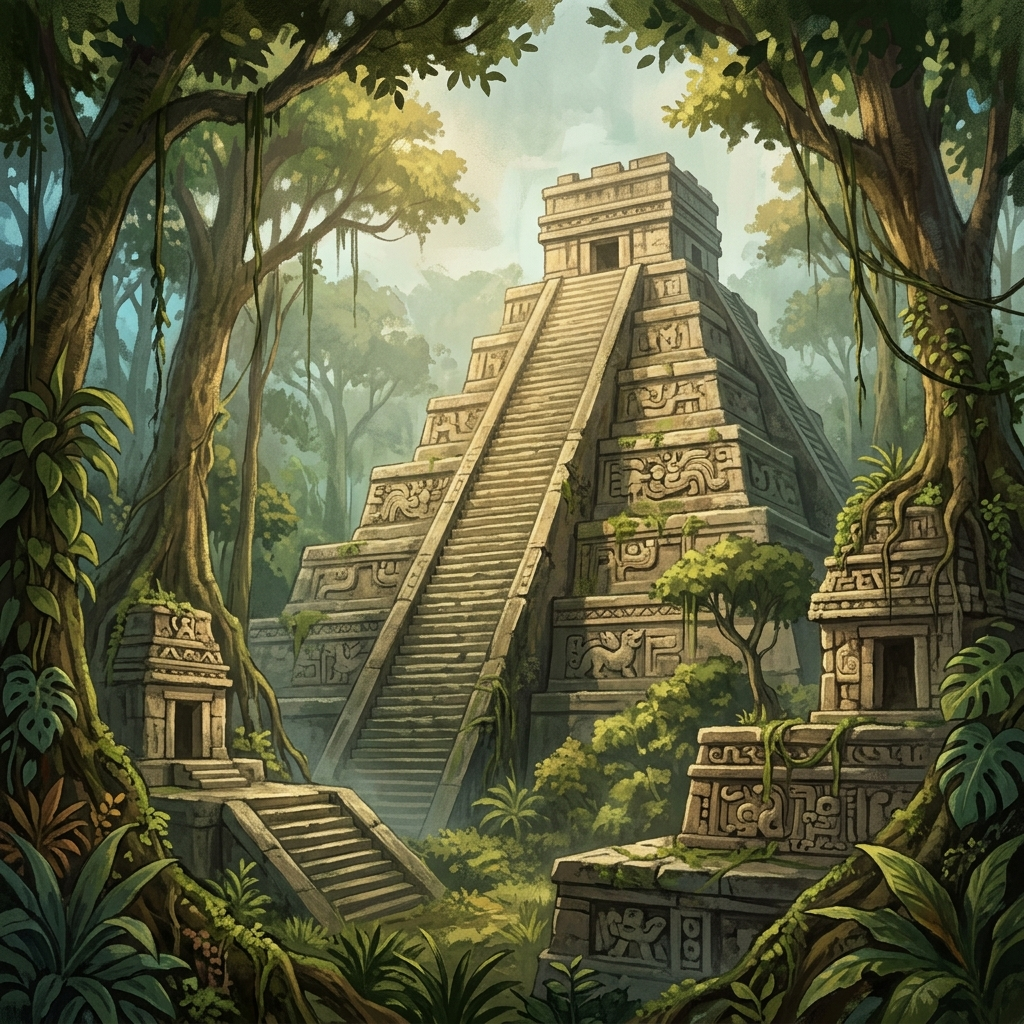
The Maya city of Minanbé, discovered in the northern sector of Mexico's Calakmul Biosphere Reserve after 1,200 years beneath the jungle canopy, was found in a state of extraordinary preservation — entirely untouched by looters — with several altars displaying deliberate, intentional modification rather than enemy destruction. The site's 15-hectare core zone contains a pyramid temple rising over 13 meters alongside 14 stelae and altars, making it a direct physical record of the Terminal Classic period (CE 800–1000), when large-scale demographic shifts reshaped the Maya lowlands in patterns far more geographically varied than the word collapse implies. Turner and Sabloff's landmark 2012 PNAS study documented a 90% population decline in the central Maya lowlands while explicitly noting strong regional continuity and even florescence in some areas; the scholarly debate over whether collapse is even the right word had been open since at least 2007, when Aimers titled a peer-reviewed paper simply "What Maya Collapse?" Yet mainstream outlets from Smithsonian Magazine to Nature News continued framing 2026 Minanbé coverage with the singular, dramatic word collapse, even in articles whose own body text presented a more complicated picture. Minanbé's final dated monument, Stela 1 (849 CE), predates the onset of the documented drought record by 22 years (871 CE), which means the often-cited megadrought cannot be held responsible for this specific city's trajectory. Together, the physical evidence and chronological anomaly force a fundamental question: when we say a civilization collapsed, are we describing what actually happened — or are we simply revealing the limits of our own imagination for how complex societies end?
Key Points
A Sealed Time Capsule: What an Untouched Site Actually Means for Archaeology
Minanbé's archaeological significance begins with a fact that sounds simple but is extraordinarily rare: no looter has ever disturbed this site. Šprajc's team reported that of all the sites they discovered in the past three years across the Calakmul region, Minanbé was the first where the contents remained entirely intact — meaning every other site had been ransacked, destroying the stratigraphic context that gives artifacts their interpretive meaning. The 15-hectare core zone, with its pyramid temple exceeding 13 meters and 14 stelae and altars, has been preserved in an undisturbed state that allows archaeologists to approach the site with the spatial and depositional relationships between objects and architecture still intact — something that is impossible to recover once looting has occurred. In the formal language of archaeology, undisturbed context means that artifacts remain in their original layer and position, which is the foundation of reliable chronology and interpretation; looted sites lose this record irreversibly. The architectural style — classified as Río Bec, the regional tradition of the Calakmul zone — is well-documented at surrounding sites, making Minanbé's intact assemblage a direct comparative baseline for understanding how this style evolved and was used through the Terminal Classic period. Stela 1's 849 CE date paired with Monument 6's estimated late-7th-century Long Count date (approximately 650–699 CE) means a single site may offer over 200 years of continuous occupation to track — an unusually wide temporal window for any individual Maya city. An untouched Maya site is genuinely what archaeologists call a "sealed time capsule," and Minanbé is the most recent and most significant example of that category to enter the scholarly record.
The Twenty-Year Gap: Why Scholarship and Media Are Telling Different Stories
The scholarly community's skepticism about "collapse" as applied to the Maya is not new, recent, or fringe — it is nearly 20 years old. Aimers published a paper titled "What Maya Collapse?" in the Journal of Archaeological Research in 2007, and the question has only become more pointed since. Turner and Sabloff's landmark 2012 PNAS study, one of the most cited works on Terminal Classic Maya demographics, explicitly states that "considerable regional variation in occupational patterns existed, with some areas showing strong continuity and even florescence." The same paper documents large-scale flourishing in the northern Puuc region, a prolonged boom at Chichen Itza, and continuous population at certain coastal centers — while also confirming the 90% population decline in the central lowlands. Scholarly literature has already moved toward "transformation," "transition," and "reorganization" as more precise alternatives, and Gwinneth et al.'s 2025 Biogeosciences paper placed "collapse" in quotation marks alongside "transformation" to flag its contested status. Yet in 2026, Smithsonian Magazine used "Just Before It Collapsed" as a headline for Minanbé coverage, Nature News described a "catastrophic collapse," and Physics.org titled a story "The collapse of Maya civilization" — with that last article's own body arguing that drought alone can't explain the decline. The disconnect doesn't reflect editorial sloppiness so much as the cultural inertia of a narrative with enormous popular momentum, and the slow, imperfect translation of scholarly consensus into public understanding. That translation lag has now stretched nearly 20 years, which is long enough to constitute a structural failure rather than a temporary gap.
The 22-Year Chronological Mismatch: The Single Strongest Fact in This Story
Minanbé's Stela 1 bears the Maya calendar date corresponding to 849 CE — the latest dated monument at the site, representing the most recent epigraphic record of the city's active life. James et al.'s 2025 Science Advances study, which reconstructed precipitation patterns from Yucatán stalagmites, places the beginning of the relevant drought sequence at 871 CE. The Cambridge University press release accompanying that study used deliberate, careful language: a 13-year megadrought and eight droughts lasting three or more years "may have contributed" to the transformation of Maya civilization — not "caused," not "triggered," but "may have contributed." Minanbé's last epigraphic record predates that drought sequence's onset by 22 years, which means the timeline does not support a direct causal argument linking megadrought to this particular city's abandonment. A proposed cause must precede its proposed effect; when the documented drought began 22 years after the last evidence of the city's active monumental life, the causal chain breaks at the chronological level. Non-climatic factors — political reorganization, shifting trade network configurations, changing relationships with neighboring polities — become the more logically compelling primary drivers of Minanbé's transition. Gwinneth et al.'s 2025 Biogeosciences study reinforces this reading: population decline occurred even at climatically stable Itzán in Guatemala, indicating that social, political, and economic dynamics were capable of driving major demographic shifts entirely independently of environmental stress. The 22-year gap between Minanbé's Stela 1 and the drought record is, in my view, the most powerful single data point in this entire story — and precisely what the "collapse-by-drought" narrative most completely fails to account for.
Reverential Abandonment: What Comparative Archaeology Reads in Minanbé's Evidence Pattern
The two facts INAH officially confirmed at Minanbé are deliberately modified altars and a complete absence of looting evidence. When this combination is evaluated through comparative Maya archaeology, it aligns closely with what Tsukamoto defined as "reverential abandonment" in his 2017 Antiquity study of El Palmar. Tsukamoto documented that participants in Classic Maya termination rituals "damaged, disassembled, or modified portable objects, human and animal bones, monuments, and architecture" — and identified a critical diagnostic distinction between hostile and reverential termination: when enemies conquered a city, they typically dismantled stairway assemblages; in reverential abandonment, the stairs are preserved. Minanbé's pyramid stairs remain intact, the altars were deliberately modified, and the buildings themselves were not destroyed — a pattern that fits the reverential abandonment profile precisely. Ingalls and Houk's 2026 Latin American Antiquity study adds further depth by documenting Maya ritual revisitation of monuments even after urban abandonment, suggesting that leaving a city was a gradual transformation of relationship with sacred space rather than a clean break. However, full transparency requires acknowledging what INAH's press release does not say: there is no official attribution of "ritual abandonment" or "planned departure" to the site — these interpretations are grounded in comparative literature, not in findings by the discoverers, and they remain hypotheses until excavation yields the physical cache deposits that would constitute confirming evidence. Tsukamoto found 201 broken ceramic vessels and related materials at El Palmar; whether Minanbé's ground holds comparable evidence is a question only excavation can answer.
Genetic Continuity: The Deepest Challenge to the "Lost Civilization" Premise
Murray et al.'s 2025 Current Biology study analyzed genomes from seven ancient Maya individuals from Copán, Honduras, and found that genetic continuity was maintained through major demographic disruption, with lineages traceable to 3700 BCE and no evidence of population replacement by outside groups. The study's core finding is that the Terminal Classic period's population decline did not represent the replacement of Maya people by others, but rather a large-scale social reorganization in which existing populations dispersed and restructured — the people moved, they did not disappear. This matters enormously for how we understand the word "collapse," because for a civilization to be "lost," its people must actually be lost — but the genetic evidence refuses this premise. Modern Maya communities still live across the Yucatán Peninsula, still speak Maya languages, and the name Minanbé itself derives from living Yucatec Maya vocabulary, which is a quiet but powerful demonstration of cultural continuity. The archaeological and genetic evidence now converge on the same conclusion from entirely independent disciplines: what the Maya lowlands experienced in the Terminal Classic was a spatial and social reorganization of existing populations, not the disappearance of a people. Combining this genetic evidence with the comparative archaeological evidence of reverential abandonment creates what may be the strongest available interdisciplinary argument for replacing "collapse" with "transformation" in both scholarly and public discourse. When two different fields — archaeology and genomics — independently arrive at the same conclusion, the convergence carries substantially more weight than either finding in isolation, and that convergence is now well underway.
Positive & Negative Analysis
Positive Aspects
- Unprecedented Opportunity to Reconstruct Maya Urban Abandonment
The untouched condition of Minanbé provides something almost entirely absent from the Maya archaeological record: a chance to study an urban abandonment process in its original, undisturbed state from start to finish. Most Maya sites across the central lowlands have been subjected to centuries of looting that progressively destroyed the stratigraphic relationships allowing archaeologists to reconstruct what happened, in what sequence, and why. At a looted site, artifacts have been removed from their original layers, portable objects scattered or stolen, and the spatial logic of the deposit — which object was placed where, in what relationship to which other object — is permanently erased. At Minanbé, none of that damage has occurred, meaning that when excavation begins, each soil layer will have remained in place since the city was abandoned, and the physical record of the abandonment process is still intact and readable. This creates a direct comparative opportunity with Tsukamoto's findings at El Palmar, where 201 broken ceramic vessels, jade celts, incense burners, and animal bones were recovered in termination ritual deposits — the scientific value of replicating or contrasting that finding at an uncontaminated, geographically proximate site is exceptional. Sites of this quality — undisturbed, datable to a specific Terminal Classic horizon, with existing epigraphic anchors and a well-documented regional framework — are extraordinarily rare across the entire Maya lowlands, and Minanbé represents the most recent and most significant addition to that narrow category.
- An Empirical Foundation for Reconsidering the Collapse Narrative
The discovery of Minanbé doesn't just add another data point to Maya archaeology — it creates a specific, testable empirical opportunity to evaluate the "collapse vs. transformation" debate that has been running at the scholarly level for nearly 20 years without producing publicly decisive evidence. The existing debate has largely relied on reinterpretation of previously excavated data, and new raw data from an unexcavated site introduces a level of evidentiary freshness that the discussion has been missing. If the hieroglyphs on Minanbé's 14 monuments are successfully deciphered, they will reveal the site's political structure, dynastic history, and relationships with neighboring cities — data that directly addresses how Terminal Classic intersite networks reorganized or fragmented. Gwinneth et al.'s 2025 Biogeosciences finding that climatically stable Itzán experienced population decline suggests that network effects — disruptions to trade routes, political alliances, or economic systems — could drive demographic shifts independently of environmental stress, and Minanbé's dataset will offer a new test case for this interpretation. The broader significance extends beyond Mayanist scholarship: understanding how complex pre-industrial societies reorganized during periods of stress has direct conceptual relevance to complexity theory in social science, historical ecology, and contemporary thinking about civilizational resilience and adaptive capacity.
- Opening the Campeche Archaeological Blind Spot
Šprajc's own assessment — that the density of sites in this region makes it impossible to distinguish where one ancient community ends and another begins — captures how much of northern Calakmul remains archaeologically unexplored. The 2022 PLoS ONE survey of the Chactún area covering 240 square kilometers confirmed approximately 61 structures per square kilometer; Auld-Thomas et al.'s 2024 Antiquity study of 122 square kilometers in Campeche documented 6,764 structures at an average density of 55.3 structures per square kilometer and identified a previously unknown major city, Valleriana. Extrapolating these density figures across the broader northern Calakmul zone implies tens of thousands of undocumented structures waiting beneath the jungle canopy. Minanbé's discovery — and especially its international profile — is likely to catalyze expanded systematic survey of this area, potentially yielding additional major cities whose existence could transform regional understanding of Terminal Classic settlement patterns. Each new site adds to the comparative database for evaluating how abandonment played out across different political and geographic contexts, gradually building the landscape-level picture that individual site studies cannot provide on their own. This accumulation of regional data is ultimately what shifts the "collapse vs. transformation" debate from a theoretical disagreement to an empirically grounded one with real comparative purchase.
- Restoring Historical Agency to Modern Maya Descendants
Evaluating Minanbé purely as an academic achievement misses half its significance. Murray et al.'s 2025 genetic study established that the people who lived in Terminal Classic Maya cities were the biological ancestors of communities living today — there was no replacement, no disappearance, only reorganization and movement across the landscape. The "collapse" frame, by implying that a civilization was extinguished, carries a hidden claim: that the people too were in some sense lost, which is not only archaeologically inaccurate but actively harmful to the historical identity of living Maya communities. If Minanbé's evidence is ultimately interpreted as reverential abandonment — people performing deliberate closing rituals, making intentional choices about departure, maintaining relationship with sacred spaces through the process — it returns to modern Maya descendants a narrative of ancestral agency rather than victimhood. Establishing participatory excavation and interpretation models that include modern Maya communities from Campeche, where Yucatec Maya is still spoken as a mother tongue, would set an important precedent for decolonizing Maya archaeology more broadly. The most politically and humanistically significant contribution Minanbé can make is to convert the dominant "lost civilization" narrative into a story of active, culturally continuous transition — which is what the available evidence, read carefully, already points toward.
Concerns
- Deteriorating Conservation Status and Tren Maya's Direct Threat
IUCN's 2025 assessment of the Calakmul World Heritage site — rated "Significant Concern" with a trend designated "Deteriorating" — casts a long shadow over the prospects for Minanbé's protection. Mexico's Tren Maya railway project had already affected 10,831 hectares by June 2023, with 61% of that figure — approximately 6,615 hectares — suffering direct forest clearance. IUCN documented roughly 1,300 archaeological sites under threat along the project's route, and as construction and subsequent development continue, both the affected area and the site count will expand. Minanbé's location in the northern Calakmul reserve places it within the general zone of Tren Maya's developmental influence, and while the 90% federal land ownership of the biosphere provides a legal basis for protection, legal designation does not automatically translate to enforceable reality when the administering agency faces budget constraints. Forest clearance, even when it doesn't directly damage a site, accelerates the vulnerability chain: exposed land creates new access routes, access routes attract looters, and looters cause irreversible archaeological damage. The IUCN trend assessment suggests that the condition of the broader landscape in which Minanbé sits has been worsening, not improving — which means any new site in this region enters a conservation environment already under measurable stress. The current trajectory makes it difficult to project with confidence that Minanbé's pristine condition will still be intact five years from now without a material change in either funding or enforcement capacity.
- INAH Resource Constraints and Excavation Priority Uncertainty
Mexico's National Institute of Anthropology and History manages a portfolio of 194 archaeological zones and 162 museums under persistent fiscal pressure, and it has responded to budget constraints partly by significantly raising foreign visitor entry fees as a revenue generation mechanism. Against this backdrop, the question of whether an extremely remote, newly discovered site with no near-term tourism revenue potential will receive adequate protective resources and excavation priority is genuinely uncertain. INAH's operational priorities tend to concentrate on sites with established tourism infrastructure, where visitor revenue provides a direct institutional justification for investment. Minanbé, requiring roughly 6 kilometers of jungle travel to access, does not fit that profile and is unlikely to become a direct visitor destination in any near-term timeframe. The research team conducting the discovery — Šprajc's group under the Slovenian Academy of Sciences and Arts — has independent research funding capacity, but excavation requires INAH permits and administrative cooperation, meaning even a well-resourced international team cannot proceed without institutional alignment with the national authority. The resulting dependency creates a gap: the intellectual case for fast-tracking Minanbé is strong, but the institutional incentive structure for doing so is weak. Without a dedicated funding mechanism — international grant support, a UNESCO-backed program, or a specific budgetary allocation — the site could remain in protective limbo for years, with minimal monitoring and no formal excavation.
- Media Exposure as an Inadvertent Broadcast to Looters
The global media coverage of Minanbé, which prominently featured the fact that the site has been untouched by looters for 1,200 years, creates a security paradox: the news that made this discovery internationally significant simultaneously functions as an advertisement to those who would profit from destroying it. Šprajc's observation that every other site he discovered in the same region over the past three years had been looted is not a historical anecdote — it describes the active operating environment in northern Calakmul right now. Minanbé's precise coordinates have not been publicly disclosed, but its general placement in the northern Calakmul Biosphere Reserve has been widely reported across multiple outlets. The combination of known approximate location, known pristine condition, and gradually improving regional access due to Tren Maya construction creates a situation in which the window for preventive protection is actively closing. If looting reaches Minanbé before INAH establishes even basic site security — a physical presence, access monitoring, or perimeter barriers — the 1,200-year-old archaeological context that makes the site scientifically extraordinary would be irreversibly compromised. The specific risk of carved sections being cut from stelae for the black-market trade in Maya stone would make epigraphic reconstruction permanently incomplete, eliminating the chronological data that is among Minanbé's most important scholarly contributions. The broader pattern — that discovery and vulnerability travel together in this region — suggests that the announcement of Minanbé's existence started a clock whose ticking is not theoretical.
- Tourism Development Pressure and the Sustainability Dilemma
Calakmul's visitor statistics tell a story more complicated than either straightforward success or simple failure. Visitor numbers rose from 14,449 in 2012 to 51,447 in 2023 — then fell to 35,000 in 2024. The 2024 decline reflects a combination of factors: access disruptions from Tren Maya construction, a significant increase in foreign visitor entry fees, and conservation policy adjustments. Reporting only the surge without acknowledging the 2024 reversal misrepresents the actual trend; the decline signals that the system is under stress rather than on a simple growth trajectory. If Tren Maya's completion substantially improves regional accessibility, visitor numbers could spike again — but Calakmul's conservation infrastructure was already struggling before the 2024 decline, making it poorly positioned to absorb a second rapid increase in visitation. Minanbé itself is effectively inaccessible to general tourism, but its discovery increases the international profile of the broader Calakmul archaeological zone, exerting indirect pressure on a heritage management system that is resource-constrained even at current visitor levels. The deeper structural problem is whether tourism revenue actually returns to conservation in a meaningful and transparent way — whether fees collected from visitors translate into site protection budgets, maintenance, trained staff, and emergency response capacity. If the revenue recycling mechanism is weak or opaque, tourism growth becomes a net negative for heritage preservation rather than a funding solution, and sites most valuable to science end up most vulnerable to the consequences of their own fame.
Outlook
Let's start with what happens in the next six months. Minanbé was officially announced in June 2026, but systematic excavation has not yet begun. Archaeological fieldwork in the Calakmul region typically runs from November through May — the dry season — because wet-season tropical rains make jungle access essentially impossible. The first work to be undertaken will almost certainly be precision topographic mapping and systematic documentation of all 14 stelae and altars. The 12 monuments not yet analyzed for inscriptions could contain date information positioned chronologically between Stela 1 (849 CE) and Monument 6's estimated late-7th-century date, and decoding them is the key to reconstructing Minanbé's full timeline. This documentation alone is likely to consume an entire fieldwork season — the 2026–2027 dry season at minimum — before any ground-breaking excavation can responsibly proceed.
During that same period, I'd expect media coverage to follow a highly predictable pattern. Every follow-up story about Minanbé will deploy "collapse" or "lost city" in the headline while the article body gradually introduces a more nuanced picture. The headline-body disconnect will persist because it reflects structural incentives in media: dramatic words drive clicks, and no amount of scholarly consensus alone changes that incentive structure in the short term. The Art Newspaper's 2025 coverage of the drought study illustrates this perfectly — running under a headline that foregrounded "collapse" while the article itself introduced complicating evidence. This pattern will likely continue for years, changing only gradually as the accumulation of revisionist findings becomes too large to ignore even at the headline level.
On the epigraphy side, the specialist community's response is worth watching closely. Minanbé's 14 monuments represent an unpublished corpus of Maya inscriptions that has never been systematically analyzed. If the 3D digital modeling approach Olguín applied to Monument 6 scales successfully to the other eroded stelae, the yield could include dynastic records, political history, and intersite relationships that transform our understanding of Minanbé's role in the Terminal Classic political landscape. Šprajc noted that the site has potential to expand understanding of relationships with surrounding regions and the political geography of the Maya lowlands — and epigraphic decipherment will be the primary mechanism through which that potential is realized or deferred.
INAH's institutional response is another critical short-term variable. INAH administers 194 archaeological zones and 162 museums under persistent fiscal constraints, and Minanbé — extremely remote, requiring roughly 6 kilometers of jungle travel to access, with no near-term tourism revenue potential — doesn't fit the profile of a site likely to receive rapid resource allocation. Šprajc's team operates under the Slovenian Academy of Sciences and Arts with its own research funding, giving it independent survey capacity, but excavation permits and legal authority rest with INAH. The speed of coordination between these two institutions will determine Minanbé's near-term fate. Given that every other site discovered in the same area over the past three years was looted, whether INAH can establish even minimal protective presence — or whether it will depend on the jungle's own inaccessibility as the primary security mechanism — is the most urgent near-term watchpoint.
Looking one to two years out, the most important potential turning point is the first test excavation. The physical evidence needed to evaluate the reverential abandonment hypothesis lies beneath the surface. The diagnostic indicators that Tsukamoto found at El Palmar — broken ceramic vessels, jade celts, incense burners, animal bones deposited as termination ritual caches — would, if present at Minanbé, position the site as the most intact documented example of Maya urban termination ritual. If excavations turn up empty buildings with no cache deposits, the interpretation of the abandonment changes entirely. Either outcome has scientific value — but the undisturbed condition of the site maximizes the interpretive reliability of whatever is found, which is exactly why this particular excavation matters beyond its immediate results.
Running parallel to excavation timelines is the possibility of ancient DNA analysis. Murray et al.'s 2025 Current Biology study analyzed genomes from seven ancient Maya individuals at Copán, Honduras, documenting genetic continuity through major demographic disruption, with lineages traceable to 3700 BCE and no evidence of population replacement. If Minanbé yields human skeletal remains suitable for DNA sampling, direct comparison with the Copán genetic profile becomes feasible — providing a way to trace, genetically, where Terminal Classic populations actually moved when they left cities like Minanbé. This depends entirely on the presence and preservation of human remains, but it will be among the first research questions raised once excavation begins in earnest.
Academic publication activity will also accelerate in this window. Within one to two years of the official announcement, preliminary reports from Šprajc's team and Olguín's epigraphic analysis are likely to appear in peer-reviewed journals. Minanbé will inevitably be placed in comparative context with Chactún, Tamchén, and Lagunita — sites Šprajc discovered in the same region between 2013 and 2014 — and direct comparison with Tsukamoto's El Palmar termination ritual study is essentially unavoidable. Šprajc's 2022 PLoS ONE survey of the Chactún area covered 240 square kilometers and confirmed approximately 61 structures per square kilometer; adding Minanbé's density data will contribute an important piece to reconstructing the archaeological landscape of northern Calakmul. How these papers handle the term "collapse" — whether they bracket it, add quotation marks, or substitute "transformation" — will serve as a barometer of the field's evolving temperature.
Tren Maya's pressure on the region must also be tracked over the medium term. IUCN's tally of 10,831 hectares affected by June 2023, with 61% showing forest clearance, will continue to expand as construction and subsequent development proceed. The question of whether Minanbé is formally added to IUCN's list of roughly 1,300 threatened archaeological sites is itself a meaningful threshold. The 90% federal land ownership of the biosphere provides legal protection, but legal protection under fiscal stress doesn't automatically translate to enforceable, on-the-ground reality. I think it's likely that within two years, UNESCO's World Heritage Committee will either dispatch a monitoring mission to Calakmul or issue strengthened conservation recommendations — the IUCN's "Deteriorating" trend assessment already points in that direction.
Tourism dynamics will become more complex at the medium-term horizon. Calakmul's visitor numbers climbed from 14,449 in 2012 to 51,447 in 2023, then declined to 35,000 in 2024. If Tren Maya's completion substantially increases regional accessibility, visitation could surge again — but Minanbé itself, requiring extreme physical effort to reach, is unlikely to become a direct tourism destination. The more probable dynamic is that Minanbé's discovery drives renewed interest in the Calakmul archaeological zone more broadly, adding indirect pressure to site infrastructure that was already under stress before the 2024 decline. The structural question is whether tourism revenue actually flows back into conservation in a transparent and functional way, rather than disappearing into general government accounts where its impact on heritage is impossible to trace.
The role of modern Maya descendant communities deserves serious attention in the medium term. Campeche still has communities where Yucatec Maya is spoken as a mother tongue, and the very name Minanbé derives from that living language. Whether these communities are invited into the excavation and interpretation process — as genuine participants rather than background context — will determine whether Minanbé becomes "their history" or remains confined to the category of "researchers' subject." Participatory excavation models involving Indigenous communities have become increasingly common in Latin American archaeology, and UNESCO actively encourages them. The extreme physical difficulty of accessing Minanbé creates a practical barrier to on-site community participation, but at the very minimum, descendant communities should have meaningful voice in how the site's story is constructed and communicated to a global audience.
Looking further out, at a two-to-five-year horizon, the biggest variable is whether systematic survey of the broader Campeche region accelerates. Auld-Thomas et al.'s 2024 Antiquity study surveyed 122 square kilometers in Campeche and documented 6,764 structures at an average density of 55.3 structures per square kilometer — and identified a previously unknown major city, Valleriana. Combined with Šprajc's team's figure of approximately 61 structures per square kilometer across a 240-square-kilometer survey of the Chactún zone, extrapolating these density numbers across northern Calakmul implies tens of thousands of undocumented structures beneath the jungle canopy. Sites of Minanbé's scale could exist in multiple locations, and systematic survey expansion would generate the landscape-level data on Terminal Classic population movement patterns that individual site studies cannot provide alone.
The long-term trajectory of the word "collapse" itself will be an interesting thing to watch. Aimers published "What Maya Collapse?" in 2007 — nearly 20 years ago — but the term persists in textbooks and popular media with remarkable staying power. Academic literature already shows frequent use of alternatives: "transformation," "transition," "reorganization." Gwinneth et al.'s 2025 paper used the phrasing "transformation or 'collapse'" with quotation marks around the second term, signaling scholarly discomfort while remaining accessible to a broad readership. Popular language always lags scholarly consensus, and frames with strong narrative inertia resist replacement far longer than frames without cultural weight. If reverential abandonment patterns are confirmed at Minanbé and subsequently replicated at multiple other sites, the accumulating case may become sufficient to crack mainstream media's default usage within five years — though I suspect it will take longer than optimists hope.
Climate change enters the picture as an ironic long-term variable. Ancient Maya cities may have been shaped partly by drought cycles; modern climate change now threatens the physical remains of those cities. Changing rainfall patterns across tropical forest zones, increased frequency of extreme weather events, and progressive drying could accelerate weathering of stone monuments and damage surface-level archaeological evidence before systematic excavation is possible. The drought sequence reconstructed by James et al. — beginning 871 CE — raises natural questions about what modern climate models suggest about analogous future patterns in the same region. If ancient climatic shifts contributed to Maya urban transitions, modern climate change could erase the physical evidence of those transitions before we've finished reading it, which means the temporal urgency of both excavation and conservation will only grow with each passing year.
Now let me lay out the three scenarios explicitly. In the most optimistic path, systematic mapping during the 2026–2027 dry season leads to test excavations in 2027–2028 that yield clear termination ritual deposits — broken ceramics, jade objects, incense burners — matching the El Palmar pattern. The results are published in a high-impact journal, positioning Minanbé as the most intact documented case of Maya reverential abandonment. International attention draws UNESCO and major research institutions into a coordinated study program. Sufficient international funding flows in to establish both site protection and a participatory management model with modern Maya descendant communities. Within this trajectory, the "collapse" narrative begins yielding to "transformation" for the Calakmul region specifically, and Minanbé becomes the symbolic anchor for recalibrating public understanding. Comparisons with Chactún and El Palmar consolidate a typology of Terminal Classic urban abandonment that gives the field a comparative framework it currently lacks.
The most pessimistic path is also realistically imaginable. Persistent INAH budget constraints delay formal protection, and media coverage of the pristine, unlooted site functions as an inadvertent advertisement that reaches people with illegal intent. Given that every other site discovered in the same area over the past three years was looted, this is not a theoretical risk — it's the documented operational reality of the region. Tren Maya construction, by gradually improving access to northern Calakmul, compounds the exposure window. If looting reaches Minanbé before protective measures are in place, the 1,200-year-old archaeological context is gone — not damaged, but permanently destroyed. If looters extract carved sections from the stelae for the black-market trade in Maya stone, the epigraphic record needed to decode Minanbé's chronology becomes permanently incomplete. In this scenario, Minanbé becomes a case study in how a discovery's announcement can accelerate the destruction it was meant to celebrate.
The most probable path lies between these two poles. INAH implements minimal protective measures while Šprajc's team secures partial international funding for limited excavation; full systematic investigation takes several years to more than a decade. Academic publication proceeds steadily but popular narrative change is slow. Media coverage continues to deploy "collapse" and "lost city" in headlines while article bodies gradually introduce more nuanced framings — the double structure persisting as an industry norm. I should also be honest about where my own interpretation could be wrong. If excavation reveals evidence of combat, fire damage, or sudden violent disruption, the reverential abandonment hypothesis needs revision. The absence of modern looting tells us that contemporary looters haven't reached the site — it doesn't, by itself, guarantee that the ancient abandonment was orderly or peaceful. Intellectual honesty requires holding that possibility open. The evidence pattern is suggestive, but the ground has the final word.
My final message is simple. The next time you see a "Maya collapse" headline, run three questions against it: whose collapse, across what timeframe, and driven by which cause? A 90% population decline in the central lowlands is real and significant — but if that decline unfolded differently in different places for different reasons, then collapsing it all into one word is an act of flattening, not description. Pay attention to what's happening in Campeche. The IUCN's "Significant Concern" rating and Tren Maya's ongoing impact are not abstract policy questions — they represent an active threat to humanity's shared cultural heritage. Minanbé survived for 1,200 years because the jungle was its protection. That protection is receding. The question of who picks up where the jungle left off is the most pressing thing this discovery raises, and it has an answer only if someone acts now.
Sources / References
- INAH Press Release: Minanbé Declared — A Virgin Maya City North of the Calakmul Biosphere Reserve — INAH (2026-06-22) — INAH Press Release: Minanbé Declared — A Virgin Maya City North of the Calakmul Biosphere Reserve
- Classic Period Collapse of the Central Maya Lowlands: Insights about Human–Environment Relationships for Sustainability — PNAS / Turner & Sabloff (2012) — Classic Period Collapse of the Central Maya Lowlands: Insights about Human–Environment Relationships for Sustainability
- Reverential Abandonment: A Termination Ritual at the Ancient Maya Polity of El Palmar — Antiquity / Tsukamoto (2017) — Reverential Abandonment: A Termination Ritual at the Ancient Maya Polity of El Palmar
- Classic Maya Response to Multiyear Seasonal Droughts — Cambridge Press Release — University of Cambridge (2025) — Classic Maya Response to Multiyear Seasonal Droughts — Cambridge Press Release
- Ancient Maya City and Protected Tropical Forests of Calakmul, Campeche — IUCN World Heritage Outlook — IUCN (2025) — Ancient Maya City and Protected Tropical Forests of Calakmul, Campeche — IUCN World Heritage Outlook
- Running Out of Empty Space: Environmental LiDAR and the Crowded Ancient Landscape of Campeche, Mexico — Antiquity / Auld-Thomas et al. (2024) — Running Out of Empty Space: Environmental LiDAR and the Crowded Ancient Landscape of Campeche, Mexico
- Ancient Maya City Minanbé Discovered in Mexican Jungle, Campeche — The Art Newspaper (2026-07-01) — Ancient Maya City Minanbé Discovered in Mexican Jungle, Campeche
- Ancient DNA Unravels Ancestral Secrets of Classic Maya Period — Phys.org / Murray et al. Current Biology (2025) — Ancient DNA Unravels Ancestral Secrets of Classic Maya Period
- Maya Collapse Mystery Deepens as Scientists Find No Drought at Key Site — ScienceDaily / Gwinneth et al. Biogeosciences (2025) — Maya Collapse Mystery Deepens as Scientists Find No Drought at Key Site